DEF CON 32 Closing Ceremonies
This video is a recording of the closing ceremonies for DEF CON 32, which includes organizational updates, community awards, and recaps of various conference tracks and villages. It provides an overview of the event's logistics, including network performance, security operations center (SOC) metrics, and community engagement statistics. The talk serves as a non-technical summary of the conference's operational success and community milestones.
Behind the Scenes at DEF CON 32: Operational Security and Community Resilience
TLDR: The DEF CON 32 closing ceremonies provided a rare, transparent look at the operational challenges of running the world's largest hacker conference. From managing massive network traffic and wireless security to handling sensitive incident response via the SOC and hotline, the event highlighted the critical intersection of physical security and digital infrastructure. For researchers and attendees, these metrics offer a blueprint for understanding the scale and complexity of securing large-scale, high-density environments.
The closing ceremonies of a major security conference are usually reserved for thank-yous and logistical housekeeping. However, when you look past the stage banter, the data presented during the DEF CON 32 wrap-up reveals a fascinating case study in high-stakes operational security. For those of us who spend our time hunting bugs or running red team engagements, the sheer volume of traffic and the nature of the incidents reported provide a unique window into the threat landscape of a live, high-density environment.
The Reality of the SOC and Hotline Metrics
Security Operations Center (SOC) and hotline data are rarely shared with this level of granularity. The numbers reported this year—including specific counts of code of conduct violations, physical security incidents, and even reports of theft—underscore the reality that a conference is not just a digital target, but a physical one.
When we talk about "security," we often focus on the stack: the WPA3 implementation, the network segmentation, or the endpoint protection. But the DEF CON data shows that the human element remains the most volatile variable. The fact that the team had to manage medical issues, physical altercations, and even reports of theft highlights that the "threat landscape" includes everything from social engineering to physical larceny. For any pentester or researcher, this serves as a reminder that your engagement scope should never be limited to the digital perimeter. If you are testing a facility, the physical access controls and the response time of the security staff are just as critical as the firewall rules.
Network Performance and Wireless Security
Managing wireless connectivity for thousands of devices is a nightmare scenario for any network engineer. The data shared regarding the network usage—specifically the split between secure and insecure traffic—is a stark reminder of the state of user behavior. Despite the ubiquity of secure protocols, a significant portion of traffic still traverses insecure channels.
For those of us conducting research, this is a goldmine. The OWASP Mobile Top 10 continues to highlight insecure communication as a primary risk, and the DEF CON network metrics confirm that users are still failing to enforce basic transport security. If you are looking for a target-rich environment, the gap between what users should be doing and what they are doing remains wide. The official documentation for WPA3 outlines how modern standards are designed to mitigate these risks, but as the conference data shows, the deployment of these standards is only half the battle.
The Evolution of Community-Led Infrastructure
One of the most impressive aspects of the conference is the reliance on community-led infrastructure. The "DevOps" team, which managed the Discord server and the various bots supporting the event, processed nearly 20,000 lines of code in production. This is not a corporate-managed environment; it is a living, breathing, and constantly evolving system built by volunteers.
This model of "hacker-built" infrastructure is something we should all be paying attention to. When you look at the Raspberry Pi Hacking Challenge or the various badge-based projects, you see a level of technical depth that often exceeds commercial equivalents. These projects are not just toys; they are functional, complex systems that require the same security rigor as any enterprise application. If you are a developer, the way these tools are built—with an emphasis on reusability and community contribution—is a model for how we should be approaching our own internal tooling.
Lessons for the Field
What can we take away from these ceremonies? First, transparency matters. By sharing these metrics, the organizers are not just showing off; they are providing a baseline for what "normal" looks like in a high-threat environment. Second, the shift toward more complex, community-driven challenges—like the DARPA AI Cyber Challenge (AIxCC)—signals where the industry is heading. We are moving away from simple, static CTFs toward dynamic, AI-driven environments that require a completely different set of skills.
As you prepare for your next engagement, think about the scale of the systems you are testing. Whether it is a small web application or a massive, distributed network, the principles of operational security remain the same. You need to account for the human, the physical, and the digital. The next time you find yourself frustrated by a lack of documentation or a complex, custom-built tool, remember that the most effective solutions are often the ones built by the community, for the community. Keep pushing the boundaries, keep documenting your findings, and most importantly, keep building. The next big vulnerability is likely hiding in the very infrastructure we use to secure our own work.
Up Next From This Conference
Breaking Secure Web Gateways for Fun and Profit
Listen to the Whispers: Web Timing Attacks That Actually Work
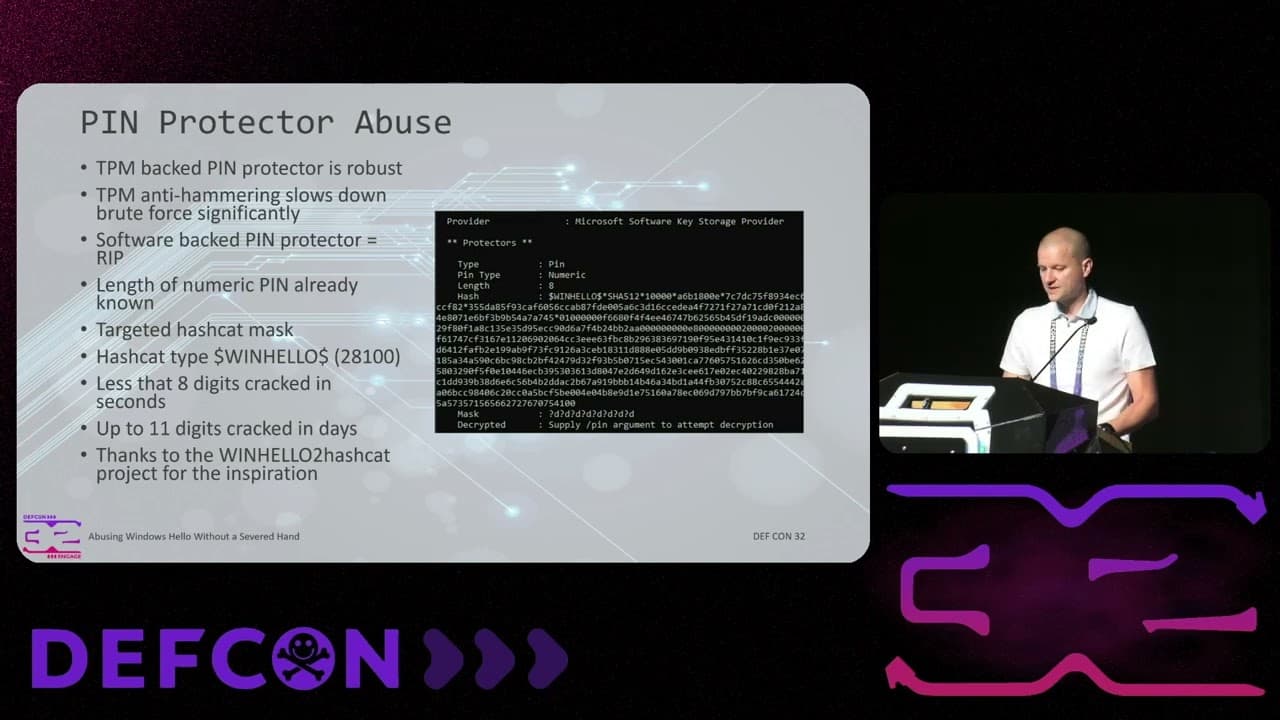
Abusing Windows Hello Without a Severed Hand
Similar Talks
The Dark Side of Bug Bounty

On Your Ocean's 11 Team, I'm the AI Guy