Defcon History and Community Philosophy
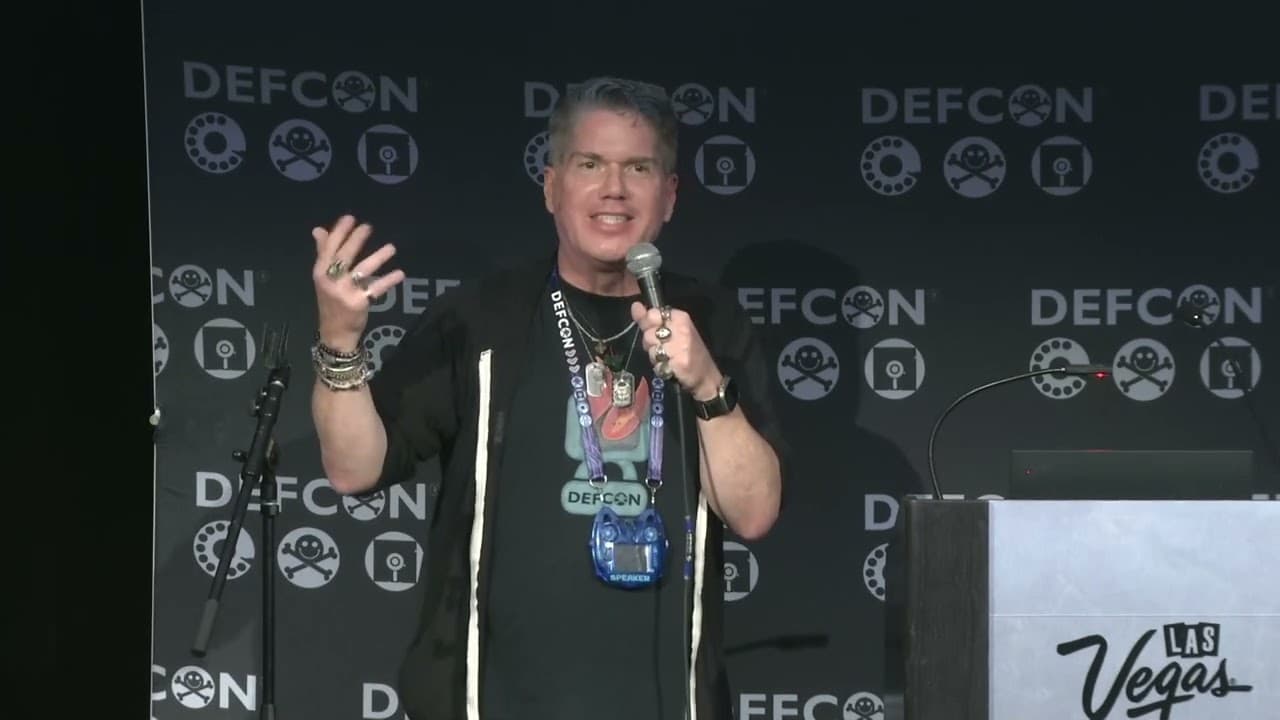
This talk provides a historical overview of the Defcon conference, focusing on its evolution from an invite-only event to an open community-driven gathering. It discusses the organizational philosophy behind managing large-scale security events, including the implementation of codes of conduct and transparency reports. The speaker emphasizes the importance of fostering a collaborative environment for security researchers and the challenges of maintaining community standards as the event scales.
The Engineering Behind Scaling Community-Driven Security Research
TLDR: Scaling a security conference like DEF CON requires moving beyond simple logistics to solve the fundamental problem of maintaining community intimacy in massive crowds. By breaking down large attendee groups into smaller, affinity-based "hacker villages," organizers can foster genuine technical collaboration rather than just hosting a trade show. This approach provides a blueprint for any security team trying to maintain a high-signal culture while their organization grows rapidly.
Security conferences often suffer from the same entropy that plagues growing engineering teams. As the headcount increases, the signal-to-noise ratio drops, and the culture that once drove innovation begins to dilute. When a conference grows from a few hundred attendees to tens of thousands, the challenge is no longer just about venue capacity or bandwidth. It is about maintaining the specific, high-intensity environment where researchers can actually share knowledge and collaborate on complex problems.
The Problem of Scale in Security Communities
Maintaining a high-quality research environment at scale is a classic engineering problem. When you have twenty thousand people in one room, you cannot have a meaningful conversation about a complex exploit chain. The noise floor becomes too high. The solution, as seen in the evolution of DEF CON, is not to try and manage the crowd as a monolith, but to decompose the problem into smaller, manageable units.
By creating affinity groups—what we call "hacker villages"—organizers effectively shard the conference. Whether it is car hacking, hardware security, or industrial control systems, these smaller clusters allow for the kind of focused, hands-on collaboration that is impossible in a general session. This is the same principle behind microservices architecture: you isolate the components to ensure that a failure or a surge in one area does not bring down the entire system.
Engineering for High-Signal Interaction
The most effective way to keep a community focused is to lower the barrier to entry for asking "dumb" questions. In many corporate environments, the fear of looking incompetent prevents junior researchers from engaging with senior experts. At a conference, you have to engineer the environment to remove that friction.
When you sit at a table with ten other people who are all working on the same specific problem—like lock picking or reverse engineering a specific firmware—the social dynamics change. You are no longer performing for an audience; you are working with peers. This is where the real research happens. The goal is to create an environment where the "joy of discovery" is the primary incentive, not the prestige of the speaker.
The Role of Transparency in Community Trust
One of the most critical aspects of managing a large-scale security event is the implementation of a clear, enforced Code of Conduct. Without it, the environment becomes hostile, and the most valuable contributors leave. However, a policy is only as good as its enforcement.
Transparency reports serve as the "logs" for this policy. By publicly documenting what went wrong and how it was handled, organizers hold themselves accountable to the community. For a pentester or a security researcher, this is a lesson in how to build a security program that people actually want to participate in. If you want your team to report vulnerabilities, you have to build a culture where they feel safe doing so. If you want your developers to care about security, you have to provide them with the tools and the environment to learn without fear of retribution.
Why This Matters for Your Security Team
If you are a lead or a founder, you are likely facing the same scaling issues. Your team is growing, your codebase is becoming more complex, and your security culture is being tested. The lesson from the evolution of these large-scale events is that you cannot force a culture from the top down. You have to build the infrastructure that allows it to emerge organically.
Stop trying to force every developer into a single, massive security training session. Instead, create small, focused "security guilds" where developers can work on specific problems, like OWASP Top 10 remediation or secure CI/CD pipeline design. Give them the space to fail, the tools to experiment, and the transparency to trust that their contributions are valued.
The most successful security programs are not the ones with the most restrictive policies. They are the ones that treat security as a community-driven engineering challenge. When you provide the right environment, the researchers—or in your case, the developers—will do the work. They will find the bugs, they will propose the fixes, and they will build a more resilient system. The key is to stop acting like a gatekeeper and start acting like an architect. Build the space, set the ground rules, and then get out of the way.
Up Next From This Conference
Breaking Secure Web Gateways for Fun and Profit
Listen to the Whispers: Web Timing Attacks That Actually Work