
Defcon Village Panel
This video is a panel discussion featuring various village leads from Defcon. The participants discuss the organizational, logistical, and community-building aspects of running specialized security villages. It does not contain technical demonstrations, vulnerability research, or offensive security techniques.
Beyond the Badge: The Real-World Impact of DEF CON Village Research
TLDR: DEF CON villages are not just social hubs; they are high-intensity research labs where thousands of hours of volunteer effort translate into real-world vulnerability disclosures. This panel highlights how these communities bridge the gap between theoretical security research and the practical, often messy, reality of securing critical infrastructure. For researchers and pentesters, these villages represent the most effective way to gain hands-on experience with hardware and systems that are otherwise inaccessible.
Security conferences often get a bad rap for being glorified networking events where the real work happens in the hallways rather than the sessions. While the hallway track is undeniably valuable, the village structure at DEF CON has evolved into something far more critical. These aren't just places to grab a drink or show off a badge; they are the front lines of vulnerability research for everything from medical devices to industrial control systems.
The Village as a Research Engine
When you look at the output of a single village over a weekend, the numbers are staggering. The panel discussion revealed that in just 16 hours, one village alone identified 42 distinct vulnerabilities across 10 different medical device manufacturers. We are talking about 25 specific devices that are currently deployed in hospitals worldwide. This isn't theoretical "what-if" security. This is high-stakes, hands-on research that directly impacts patient safety and operational continuity.
The mechanism is simple but effective. Manufacturers bring their hardware, software, and firmware to the table and essentially challenge the community to break it. This creates a unique environment where the barrier to entry for deep-dive hardware hacking is lowered significantly. If you are a pentester who spends your days in Burp Suite, the OWASP IoT Security Verification Standard is a great starting point, but it cannot replace the experience of physically probing a PCB or dumping firmware from a proprietary medical device.
Bridging the Gap Between Research and Disclosure
One of the most significant challenges in our industry is the friction between security researchers and vendors. The panel touched on a crucial point: the "Hacker-to-Vendor" pipeline. When a researcher finds a bug in a medical device, the disclosure process is often a nightmare of legal threats and silence. However, villages have established partnerships with organizations like the FDA, creating a pathway where vendors can officially acknowledge that their hardware was "hacked at DEF CON."
This shift in vendor attitude is massive. It turns a potential PR disaster into a collaborative effort to improve device security. For a bug bounty hunter, this means the difference between a cease-and-desist letter and a CVE entry. If you are looking to get involved, start by checking the NVD database for recent entries related to the specific hardware you are interested in. Understanding the history of a device's vulnerabilities is the first step toward finding the next one.
The Logistics of Community-Led Security
Running these villages is a logistical feat that mirrors the complexity of running a small, high-pressure startup. The panel members discussed the immense effort required to coordinate volunteers, manage hardware, and handle the inevitable chaos of a live event. From a pentester's perspective, this is a masterclass in project management. When you are running a red team engagement, you are essentially managing a mini-village. You have to coordinate tools, manage access, and ensure that your team is not just breaking things, but documenting them in a way that provides actual value to the client.
The "secret shoppers" mentioned by the panel are a great analogy for how we should approach our own testing. These evaluators are constantly watching, not to catch you in a mistake, but to ensure that the research being conducted is rigorous and repeatable. If your methodology doesn't hold up under scrutiny, your findings are just noise.
Actionable Takeaways for the Field
If you want to move beyond the basics, stop treating security as a purely digital exercise. The most interesting bugs today are at the intersection of hardware and software. Whether it is an Automotive ISAC initiative or a specialized medical device lab, the future of our work is in the physical systems that run our world.
For those of you who have never spent time in a village, make it a priority for your next conference. You will find that the people running these sessions are the same ones who are actively shaping the future of defensive security. They are dealing with the same constraints we all face: limited time, limited resources, and the constant pressure to deliver results.
The next time you are on an engagement, ask yourself if you are just looking for the low-hanging fruit or if you are actually digging into the underlying architecture of the system. The researchers in these villages aren't just finding bugs; they are proving that with enough community effort, even the most "secure" proprietary systems can be understood and improved. Don't just be a consumer of security research. Find a target, get your hands on the hardware, and start building your own research pipeline. The industry needs more people who are willing to do the hard work of breaking things to make them better.
Up Next From This Conference
Breaking Secure Web Gateways for Fun and Profit
Listen to the Whispers: Web Timing Attacks That Actually Work
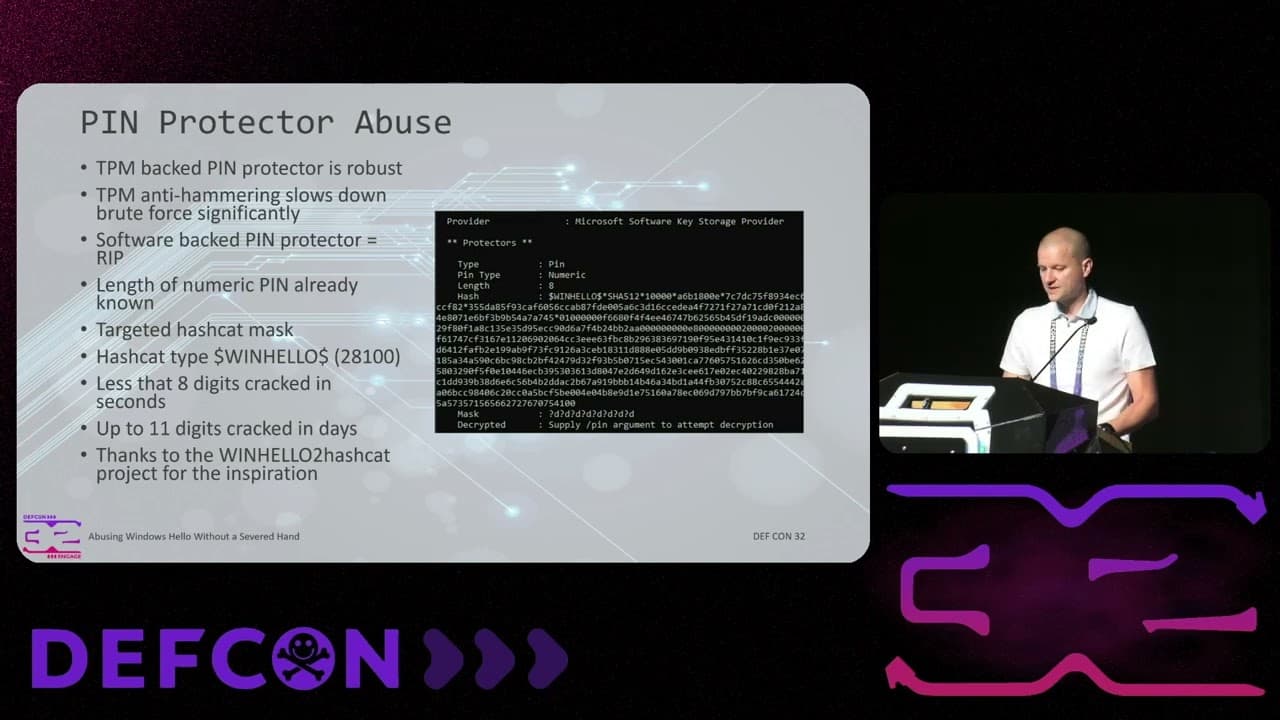
Abusing Windows Hello Without a Severed Hand
Similar Talks

On Your Ocean's 11 Team, I'm the AI Guy

How to Make Badges
