Formidable Adversaries and Threat Actor Panel
This panel discussion focuses on the evolving landscape of threat actors, emphasizing the shift from simple automated attacks to sophisticated, persistent, and resource-intensive campaigns. The speakers analyze the tactics used by state-sponsored and advanced persistent threat (APT) groups, highlighting their use of zero-day vulnerabilities, supply chain compromises, and living-off-the-land techniques. The panel provides strategic advice for security teams on improving basic security hygiene, such as MFA implementation and asset inventory, to defend against these persistent adversaries.
Beyond the IOC: Why Your Threat Hunting Strategy is Failing
TLDR: Modern threat actors have moved past simple, noisy indicators of compromise, favoring sophisticated, living-off-the-land techniques that blend into legitimate administrative traffic. This panel at DEF CON 2024 revealed that relying on static IP blacklists or basic signature detection is a losing battle against persistent adversaries. Security teams must shift their focus toward behavioral analysis and identity-based monitoring to detect the subtle, anomalous patterns that precede a full-scale breach.
Security research often gets trapped in a cycle of chasing the latest CVE or the newest exploit chain. While those are critical, the reality of modern offensive operations is far more mundane and, consequently, much harder to stop. The recent panel on formidable adversaries at DEF CON 2024 made one thing clear: the most dangerous threat actors are not the ones running loud, automated scanners. They are the ones who have already compromised a low-level service account and are patiently moving laterally using the same tools your sysadmins use every day.
The Myth of the Perimeter
We have spent decades building walls, but the walls are porous. The panel highlighted a recurring theme: attackers are no longer looking for the "big gun" exploit to drop a payload. Instead, they are abusing the very infrastructure designed to keep systems running. When an adversary gains access to a network, they do not immediately trigger an alert by running a custom malware binary. They use Remote Desktop Protocol (RDP) or PowerShell to blend in with normal administrative activity.
This is the essence of living-off-the-land. If you are a pentester, you know that the most successful engagements are the ones where you never touch a custom exploit. You use net user to enumerate accounts, vssadmin to delete shadow copies, or standard WMI calls to execute commands across the domain. These are not vulnerabilities; they are features. When an attacker uses these features, they leave no traditional signature for an antivirus or EDR to flag.
Identity is the New Network Edge
The most significant takeaway from the discussion was the shift in focus from network-level indicators to identity-based anomalies. Attackers are increasingly targeting Identification and Authentication Failures to gain a foothold. Once they have valid credentials, they are effectively authorized users.
Consider the common scenario of credential theft via phishing or session hijacking. If an attacker steals a session token, they bypass MFA entirely. They are not "hacking" the system in the traditional sense; they are simply logging in. This is why the panel emphasized that basic security hygiene is the most effective defense against even the most sophisticated state-sponsored groups. If you are not enforcing strict MFA, limiting the scope of service accounts, and monitoring for impossible travel or anomalous login times, you are essentially leaving the front door unlocked.
The Cost of Ignoring Basic Hygiene
One of the most sobering points raised was the "gentrification of security." Organizations often throw money at expensive, high-end security appliances while ignoring the foundational work. You can buy the most advanced XDR on the market, but if your service accounts have domain admin privileges and your internal network is a flat, unsegmented mess, you are just paying for a very expensive alarm system that only goes off after the house has been emptied.
For those of us in the trenches, this means our testing methodology needs to evolve. Stop focusing solely on finding the next remote code execution bug. Start testing the resilience of your identity provider. Can you move laterally from a workstation to a domain controller using only built-in Windows tools? If the answer is yes, you have found a critical path that no amount of threat intelligence will fix.
Moving Toward Behavioral Detection
Defenders need to stop obsessing over Indicators of Compromise (IOCs). An IP address or a file hash is a snapshot in time; it is useless the moment the attacker rotates their infrastructure. Instead, look for behavioral patterns. If a service account that usually only touches two servers suddenly starts querying the entire Active Directory environment, that is a signal. It does not matter what tool they are using; the behavior is inherently suspicious.
The panel suggested that we need to start "speaking the language" of the business to get the resources we need. When you present a risk to an executive, do not talk about the technical nuances of a specific exploit. Talk about the potential for business disruption, the loss of intellectual property, and the cost of a total system recovery. Use the MITRE ATT&CK framework to map these behaviors to real-world risks. It provides a common language that helps bridge the gap between the security team and the people who control the budget.
Ultimately, the goal is to make the cost of the attack higher than the value of the target. If you force an attacker to be noisy, to use custom tools, and to spend weeks on discovery, you have already won half the battle. They will move on to an easier target. The next time you are on an engagement, look past the low-hanging fruit. Find the systemic weaknesses in identity and access management that allow an attacker to operate in plain sight. That is where the real work is, and that is where the most significant impact lies.
Vulnerability Classes
Target Technologies
Attack Techniques
OWASP Categories
Up Next From This Conference
Breaking Secure Web Gateways for Fun and Profit
Listen to the Whispers: Web Timing Attacks That Actually Work
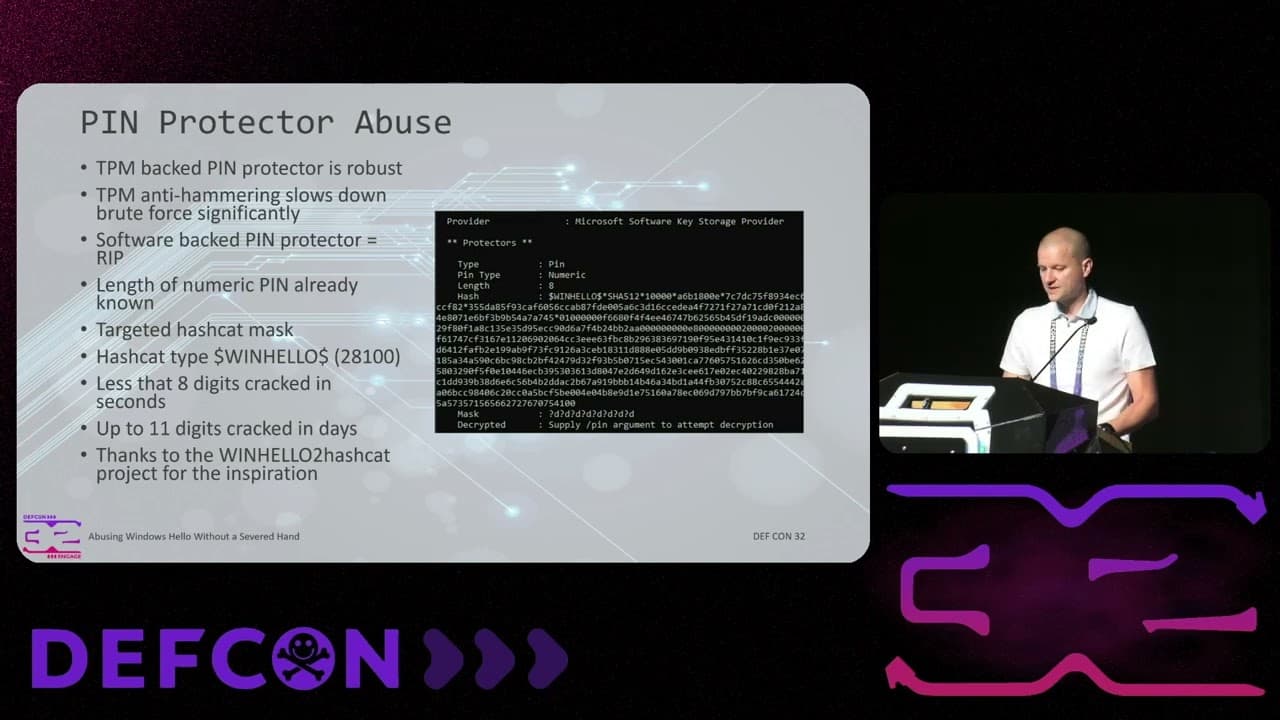
Abusing Windows Hello Without a Severed Hand
Similar Talks

Kill List: Hacking an Assassination Site on the Dark Web
Hacking Apple's USB-C Port Controller