
Hacker Jeopardy 30th Anniversary
This video is a recording of the Hacker Jeopardy event held at DEF CON 32, celebrating the 30th anniversary of the competition. The event features contestants answering trivia questions related to cybersecurity history, famous vulnerabilities, and industry culture. It is a non-technical entertainment segment and does not contain any security research or technical demonstrations.
The Reality of Modern Web Exploitation: Lessons from the Trenches
TLDR: Modern web exploitation is rarely about finding a single magic bullet. It is about chaining low-severity issues, understanding the nuances of modern frameworks, and recognizing that the most dangerous vulnerabilities are often the ones hiding in plain sight. This post breaks down the core mechanics of recent research into SSRF and deserialization chains, providing a roadmap for how to identify these patterns in your next engagement.
Security research is often framed as a hunt for the next zero-day, but the reality for most of us is far more mundane. We spend our time digging through complex application logic, looking for the subtle misconfigurations that turn a standard feature into an entry point. The most effective research isn't about inventing new primitives; it is about finding creative ways to combine existing ones.
The Anatomy of a Chained Exploit
When you are looking at a target, the initial entry point is rarely the end of the story. Most modern applications have enough layers of defense that a single vulnerability is rarely sufficient for full compromise. Instead, you need to think in terms of chains.
Consider the recent surge in Server-Side Request Forgery (SSRF) vulnerabilities. It is easy to dismiss a simple SSRF as a low-impact finding, but that is a mistake. When you find an SSRF, you aren't just looking at a way to ping an internal IP. You are looking at a way to interact with internal services that were never meant to be exposed to the internet.
If you can reach the AWS Metadata Service or a similar internal API, you have effectively bypassed the perimeter. The goal is to find an internal endpoint that performs an action based on the request you send it. This is where the real work begins.
Deep Dive: Deserialization and Logic Flaws
Deserialization vulnerabilities are another area where the complexity of modern frameworks works against the developer. When an application takes user-supplied data and turns it into an object, it is essentially trusting that data to be well-formed. If you can manipulate that data, you can often control the state of the application.
Look at how CVE-2023-23397 was handled. It wasn't just a simple bug; it was a fundamental flaw in how the application processed incoming messages. By sending a specially crafted message, an attacker could force the application to perform an NTLM authentication against a remote server. This is a perfect example of how a seemingly small issue can be escalated into a critical vulnerability.
For a pentester, the key is to identify where the application is performing these transformations. You need to look for:
- Endpoints that accept serialized objects as input.
- Custom protocols that are being used for internal communication.
- Any place where the application state is being persisted to a database or cache.
If you can find a way to inject your own data into these processes, you have a high probability of finding a path to code execution.
Real-World Engagement Strategy
During a typical engagement, you won't have the luxury of time to analyze every single line of code. You need to be surgical. Start by mapping the application's attack surface. Identify every endpoint that interacts with external data. Then, prioritize those endpoints based on the complexity of the processing they perform.
If you find an endpoint that is doing something complex, like parsing XML or processing a file upload, that is where you should focus your efforts. Use tools like Burp Suite to intercept and modify the traffic. Look for ways to trigger errors that reveal information about the underlying technology stack.
When you find a potential vulnerability, don't just report it. Try to exploit it. The process of exploitation will teach you more about the application's security posture than any automated scanner ever could.
The Defensive Perspective
Defenders often focus on patching vulnerabilities as they appear, but this is a losing battle. You need to move toward a model of defense-in-depth. This means:
- Implementing strict input validation at every layer of the application.
- Using secure serialization formats that are not susceptible to object injection.
- Restricting the network access of internal services so that they cannot be reached from the outside.
The goal is to make the cost of exploitation so high that an attacker will move on to an easier target.
What Comes Next
The landscape of web security is constantly shifting, but the fundamental principles remain the same. If you want to stay ahead, you need to keep learning. Don't just rely on the tools you know. Experiment with new techniques, read the latest research, and never stop questioning the assumptions that developers have made about their own code.
The next time you are on an engagement, look for the connections between the small, seemingly insignificant bugs. That is where the real vulnerabilities are hiding. Keep digging, keep testing, and don't let the noise distract you from the signal.
Up Next From This Conference
Breaking Secure Web Gateways for Fun and Profit
Listen to the Whispers: Web Timing Attacks That Actually Work
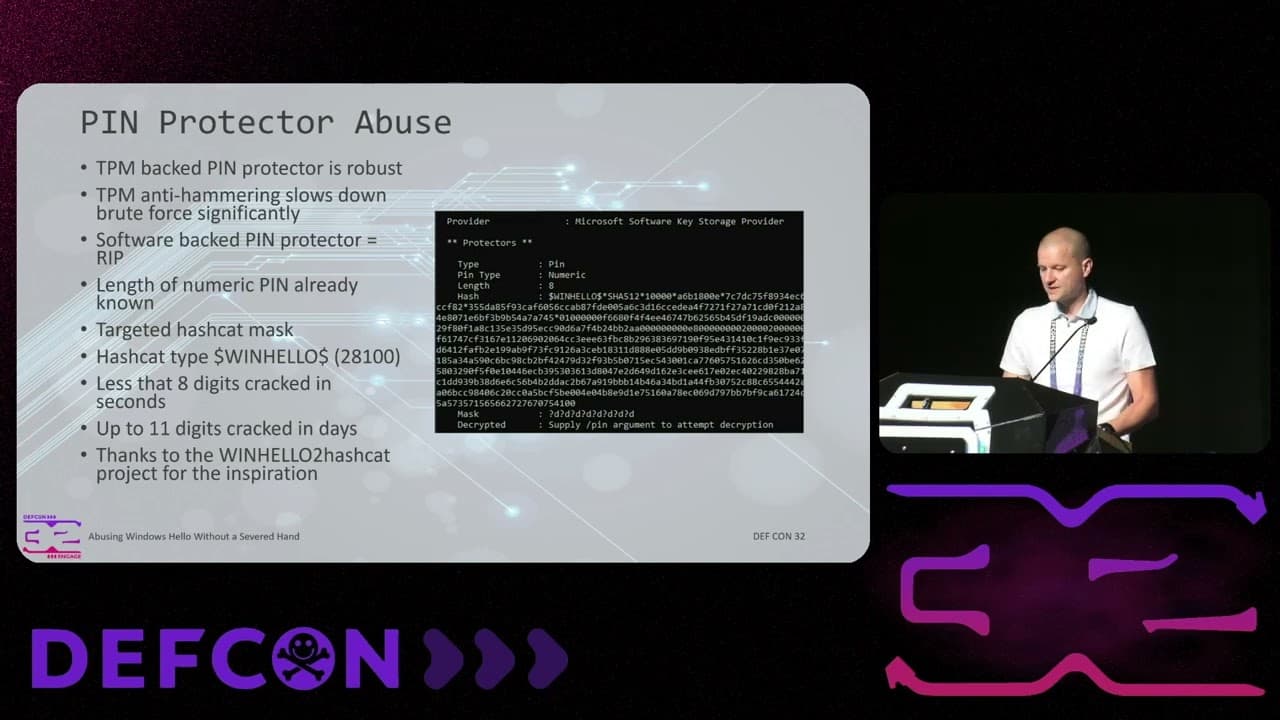
Abusing Windows Hello Without a Severed Hand
Similar Talks

On Your Ocean's 11 Team, I'm the AI Guy

The Anatomy of a Crypto Scam
