Inside the FBI's Secret Encrypted Phone Company 'Anom'
This talk details the FBI's Operation Trojan Shield, a massive undercover operation where the agency operated a secret encrypted phone company called Anom to intercept communications from organized crime syndicates. The operation involved the distribution of modified mobile devices with a hidden backdoor that carbon-copied all messages to an FBI-controlled server. The presentation highlights the use of metadata analysis and automated translation to monitor criminal conspiracies on a global scale. It also discusses the implications of such operations for the ongoing 'going dark' debate regarding law enforcement access to encrypted communications.
How the FBI Built a Global Backdoor into Encrypted Messaging
TLDR: Operation Trojan Shield demonstrates the extreme lengths law enforcement will go to bypass end-to-end encryption by controlling the hardware and OS layer. By distributing modified devices with a hidden carbon-copy backdoor, the FBI turned secure communication platforms into surveillance tools. This case serves as a stark reminder that even the most secure messaging app is useless if the underlying operating system is compromised.
Security researchers often focus on finding vulnerabilities in protocols or application code, but the most effective way to break encryption is to own the device itself. Operation Trojan Shield, detailed by Joseph Cox at DEF CON 2024, is the ultimate case study in supply chain compromise. The FBI did not need to crack PGP or break the underlying crypto of the Anom messaging app. Instead, they simply ensured that every message sent was carbon-copied to their own servers before it was ever encrypted.
The Mechanics of the Backdoor
The Anom platform was not a standard app store download. It was a curated ecosystem of modified hardware, including Google Pixels, Samsung Galaxies, and Xiaomi devices, all running a custom operating system called ArcaneOS. This OS was a fork of GrapheneOS, stripped of standard features and replaced with a messaging interface hidden behind a calculator app.
From a technical perspective, the "backdoor" was not a vulnerability in the traditional sense of a buffer overflow or a logic flaw. It was a feature. The messaging application was designed to send a copy of every plaintext message to a hidden "Bot" contact. This contact was an FBI-controlled node. Because the application handled the message before the encryption process, the FBI received the data in the clear.
This technique effectively bypasses the OWASP Mobile Top 10 concerns regarding data storage and focuses instead on the integrity of the execution environment. If the OS itself is malicious, no amount of application-level hardening can protect the user.
Metadata and Automated Surveillance
While the content of the messages was valuable, the metadata was the real force multiplier. The FBI’s "Arcane Manager" portal allowed agents to visualize the entire social graph of the criminal underworld. By mapping who was talking to whom, and at what frequency, they could identify key nodes in drug trafficking networks without needing to read every single message.
The system also utilized automated translation services to handle the global nature of the operation. Since the messages were intercepted in plaintext, the FBI could feed them into automated systems to flag specific keywords or patterns. This is a classic application of T1592 (Gather Victim Host Information) on a massive, state-sponsored scale. The ability to pivot from a single intercepted device to a global network map is why this operation was so successful.
Why This Matters for Pentesters
For those of us conducting red team engagements or security assessments, the lesson is clear: trust nothing that you do not control. If you are testing a secure communication device, you must verify the integrity of the firmware and the OS. A device that claims to be "hardened" or "encrypted" is often just a black box with a proprietary OS that could be doing anything.
During an engagement, if you encounter a device that seems to be "locked down" or "secure," your first step should be to analyze the network traffic at the gateway level. Look for unexpected outbound connections to unknown endpoints. In the case of Anom, the devices were constantly communicating with AWS-hosted infrastructure that acted as the ingestion point for the intercepted data.
The Defensive Reality
Defending against this level of compromise is nearly impossible for the end user. If the hardware manufacturer or the OS provider is compromised, the user has already lost. However, for organizations, the defense lies in Zero Trust Architecture. You cannot assume that a device is secure simply because it is running an "encrypted" app.
Organizations should implement strict device management policies that prevent the use of unauthorized hardware. If a device is not part of a managed, auditable fleet, it should be treated as a potential surveillance node. The "going dark" debate will continue, but as long as law enforcement can influence the supply chain, they will always have a way to turn the lights back on.
The success of Operation Trojan Shield was not due to a failure of cryptography, but a failure of trust in the platform. As researchers, we need to stop assuming that the underlying OS is a neutral party. When you are auditing a secure system, start at the kernel and work your way up. If the foundation is compromised, the entire structure is just a front for whoever holds the keys.
Vulnerability Classes
Target Technologies
Attack Techniques
Up Next From This Conference
Breaking Secure Web Gateways for Fun and Profit
Listen to the Whispers: Web Timing Attacks That Actually Work
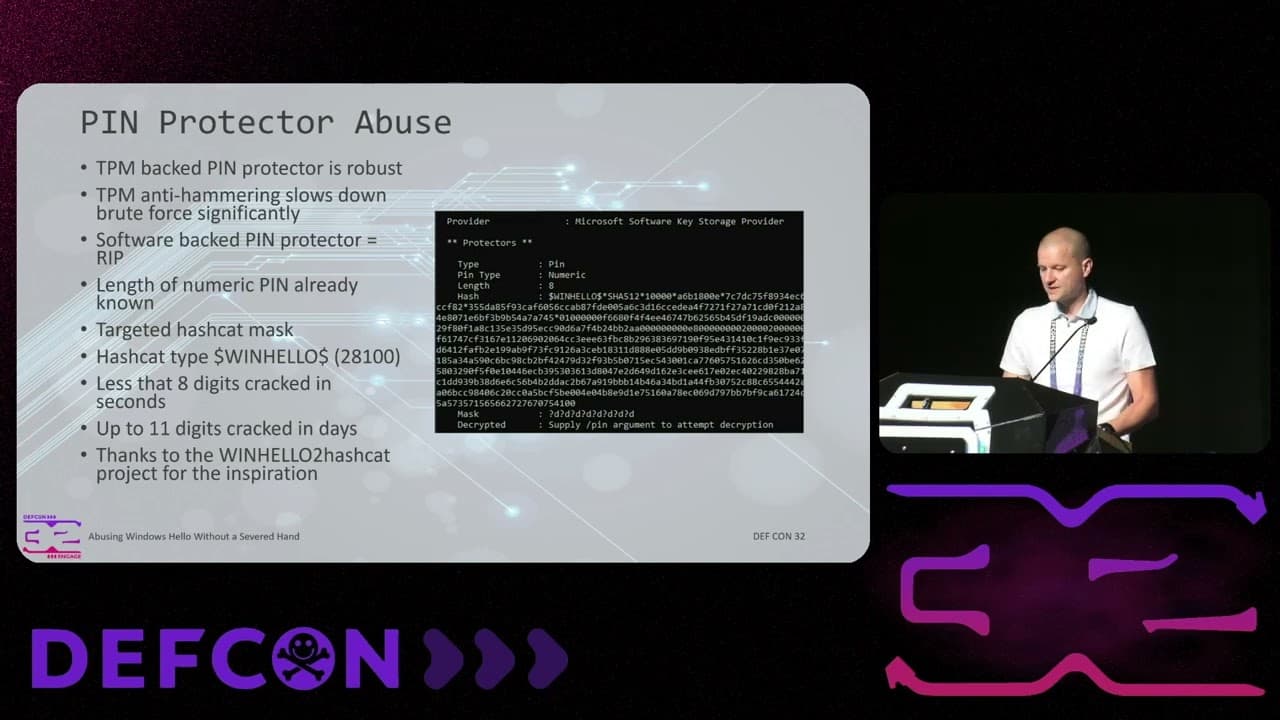
Abusing Windows Hello Without a Severed Hand
Similar Talks
Kill List: Hacking an Assassination Site on the Dark Web
Unmasking the Snitch Puck: The Creepy IoT Surveillance Tech in the School Bathroom