
Quantum Security: Myths, Facts, and Realities
This panel discussion addresses the security implications of quantum computing on current cryptographic standards, specifically focusing on the threat to RSA and elliptic curve cryptography. The speakers clarify the current state of quantum hardware, distinguishing between noisy intermediate-scale quantum (NISQ) devices and the requirements for fault-tolerant, error-corrected quantum computers. The session emphasizes the necessity of transitioning to post-quantum cryptography (PQC) and highlights the risks associated with 'harvest now, decrypt later' attacks on long-lived sensitive data. The panelists also discuss the practical challenges of deploying hybrid cryptographic solutions and the current limitations of quantum key distribution (QKD).
Why Your Current Cryptographic Inventory is Already Obsolete
TLDR: Quantum computers capable of breaking RSA and elliptic curve cryptography are not here yet, but the "harvest now, decrypt later" threat is real for long-lived sensitive data. Organizations must prioritize an inventory of their cryptographic assets to prepare for the transition to post-quantum algorithms. While hybrid cryptographic deployments offer a bridge, they introduce significant implementation complexity and potential for new vulnerabilities.
Quantum computing often feels like a distant, academic threat, something relegated to physics labs or high-level government strategy documents. However, the reality for security researchers and penetration testers is much more immediate. The threat is not just about the eventual arrival of a fault-tolerant quantum computer; it is about the data being intercepted and stored today. If you are managing infrastructure that handles data with a shelf life of ten or twenty years, you are already facing a risk that cannot be patched away with a simple software update.
The Reality of the Quantum Threat
Current cryptographic standards like RSA and elliptic curve cryptography rely on mathematical problems that are computationally infeasible for classical computers to solve within a reasonable timeframe. Quantum algorithms, specifically Shor’s algorithm, change this dynamic entirely. A sufficiently powerful quantum computer would render these schemes insecure.
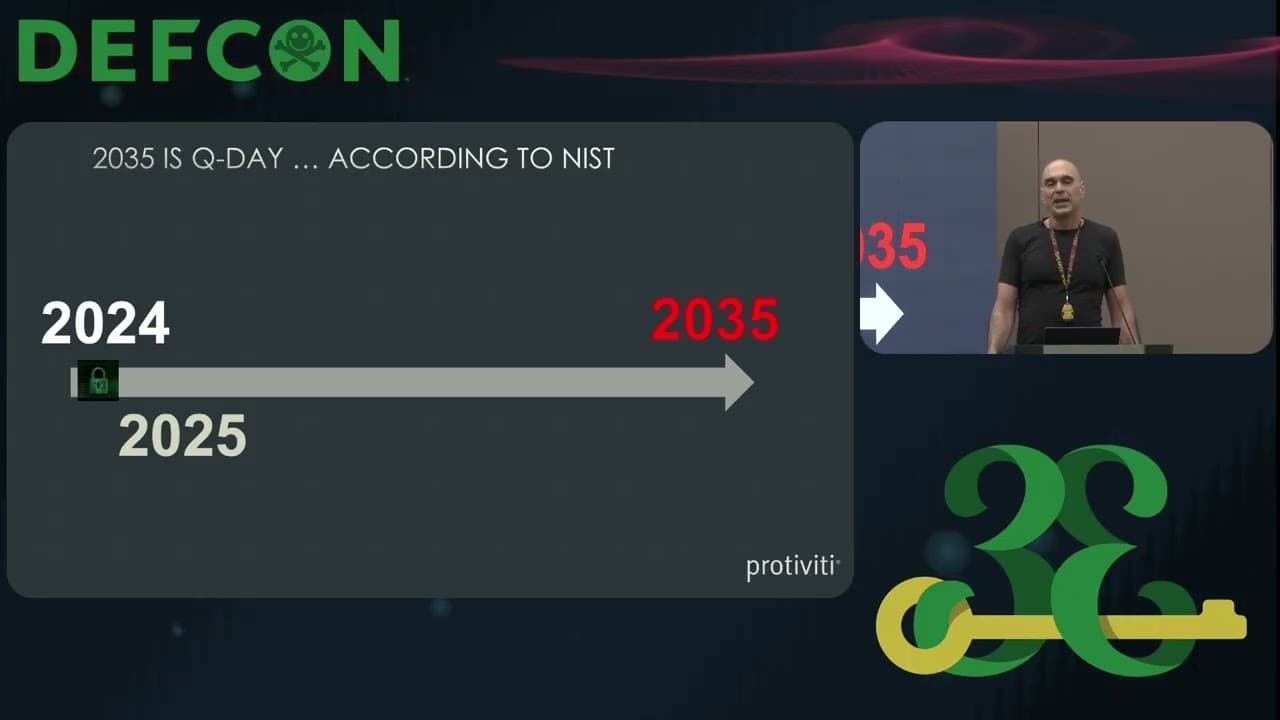
The most pressing concern is the "harvest now, decrypt later" strategy. Adversaries are currently intercepting and storing encrypted traffic—TLS, SSH, and IPsec tunnels—with the intent to decrypt it once quantum hardware matures. If your organization transmits genomic data, long-term intellectual property, or sensitive legal records, that data is effectively compromised the moment it hits the wire.
Beyond the Hype of Quantum Supremacy
Discussions around quantum computing are frequently clouded by marketing buzzwords like "quantum supremacy" or "quantum advantage." These terms are largely irrelevant to the security practitioner. What matters is the distinction between NISQ (Noisy Intermediate-Scale Quantum) devices and the fault-tolerant, error-corrected systems required for cryptanalysis.
We are currently in the NISQ era. These machines are noisy, error-prone, and lack the logical qubit count necessary to execute Shor’s algorithm at scale. A logical qubit is an error-corrected unit of information, and current hardware requires thousands of physical qubits to create a single stable logical qubit. We are nowhere near the millions of physical qubits required to break standard 2048-bit RSA keys. However, the lack of current capability does not equate to a lack of future risk.
The Challenge of Hybrid Deployments
Transitioning to Post-Quantum Cryptography (PQC) is the only viable long-term defense. Many organizations are looking at hybrid cryptographic schemes, which combine classical algorithms with PQC algorithms. The logic is sound: if the PQC implementation has a hidden flaw, the classical layer still provides the baseline security we are accustomed to.
From a pentesting perspective, this introduces a massive attack surface. Hybrid implementations are complex. They require managing two sets of keys, two sets of handshake logic, and increased packet sizes that can trigger fragmentation issues in network appliances. If you are testing a system using a hybrid approach, focus your efforts on the negotiation logic. Are there edge cases where the system falls back to the weaker classical algorithm? Can you force a downgrade attack by manipulating the handshake?
Assessing Your Cryptographic Inventory
Defenders cannot protect what they cannot see. The first step in any quantum-readiness program is a comprehensive audit of the cryptographic inventory. You need to know exactly where RSA and ECC are being used across your stack. This includes:
- Hardcoded keys in legacy applications.
- TLS configurations on internal load balancers.
- VPN tunnels connecting remote offices.
- Hardware security modules (HSMs) that may not support PQC algorithms.
For researchers and bug bounty hunters, this is a massive, untapped area for discovery. Look for implementations that rely on outdated OWASP A02:2021-Cryptographic Failures patterns. If you find a system that is hard-coded to use a specific, non-upgradable cryptographic library, you have found a system that will be impossible to secure against future quantum threats.
Moving Forward
Do not wait for a "quantum-ready" vendor badge to start your work. The transition to PQC will be a multi-year effort, likely spanning a decade or more. Start by identifying the most sensitive, long-lived data in your environment and evaluate the cryptographic protocols protecting it. If you are a pentester, start asking questions about the cryptographic agility of the systems you assess. Can the protocol be updated without a complete re-architecture? If the answer is no, you have identified a critical long-term risk that needs to be on the roadmap today. The quantum threat is a marathon, not a sprint, but the starting gun fired years ago.
Vulnerability Classes
Attack Techniques
OWASP Categories
All Tags
Up Next From This Conference
Similar Talks
Surveilling the Masses with Wi-Fi Positioning Systems
Post-Quantum Panic: When Will the Cracking Begin, and Can We Detect It?
