Remote Code Execution via MIDI Messages
The speaker demonstrates a remote code execution vulnerability in Yamaha synthesizers by crafting malicious MIDI System Exclusive (SysEx) messages. By reverse-engineering the device's firmware and identifying a shell interface accessible via SysEx, the researcher was able to achieve arbitrary memory writes. This technique allows for full control over the device, including the ability to manipulate the LCD display and execute custom code. The talk highlights the security risks inherent in embedded systems that lack proper input validation for communication protocols.
Exploiting Yamaha Synthesizers via Malicious MIDI SysEx Messages
TLDR: Researchers discovered a critical vulnerability in Yamaha synthesizers that allows for remote code execution through crafted MIDI System Exclusive (SysEx) messages. By reverse-engineering the device firmware, the team identified an undocumented shell interface that accepts arbitrary memory write commands. This flaw enables attackers to gain full control over the hardware, including manipulating the LCD display and executing custom code, simply by sending a malicious MIDI file.
Hardware security often feels like a black box, but the reality is that most embedded devices are just poorly secured computers running on specialized silicon. When we look at consumer electronics like synthesizers, we rarely consider them as attack vectors. However, the research presented at DEF CON 2025 on Yamaha synthesizers proves that even musical instruments can be turned into execution platforms if the communication protocols are left wide open.
The Anatomy of the MIDI SysEx Vulnerability
The core of this research centers on the MIDI protocol, specifically System Exclusive (SysEx) messages. SysEx messages are designed to allow manufacturers to send device-specific data, such as patch settings or firmware updates, to their hardware. Because these messages are inherently manufacturer-defined, they often bypass standard input validation checks that might be present in more common network protocols.
The researchers started by reverse-engineering the firmware of a Yamaha PSR-E433. By dumping the flash memory and analyzing the binary, they identified a hidden shell interface. This shell was not intended for end-users, but it was fully functional. It accepted commands like d for memory reads and m for memory writes. The critical issue here is that the device did not require any authentication to access this shell, and the input handling logic was susceptible to exploitation.
From Shell Access to Arbitrary Code Execution
Once the shell was identified, the path to code execution became clear. The shell provided a mechanism to write data directly to memory. Since the device architecture is based on ARM, the researchers could craft a malicious payload in ARM assembly, convert it into a series of memory write commands, and wrap those commands in a SysEx message.
The exploitation flow looks like this:
- Craft the Payload: Write a small piece of ARM assembly that performs the desired action, such as printing a string to the LCD.
- Convert to SysEx: Translate the assembly instructions into the memory write format expected by the shell.
- Trigger the Exploit: Send the resulting MIDI file to the synthesizer.
The device processes the SysEx message, interprets the embedded commands, and executes the payload. Because the shell operates with high privileges, the attacker effectively gains full control over the device's execution flow. The researchers demonstrated this by making the synthesizer display custom text and even play "Bad Apple" on its LCD, a classic test for embedded display capabilities.
Real-World Implications for Pentesters
For those of us performing security assessments on IoT or embedded devices, this research serves as a reminder that communication protocols are often the weakest link. If you are testing a device that supports MIDI or any similar proprietary data exchange protocol, do not assume it is secure just because it is not connected to the internet.
During a penetration test, you should focus on identifying undocumented interfaces. Use tools like Ghidra to disassemble the firmware and look for command parsers or shell-like structures. If you find a command interface, test it for input validation flaws. Can you read memory? Can you write to memory? If you can write to memory, you can likely achieve code execution.
The impact of this vulnerability is significant. An attacker could potentially brick the device, exfiltrate sensitive configuration data, or use the device as a pivot point in a larger network if the synthesizer is connected to a computer via USB. The fact that this vulnerability was found in a wide range of Yamaha products, from 2012 models to those released as recently as 2022, highlights the persistence of these security oversights.
Defensive Considerations
Defending against this type of injection requires a shift in how we approach embedded firmware development. Manufacturers must treat all incoming data, including proprietary protocol messages, as untrusted. Implementing strict input validation and sanitization is non-negotiable. Furthermore, production firmware should have debug interfaces like JTAG or hidden shells completely disabled or protected by strong, hardware-backed authentication.
For developers, the OWASP Injection Prevention Cheat Sheet provides a solid foundation for understanding how to mitigate these risks. While it is primarily focused on web applications, the core principles of separating data from control instructions apply to any system that processes input.
This research is a brilliant example of how curiosity and persistence can uncover deep-seated vulnerabilities in unexpected places. It forces us to look beyond the obvious attack surfaces and consider the entire ecosystem of the device. If you are working with embedded systems, take the time to map out the communication protocols and look for the hidden doors. You might be surprised by what you find.
Vulnerability Classes
Target Technologies
OWASP Categories
Up Next From This Conference

DisguiseDelimit: Exploiting Synology NAS with Delimiters and Novel Tricks
Browser Extension Clickjacking: One Click and Your Credit Card Is Stolen
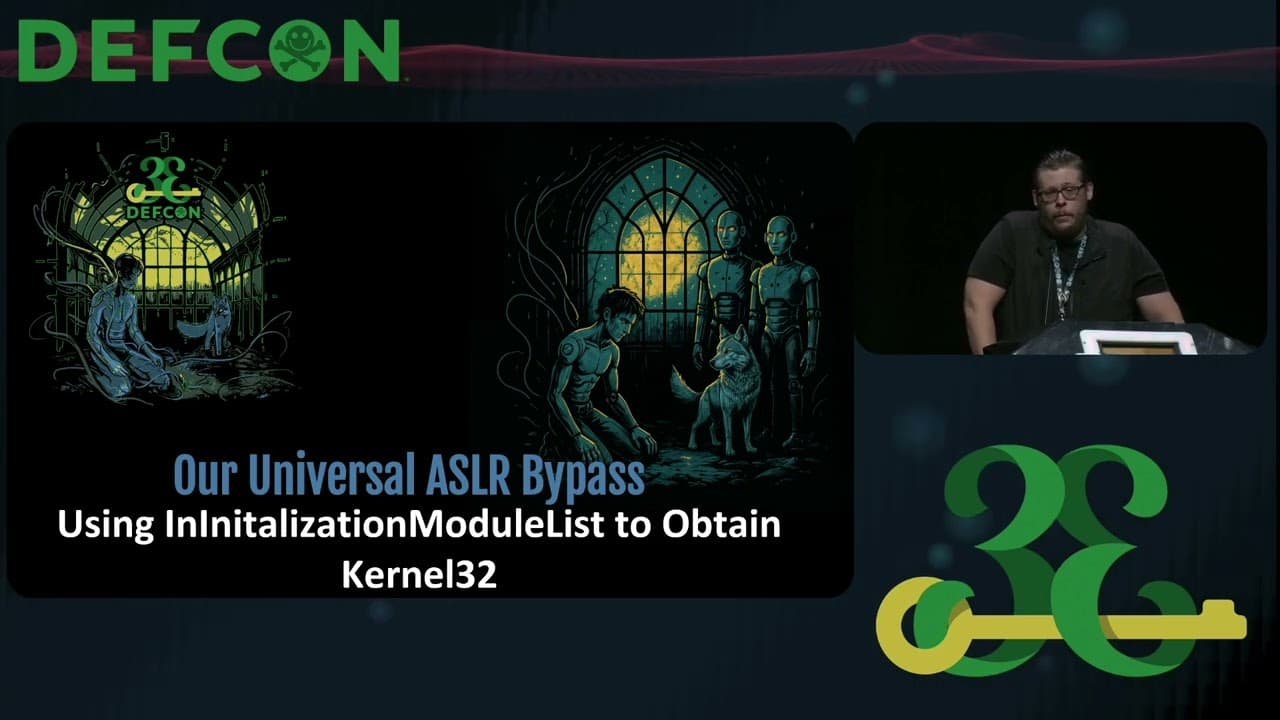
Can't Stop the ROP: Automating Universal ASLR Bypasses for Windows
Similar Talks
Kill List: Hacking an Assassination Site on the Dark Web
Hacking Apple's USB-C Port Controller