SBOMs: The Missing Link
This talk explores the implementation and operationalization of Software Bill of Materials (SBOMs) to enhance supply chain security and vulnerability management. It demonstrates how to integrate SBOMs into the product development lifecycle to accelerate the identification of vulnerable components during security incidents. The speaker highlights the challenges of managing SBOMs for complex, multi-year product portfolios and the necessity of automated, machine-readable formats for effective risk analysis.
Beyond the Spreadsheet: Why Your SBOM Strategy is Likely Failing
TLDR: Software Bill of Materials (SBOMs) are becoming a mandatory requirement for critical infrastructure, but most organizations are treating them as static compliance documents rather than dynamic security assets. This post breaks down how to move from manual, spreadsheet-based tracking to automated, machine-readable workflows that actually help during incident response. If you are a researcher or pentester, understanding how to query these artifacts can reveal hidden dependencies and vulnerable versions that aren't immediately obvious in a standard scan.
Compliance mandates often turn security research into a box-ticking exercise. We see this constantly with the push for SBOMs. Organizations are generating these files because a contract or a government regulation demands it, then burying them in a SharePoint folder where they rot. This is a massive missed opportunity. If you are performing a penetration test or hunting for bugs in a complex product, an SBOM is essentially a map of the target's internal architecture. It tells you exactly what libraries are being used, which versions are present, and where the potential attack surface lies.
The Reality of Dependency Hell
Most developers and security teams think of SBOMs as a list of open-source libraries. That is a dangerous oversimplification. A real-world SBOM for a piece of industrial control firmware or a complex software application includes proprietary code, commercial libraries, and the underlying operating system.
When a vulnerability like Log4Shell (CVE-2021-44228) or its follow-up CVE-2021-45046 hits, the standard response is to run a scanner and hope for the best. But scanners often miss transitive dependencies—the libraries that your libraries are calling. If you are testing a target, you don't care about the top-level manifest. You care about the deep, nested dependencies that are rarely patched.
The technical challenge here is that SBOMs are often generated in different formats, and they are rarely updated with the same frequency as the code itself. If you are looking at an SBOM from three years ago, it is useless. To make these artifacts useful, they must be tied to the build pipeline. Every time a binary is compiled, a new, machine-readable SBOM should be generated. This allows you to perform a dependency lookup that is actually accurate to the version of the software you are currently attacking.
Why Pentesters Should Care About SBOMs
During an engagement, you are often flying blind regarding the specific versions of third-party components embedded in a target. You might see a web server header or a specific API behavior, but you don't know what's under the hood. If you can get your hands on an SBOM, you can cross-reference the components against known vulnerabilities.
For example, consider OpenSSL vulnerabilities like CVE-2022-0778 or CVE-2022-1292. If you are testing a device that uses an older version of OpenSSL, you might be able to trigger a denial of service or bypass authentication. Without an SBOM, you are guessing. With one, you have a list of targets.
Tools like Cybeats are starting to bridge this gap by providing platforms that ingest these SBOMs and allow for automated vulnerability management. As a researcher, you should be looking for these files in public-facing documentation, vendor security portals, or even by fuzzing endpoints that might serve up build artifacts. If a vendor provides an SBOM, they are essentially handing you a vulnerability report for their own product.
The Defensive Perspective
Blue teams are struggling with the sheer volume of data that SBOMs generate. The goal for defenders is to move away from manual impact assessments. When a new CVE is announced, the security team shouldn't have to email every product owner and ask, "Are we affected?" They should be able to query a centralized database of SBOMs and get an immediate answer.
This requires a shift in how we handle security disclosures. We need to move toward a model like the Vulnerability Exploitability eXchange (VEX), which allows vendors to communicate whether a specific product is actually affected by a vulnerability. Just because a library is present doesn't mean the vulnerable code path is reachable. VEX helps filter out the noise, allowing teams to focus on the vulnerabilities that actually pose a risk.
Moving Forward
If you are building a product, stop treating SBOMs as a compliance burden. Start treating them as a core part of your security telemetry. If you are a pentester, start asking for them. If a vendor refuses to provide an SBOM, ask yourself why. They are either hiding the fact that their product is a house of cards, or they have no idea what is actually inside their own build.
The future of supply chain security isn't about having a list of files; it's about having a searchable, version-controlled, and automated inventory of your entire software stack. We have the tools to do this. We just need to stop treating the data like it's a static document and start treating it like the critical intelligence it is. The next time you are on an engagement, don't just look for the low-hanging fruit. Look for the dependencies that everyone else is ignoring. That is where the real bugs are hiding.
Vulnerability Classes
Tools Used
Target Technologies
All Tags
Up Next From This Conference
Breaking Secure Web Gateways for Fun and Profit
Listen to the Whispers: Web Timing Attacks That Actually Work
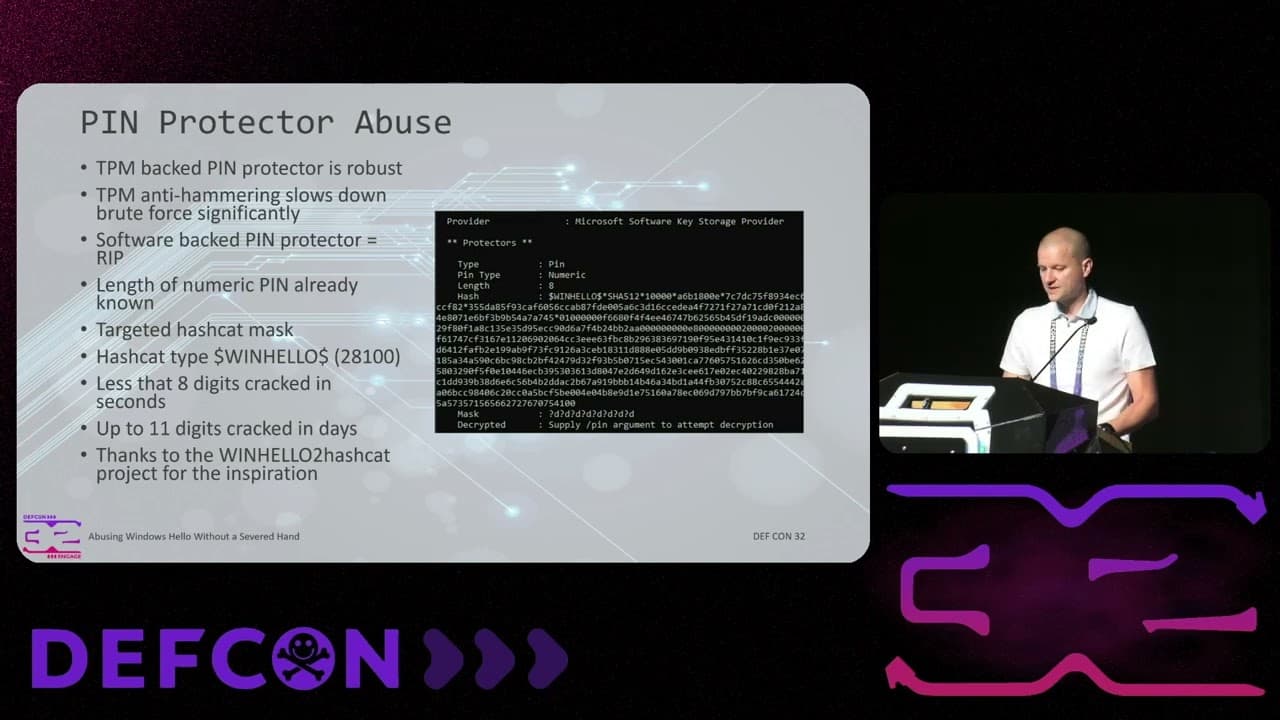
Abusing Windows Hello Without a Severed Hand
Similar Talks
Unmasking the Snitch Puck: The Creepy IoT Surveillance Tech in the School Bathroom

Firewalls Under Fire: China's Ongoing Campaign to Compromise Network Protection Devices