SQL Injection Lower Decks: Smuggling Queries at the Protocol Level
This talk demonstrates a novel SQL injection technique that exploits integer overflow vulnerabilities in database client libraries to smuggle malicious queries at the wire protocol level. By manipulating the length fields of binary protocol messages, an attacker can cause the database to misinterpret the message boundaries and execute injected SQL statements. The research highlights how these vulnerabilities affect various database drivers across multiple programming languages and demonstrates a successful exploit against the Harbor container registry. The presentation provides a methodology for identifying and testing these protocol-level vulnerabilities while emphasizing the importance of secure integer handling in memory-safe languages.
SQL Injection via Protocol Smuggling: Bypassing Filters at the Wire Level
TLDR: This research reveals how integer overflow vulnerabilities in database client libraries allow attackers to smuggle malicious SQL queries past application-level filters. By manipulating binary protocol length fields, researchers successfully bypassed security controls in systems like the Harbor container registry. Pentesters should look for these protocol-level desync issues when testing applications that handle large, user-controlled binary data streams.
SQL injection is often treated as a solved problem at the application layer. We rely on parameterized queries, ORMs, and input validation to sanitize user data before it ever touches the database. But what happens when the vulnerability isn't in your code, but in the way your database driver interprets the network protocol itself? The recent research presented at DEF CON 2024 on SQL Injection Lower Decks shifts the focus from the high-level application logic down to the binary wire protocol, proving that even "memory-safe" languages are susceptible to protocol-level smuggling.
The Mechanics of Protocol Smuggling
Most database drivers communicate using binary protocols that rely on Type-Length-Value (TLV) structures. The driver tells the database the type of message it is sending and, crucially, how many bytes follow. If an attacker can manipulate that length field, they can force the database to misinterpret where one message ends and the next begins.
The core of this research centers on integer overflows during the calculation of these message lengths. In many Go or Rust-based drivers, the length of a message is calculated as a 64-bit integer, but the protocol itself might only support a 32-bit field. When the driver truncates this value to fit the protocol specification, it creates a mismatch. The application thinks it is sending a massive, legitimate payload, but the database receives a truncated length, causing it to process only a portion of the data as the intended query and treat the remaining "overflow" data as a new, separate command.
Consider a scenario where an application takes a user-provided ID and uses it in a query. If the driver is vulnerable, an attacker can provide a massive, carefully crafted string that triggers an integer overflow. The driver sends the query, but the database sees the overflowed length and stops parsing the first query prematurely. The remaining bytes of the attacker's string are then interpreted by the database as a second, entirely distinct SQL command. This is essentially Request Smuggling applied to database protocols.
Exploiting the Harbor Registry
The researchers demonstrated this technique against Harbor, a widely used open-source container registry. Harbor uses the pgx driver to communicate with PostgreSQL. By sending a specially crafted request that triggered an integer overflow in the driver, they were able to inject an INSERT statement that added an administrative user to the database.
The exploit required a "NOP sled" of sorts—a series of small, valid protocol messages that allowed the attacker to "jump" over the legitimate query structure until they reached the point where they could inject their own malicious SQL. Because the application-level filters were only checking the initial input and not the final, mangled binary stream sent over the wire, the malicious query executed with the privileges of the database user.
Real-World Testing and Impact
For a pentester, this vulnerability class is a goldmine because it exists entirely beneath the radar of standard web application firewalls (WAFs) and input sanitization routines. When you are testing an application, you are usually looking for UNION SELECT or OR 1=1 patterns. This research suggests you should also be looking for endpoints that accept large, binary-heavy inputs—like file uploads, image processing services, or registry APIs—and testing how the underlying drivers handle those inputs.
If you are performing a white-box assessment, check the dependencies in your go.mod or Cargo.toml files. The researchers found that several popular drivers, including pgx and the Rust MongoDB driver, were vulnerable before their respective patches. If you are in a black-box environment, look for endpoints that interact with databases and attempt to send unusually large payloads. If the application returns a 500 error or behaves inconsistently, it might be a sign that the driver is struggling to parse the protocol.
Defensive Considerations
Defending against protocol-level smuggling is difficult because the vulnerability is often in a third-party library. The most effective mitigation is to keep your database drivers updated to the latest versions, as the maintainers of pgx and Npgsql have already released patches that include proper integer overflow checks.
Beyond patching, ensure that your application-level input validation is as strict as possible. While the WAF cannot see the protocol-level smuggling, it can still block the malicious SQL syntax if it reaches the application layer. However, the true fix is at the driver level. If you are a developer, ensure that your code performs explicit bounds checking before casting integers, especially when dealing with network protocols or file formats.
This research serves as a reminder that the "stack" is only as secure as its lowest common denominator. We spend so much time securing the application layer that we often forget the complex, binary protocols that act as the foundation of our infrastructure. If you cannot find a vulnerability at the surface, go a level deeper. The protocol itself is often the most interesting part of the attack surface.
Vulnerability Classes
Target Technologies
Attack Techniques
OWASP Categories
All Tags
Up Next From This Conference
Breaking Secure Web Gateways for Fun and Profit
Listen to the Whispers: Web Timing Attacks That Actually Work
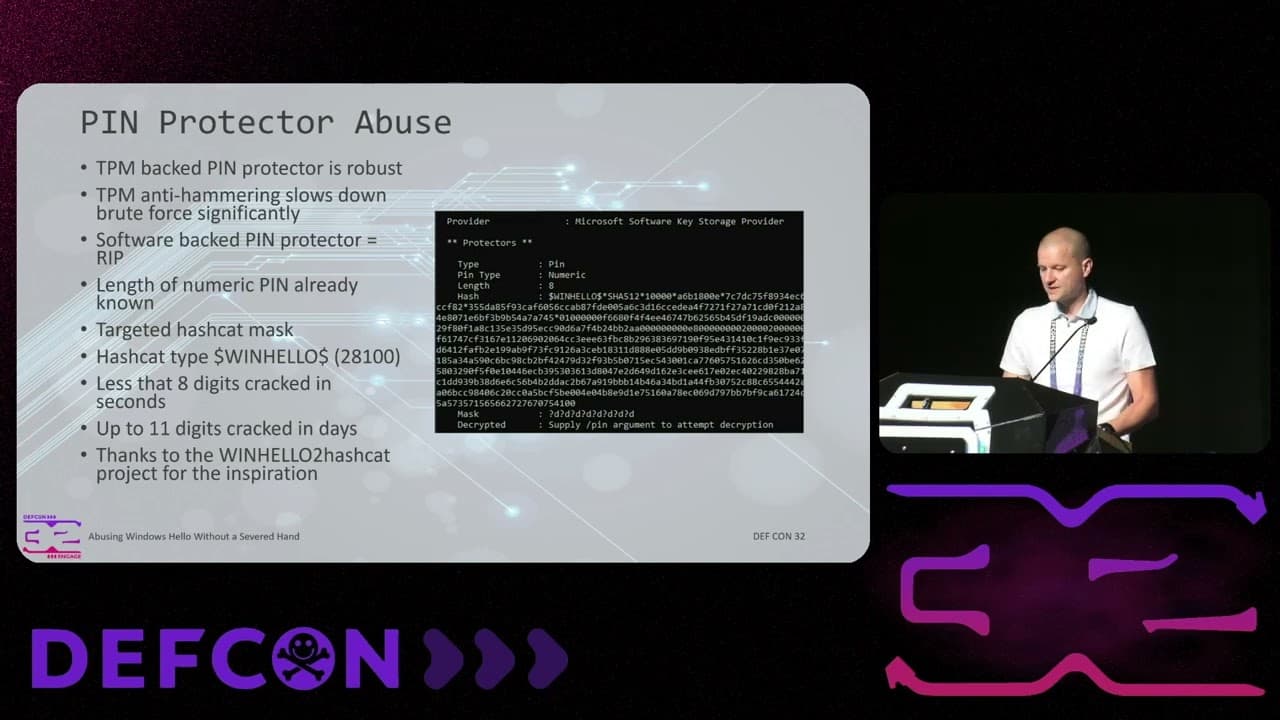
Abusing Windows Hello Without a Severed Hand
Similar Talks
Kill List: Hacking an Assassination Site on the Dark Web

Firewalls Under Fire: China's Ongoing Campaign to Compromise Network Protection Devices