Securing Elections: A Global Perspective
This panel discussion explores the critical intersection of cybersecurity and election integrity, focusing on the threats posed by foreign state actors and disinformation campaigns. The speakers analyze the vulnerabilities in election infrastructure, including voter registration systems and ballot counting processes, and discuss strategies for building resilience against cyberattacks. The session emphasizes the importance of multi-layered defense, information sharing, and the role of election officials as the primary subject matter experts in securing democratic processes.
The Reality of Election Infrastructure Security: Beyond the Disinformation Narrative
TLDR: Election security is not just about preventing ballot tampering; it is a complex, multi-layered challenge involving physical, operational, and cyber controls. While disinformation and deepfakes dominate headlines, the real risk lies in the intersection of legacy infrastructure and modern, automated attack vectors. Pentesters and researchers should focus on the resilience of voter registration systems and the auditability of the entire election lifecycle rather than just the final vote count.
Election integrity is often framed as a binary: either the system is secure, or it is compromised. This perspective is dangerous because it ignores the reality of how election infrastructure actually functions. The recent panel at Black Hat 2024, featuring leadership from CISA and the UK’s National Cyber Security Centre, moved the conversation away from the abstract fear of "hacked elections" toward the concrete, messy reality of defending distributed, heterogeneous systems. For those of us in the trenches, the takeaway is clear: the threat model is shifting from simple data theft to the disruption of trust.
The Mechanics of Election Disruption
When we talk about election security, we are rarely talking about a single, monolithic voting machine. We are talking about a sprawling ecosystem of voter registration databases, electronic poll books, ballot marking devices, and tabulators. The attack surface is massive, and much of it is managed by local jurisdictions with varying levels of technical maturity.
The primary threat vectors discussed by the panel align with standard offensive playbooks: Denial of Service (DoS) against reporting infrastructure, phishing campaigns targeting election officials, and the use of ransomware to lock critical systems. The goal of these attacks is not necessarily to change a vote count, which is often physically isolated or paper-backed, but to create enough friction and uncertainty to undermine public confidence. If an attacker can delay the reporting of results or make a registration database unavailable on election day, they have achieved a successful disruption.
The Challenge of Distributed Infrastructure
One of the most critical points raised during the discussion was the decentralized nature of election administration. In the United States, elections are run at the county level. This means that security controls are not uniform. A pentester looking at this space will find a mix of modern, cloud-hosted registration systems and legacy, air-gapped tabulators.
The risk here is not just the technology itself, but the supply chain. When election officials rely on third-party vendors for electronic poll books or ballot marking devices, they inherit the security posture of those vendors. If a vendor’s update mechanism is compromised, the impact is not limited to one county; it is systemic. Researchers should pay close attention to how these systems handle updates and remote management. If you are auditing these environments, focus on the OWASP Top 10 risks, specifically those related to broken access control and insecure design, which are rampant in legacy administrative interfaces.
Disinformation as a Technical Vector
While disinformation is often treated as a policy or social issue, it functions as a technical attack vector. The panel highlighted how foreign actors use commercial PR firms and social media to amplify narratives that erode trust. From a technical perspective, this is an exercise in T1583-acquire-infrastructure and T1566-phishing.
The use of generative AI to create deepfakes or automated robocalls—like the incident in New Hampshire where a fake presidential voice told voters not to participate—is a direct attempt to manipulate the electorate. For security researchers, the challenge is that these campaigns are designed to be "noisy." They are meant to trigger a response from the public and the media, which then forces election officials to divert resources from technical defense to crisis communication. This is a classic diversionary tactic.
Building Resilience Through Auditability
Defending against these threats requires a shift in mindset. We cannot rely on perimeter security alone. The panel emphasized that the most resilient systems are those that are auditable. If a system is compromised, can you prove the integrity of the results? This is why paper trails are non-negotiable.
For the pentester, this means your engagement should not just look for vulnerabilities in the software; it should test the integrity of the audit process. Can the logs be tampered with? Is there a clear chain of custody for the digital data? If you are working with a blue team, help them map out the "blast radius" of a potential compromise. If the voter registration database is hit with ransomware, what is the manual fallback? If the reporting website is taken down by a DDoS attack, how are results verified?
What Comes Next
The landscape of election security is evolving faster than the policy frameworks designed to govern it. We are seeing a move toward more sophisticated, multi-stage attacks that combine technical exploitation with psychological operations. As researchers, our role is to continue stress-testing these systems, not just for the sake of finding bugs, but to help build the operational resilience that keeps the process functional under duress.
If you are interested in this space, start by looking at the CISA Election Security resources. They provide a solid baseline for understanding the current defensive posture. The goal is not to build an unhackable system—that doesn't exist—but to build a system that can withstand an attack, recover quickly, and provide verifiable results that the public can trust. The next election cycle will be a test of that resilience, and the work we do today will determine the outcome.
Vulnerability Classes
Target Technologies
Attack Techniques
All Tags
Up Next From This Conference

Similar Talks
Kill List: Hacking an Assassination Site on the Dark Web
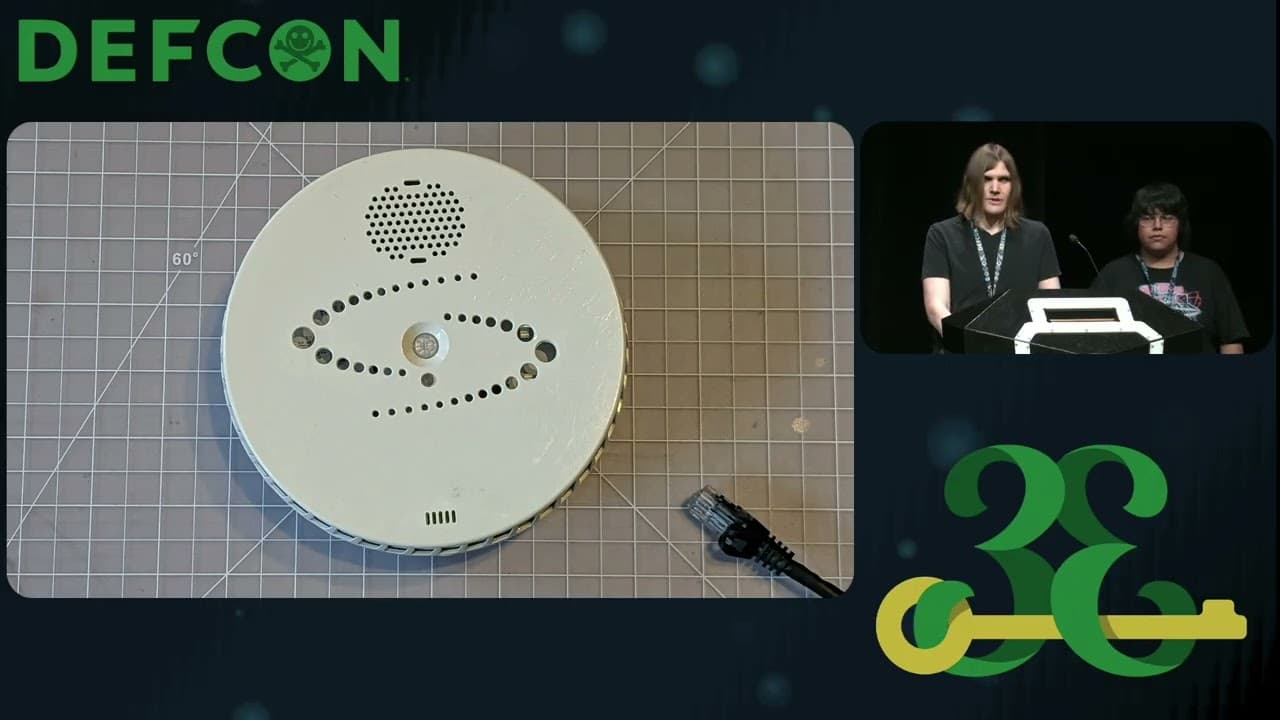
Unmasking the Snitch Puck: The Creepy IoT Surveillance Tech in the School Bathroom