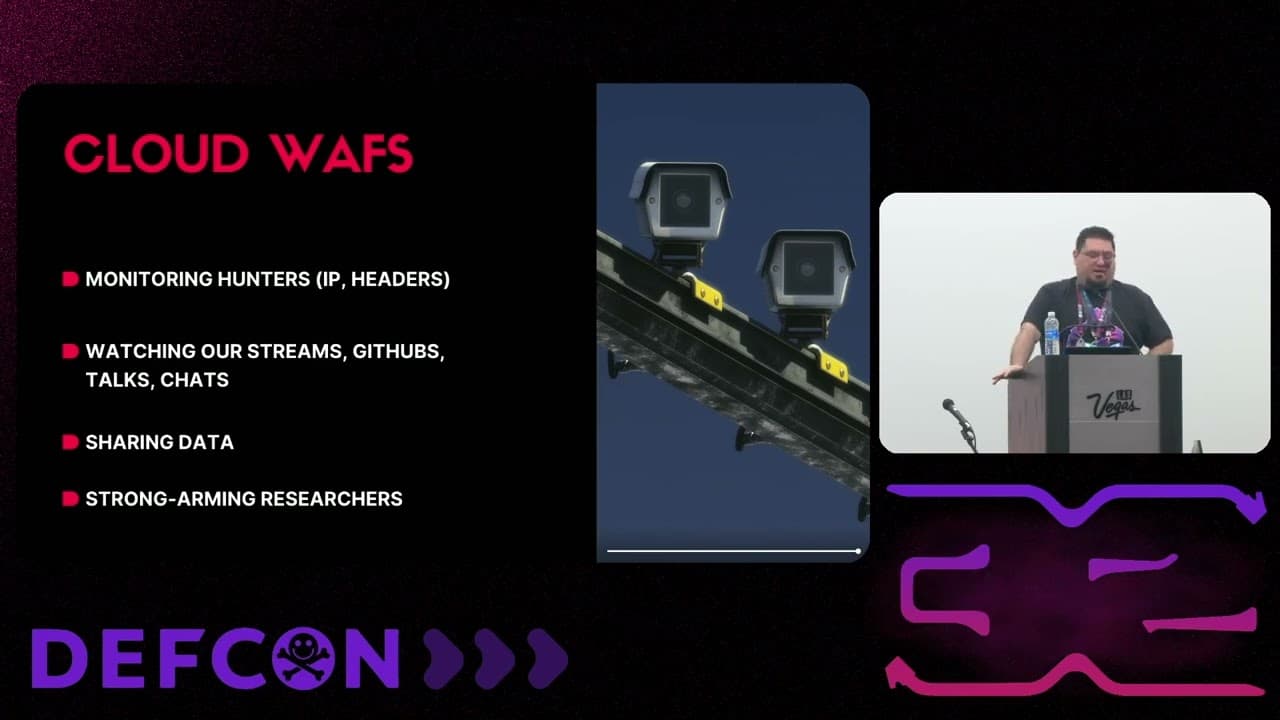
Sudos and Sudon'ts
This talk demonstrates two security vulnerabilities in the newly introduced Sudo for Windows utility: a memory safety issue in path resolution and an insufficient client authentication flaw in the ALPC interface. The research highlights how an unprivileged local attacker can exploit the lack of proper client validation to execute arbitrary commands as a privileged user. The presentation provides a detailed analysis of the RPC communication flow and the risks associated with using unsafe Rust code for Windows API interactions. A live demonstration shows the successful exploitation of the authentication flaw to gain elevated command execution.
Exploiting the Sudo for Windows RPC Interface
TLDR: Microsoft recently introduced Sudo for Windows, but the implementation contains critical flaws in its RPC client authentication and path resolution. By injecting a DLL into a controlled process, an attacker can bypass authentication checks to execute arbitrary commands as a privileged user. This research demonstrates that even when using memory-safe languages like Rust, improper use of
unsafeblocks and flawed IPC logic can lead to local privilege escalation.
Security researchers often assume that moving from C++ to memory-safe languages like Rust automatically eliminates entire classes of vulnerabilities. The recent release of Sudo for Windows serves as a perfect case study for why that assumption is dangerous. While the utility aims to bring familiar Linux-style privilege elevation to the Windows command line, the implementation of its inter-process communication (IPC) mechanism creates a significant local privilege escalation vector.
The Mechanics of the Flaw
At the heart of Sudo for Windows is an Advanced Local Procedure Call (ALPC) interface. This interface coordinates the elevation request between the unprivileged client process and the privileged server process. The research presented at DEF CON 2024 highlights two primary issues: a memory safety vulnerability during path resolution and a critical failure in client authentication.
The authentication failure is the most impactful. The Sudo server process is responsible for spawning the elevated command, but it fails to properly verify that the client requesting the elevation is the legitimate, expected process. Because the ALPC port name is predictable and the server does not perform a robust check of the calling process's identity, any local user can initiate an elevation request.
An attacker can exploit this by spawning their own Sudo-like process and using DLL injection to hook the necessary functions. By manipulating the process image name to match the expected binary, the attacker tricks the server into accepting the request. Once the server is convinced the request is legitimate, it executes the attacker-supplied command with high-integrity privileges.
Technical Deep Dive: The Authentication Bypass
The vulnerability stems from how the server validates the client. The server attempts to verify the caller by checking the image name of the process at the other end of the ALPC socket. However, this check is insufficient. An attacker can use a debugger or a custom injector to manipulate the process environment or hook the GetModuleFileName API to return the expected path.
The following logic illustrates the risk when interacting with Windows APIs in Rust. Even though Rust prevents memory corruption by default, the use of unsafe blocks to interface with native Windows APIs—such as those required to spawn processes or manage tokens—reintroduces the same risks found in C.
// Simplified representation of the unsafe interaction
unsafe {
    let path_ptr = path_as_str.as_ptr();
    // If the path is not null-terminated correctly,
    // the API call may read past the intended buffer.
    GetBinaryTypeW(path_ptr, &mut output_binary_type);
}
In the path resolution issue, the utility failed to properly handle non-standard leading characters. When a user provided a path that required re-parsing, the application would read past the intended buffer until it hit the first null byte. This memory safety issue, while less critical than the authentication bypass, demonstrates how easily developers can introduce vulnerabilities when bridging the gap between high-level abstractions and low-level system calls.
Real-World Impact for Pentesters
For a pentester or a red teamer, this vulnerability is a goldmine for local privilege escalation. If you land on a machine where a user has already initiated a Sudo session, or if you can influence the environment where Sudo is used, you can gain system-level execution.
During an engagement, you would look for the Sudo process running in the background. Once identified, you can use Process Monitor to observe the ALPC communication patterns. If the target system is running a version of Sudo prior to the March 2024 patch, you can deploy a simple payload to inject into the process and trigger the elevation request. The impact is total control over the command execution flow, effectively allowing you to bypass User Account Control (UAC) without triggering the standard GUI prompt.
Defensive Considerations
Defenders should prioritize updating to the latest version of Sudo for Windows. Microsoft addressed the authentication flaw in the March 2024 release by implementing a more rigorous check that validates the full process path and ensures the caller is indeed the expected binary.
Beyond patching, this research underscores the importance of auditing IPC boundaries. Any application that exposes an RPC or ALPC interface is essentially an attack surface. If your organization is deploying Sudo for Windows, ensure that your endpoint detection and response (EDR) tools are configured to monitor for suspicious process injection attempts, particularly those targeting newly spawned system utilities.
The transition to memory-safe languages is a positive trend, but it is not a silver bullet. As this research proves, the logic governing how we handle system-level privileges remains the most critical component of our security architecture. When you see a new tool that claims to be "secure by design" because it is written in Rust, treat it with the same skepticism you would apply to any other piece of software. Check the unsafe blocks, audit the IPC implementation, and always verify the authentication logic.
Vulnerability Classes
Tools Used
Target Technologies
Attack Techniques
Up Next From This Conference
Breaking Secure Web Gateways for Fun and Profit
Listen to the Whispers: Web Timing Attacks That Actually Work
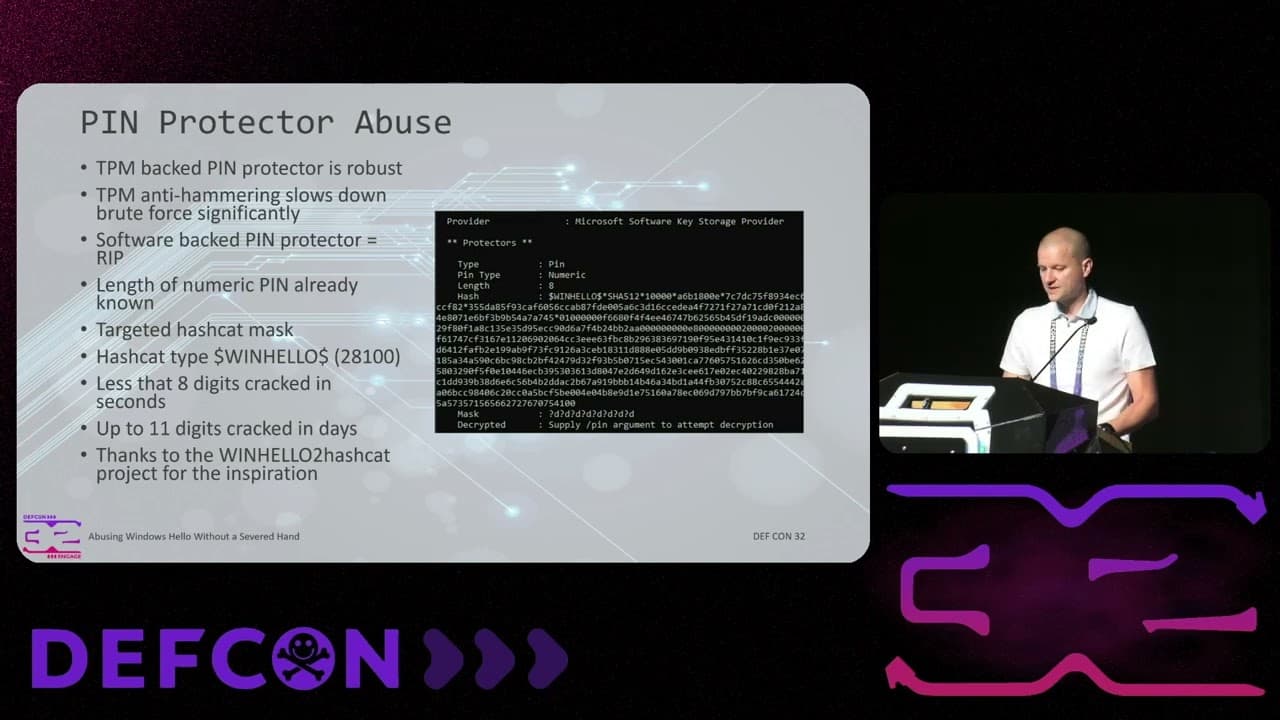
Abusing Windows Hello Without a Severed Hand
Similar Talks

Firewalls Under Fire: China's Ongoing Campaign to Compromise Network Protection Devices

We are currently clean on OPSEC: The Signalgate Saga