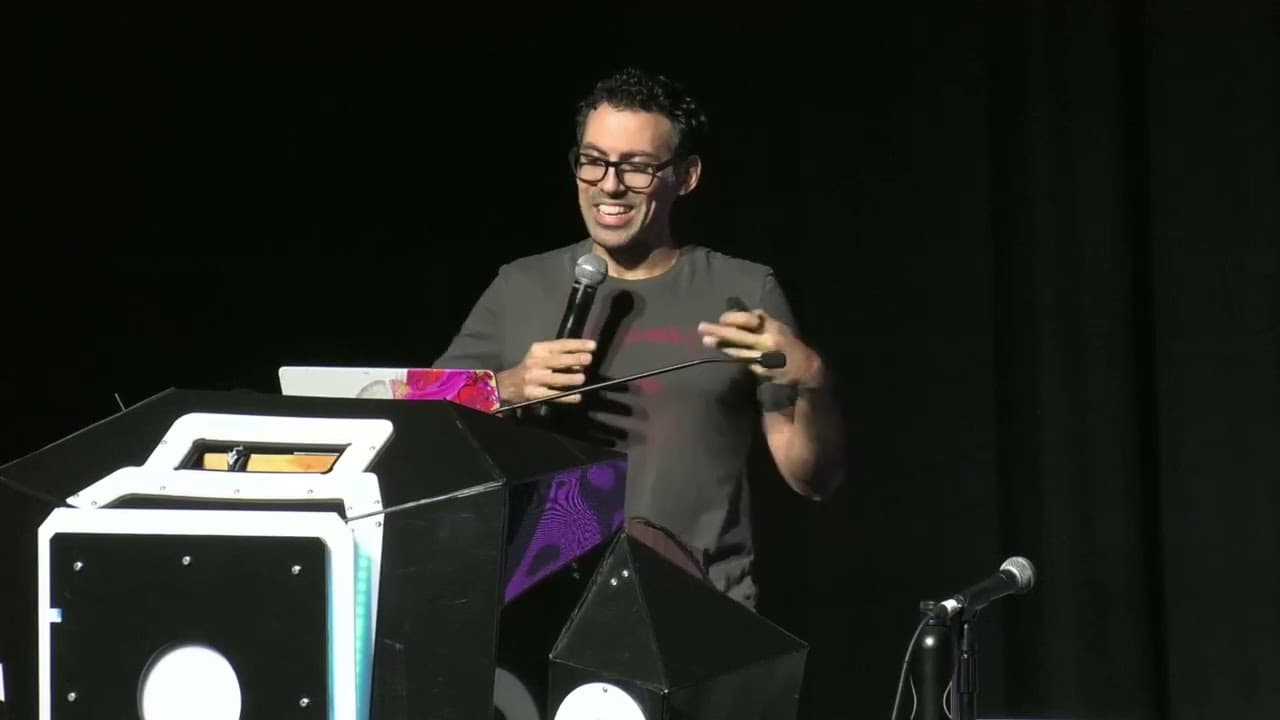
Sweet Dreams: Abusing Sleep Mode to Break Wi-Fi Encryption and Disrupt WPA2/3 Networks
This talk demonstrates how the Wi-Fi power-save (sleep) mode can be abused to force access points to buffer frames, which are then leaked in plaintext or encrypted with known keys upon a spoofed wake-up event. The research highlights a design flaw in the Wi-Fi standard regarding the management of buffered frames, affecting WPA2 and WPA3 networks. The presenters also introduce a technique to bypass client isolation by spoofing client MAC addresses to intercept traffic. A tool named MacStealer is released to help testers identify these vulnerabilities in their own networks.
Abusing Wi-Fi Power-Save Mode to Leak Data and Bypass Client Isolation
TLDR: Researchers have discovered a design flaw in the Wi-Fi standard where access points (APs) can be forced to buffer frames by spoofing power-save mode transitions. This vulnerability allows an attacker to leak buffered frames in plaintext or encrypted with known keys, and even bypass client isolation to intercept traffic. Security teams should audit their wireless infrastructure for these implementation flaws and prioritize network segmentation using VLANs to mitigate the risk of lateral movement.
Wireless security research often focuses on the handshake or the encryption protocol itself, but the implementation of the 802.11 standard is where the real chaos happens. Most of us assume that if we are running WPA3, our traffic is safe from local eavesdropping. This research from Mathy Vanhoef and his team proves that assumption wrong by targeting the power-save mechanism, a feature designed to save battery life on mobile devices. By manipulating how APs handle buffered frames, an attacker can force the disclosure of sensitive data that was never intended to be sent in the clear.
The Mechanics of the Sleep Mode Attack
The core of this issue lies in how access points manage frames when a client enters power-save mode. When a client tells an AP it is going to sleep, the AP stops transmitting and starts buffering frames. The vulnerability exists because the Wi-Fi standard does not explicitly mandate that these buffered frames must be discarded or re-keyed when the client's security context changes.
An attacker can exploit this by sending a spoofed power-save frame to the AP, pretending to be the victim. Once the AP begins buffering, the attacker then sends a spoofed disassociation or authentication frame. This forces the AP to drop the victim's session keys while keeping the buffered frames in memory. When the attacker sends a final "wake-up" frame, the AP transmits the buffered data. Depending on the specific driver and kernel implementation, these frames are either sent in plaintext or encrypted with a predictable key, effectively turning the AP into a data leak source.
Bypassing Client Isolation
Beyond data leakage, this research introduces a technique to bypass client isolation, a common security control in enterprise and public Wi-Fi networks. Client isolation is supposed to prevent devices on the same SSID from talking to each other, which is a critical defense against ARP spoofing and lateral movement.
The bypass works by spoofing the victim's MAC address to initiate a new connection to the AP. Because the AP associates the new session with the victim's MAC address, it updates its internal routing table. When the AP receives traffic destined for the victim, it forwards that traffic to the attacker instead. This effectively breaks the isolation boundary. During their presentation, the researchers demonstrated this using their tool, MacStealer, which automates the process of testing for these vulnerabilities.
Technical Implementation and Testing
For those looking to test this in a lab environment, the process involves using a tool like wpa_supplicant to manage the wireless interface while running the exploit script. The researchers' tool is designed to handle the complex timing required to win the race against the AP's internal state machine.
# Example of testing for client isolation with MacStealer
./macstealer.py wlan0 --c2c ulan1
This command checks if client-to-client traffic is blocked at the Ethernet layer. If the tool successfully transmits a frame from one interface to another, the isolation is effectively bypassed. The impact here is significant for any environment relying on client isolation as a primary security control, such as guest networks or IoT deployments. If an attacker can bypass this, they can perform man-in-the-middle attacks on other clients on the same network, regardless of the encryption protocol in use.
Defensive Strategies
Fixing this at the protocol level is a long-term effort that requires updates to the IEEE 802.11 standard. In the meantime, vendors need to implement stricter frame management. Specifically, APs should be configured to discard all buffered frames immediately upon any change in the client's association state or security context.
For network administrators, the most effective defense remains network segmentation. Relying solely on client isolation is insufficient given these implementation flaws. By using VLANs to isolate different classes of devices—such as separating guest traffic from corporate assets or IoT devices—you remove the possibility of lateral movement even if the client isolation on the AP is bypassed.
This research serves as a reminder that even well-understood features like power-save mode can hide significant security flaws. As pentesters, we should stop treating wireless networks as "secure by default" just because they use modern encryption. Instead, we need to look at how the AP handles state transitions and frame buffering. If you are auditing a network, run the MacStealer tool and see if you can force the AP to leak frames or bypass isolation. You might be surprised by how many enterprise-grade devices fail these basic checks. Keep digging into the implementation details, because that is where the most interesting bugs are hiding.
Vulnerability Classes
Tools Used
Target Technologies
Attack Techniques
Up Next From This Conference

A New Attack Interface In Java Applications
Inference Attacks on Endpoint Privacy Zones in Fitness Tracking Social Networks

Abusing Azure Active Directory: From MFA Bypass to Listing Global Administrators
Similar Talks

Unmasking the Snitch Puck: The Creepy IoT Surveillance Tech in the School Bathroom
Surveilling the Masses with Wi-Fi Positioning Systems