TotalTest Simulations v2.Oh! From Exploits to Economics
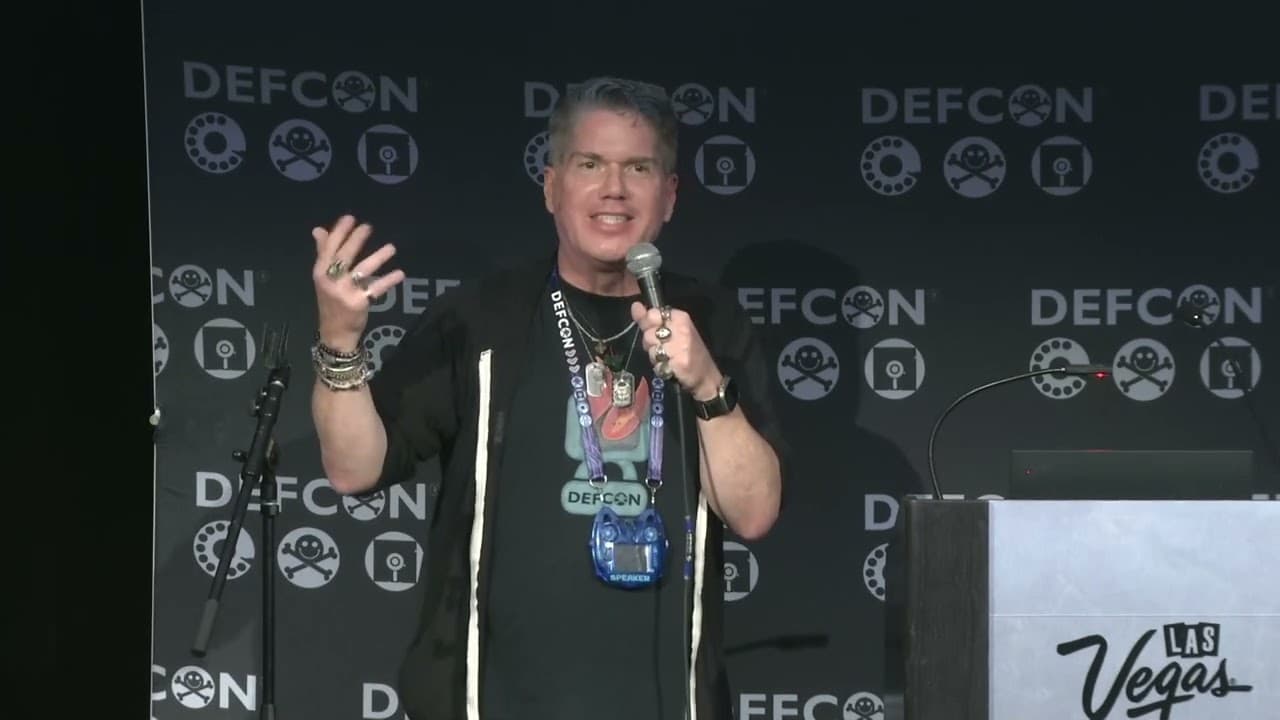
This talk presents a methodology for integrating red team exploit findings into organizational risk management and financial reporting. It demonstrates how to map technical vulnerabilities to business impact metrics like Mean Time to Initial Access (MTTIA) and Mean Time to Objective (MTTO). The approach aims to bridge the communication gap between technical security teams and executive leadership by quantifying the financial value of security improvements. The speaker emphasizes using data-driven metrics to justify security investments and prioritize remediation efforts.
Quantifying the Financial Impact of Red Team Engagements
TLDR: Most red team reports fail to resonate with executive leadership because they focus on technical exploit chains rather than business risk. By mapping findings to metrics like Mean Time to Initial Access (MTTIA) and Mean Time to Objective (MTTO), security teams can quantify the financial value of their defensive improvements. This approach transforms security testing from a cost center into a strategic tool for calculating revenue protected and justifying security spend.
Security professionals often struggle to bridge the gap between a successful compromise and a board-level conversation. You can drop a shell on a domain controller or exfiltrate sensitive data from an OT environment, but if the C-suite only sees a "critical vulnerability" report, the nuance of your work is lost. The industry has spent years perfecting the art of the breach, yet we remain remarkably poor at explaining why that breach matters in dollars and cents.
Moving Beyond the "Critical" Label
Technical teams frequently rely on CVSS scores to prioritize remediation. While useful for patching cycles, these scores ignore the reality of a complex, interconnected enterprise. A high-severity vulnerability on a non-critical system is noise; a medium-severity misconfiguration that provides a pivot point into a SCADA network is a catastrophe.
Instead of focusing on individual CVEs, shift the conversation toward the attack path. When you perform a red team engagement, you are essentially testing the organization's ability to detect and respond to specific, high-impact scenarios. By tracking metrics like MTTIA and MTTO, you provide a baseline that reflects the actual performance of the security operations center (SOC) and the effectiveness of existing controls.
Mapping Technical Findings to Business Risk
To make this data actionable, you need to move away from static spreadsheets and toward automated log analysis. Tools like RedELK are invaluable here, as they allow you to ingest logs from your Cobalt Strike beacons and other C2 infrastructure to correlate red team activity with blue team detection events.
When you define your metrics, focus on the lifecycle of the attack:
- Mean Time to Initial Access (MTTIA): How long does it take to gain a foothold? An increase in this metric over successive cycles indicates that your perimeter defenses and identity controls are becoming more effective.
- Mean Time to Objective (MTTO): How long does it take to reach the crown jewels? This measures the strength of your internal segmentation and privilege escalation defenses.
- Mean Time Undetected (MTU): How long can you operate before the SOC flags your activity? This is the most direct measure of your detection and response maturity.
By tracking these over time, you create a trend line. If your MTU is decreasing, your detection engineering is working. If your MTTIA is increasing, your hardening efforts are paying off. This is the data that a CFO understands.
The Economics of Resilience
The most powerful argument you can make is the "Loss Per Incident" (LPI) model. Every minute saved during an incident response—whether through faster detection or more efficient containment—directly reduces the financial bleeding caused by a breach.
You can model this by calculating the cost of downtime, the cost of recovery, and the potential regulatory fines associated with a specific attack scenario. When you present this to leadership, you aren't just showing them a list of bugs; you are showing them the financial value of the security program.
For example, if a red team engagement demonstrates that a new IAM policy or a network segmentation project increases the time to reach a critical system by four hours, and you know the cost of downtime for that system is $70,000 per day, you have just quantified a $11,600 reduction in potential loss for that specific scenario. Multiply that across your entire attack surface, and you have a compelling case for your next budget request.
Building a Repeatable Process
This isn't about running a one-off pentest. It is about building a continuous cycle of adversary emulation. Start by defining your critical business units and the threats that keep the board awake at night. Work with your threat intelligence team to build realistic scenarios that mirror the tactics, techniques, and procedures (TTPs) used by actual adversaries.
Execute the simulation, collect the metrics, and then hold a workshop with the SOC and the relevant business stakeholders. Don't frame this as a "gotcha" moment for the blue team. Frame it as a collaborative effort to identify where the gaps are and how to close them.
When you present the results, focus on the "Revenue Protected." This is the quantifiable financial value safeguarded by your defensive posture. It changes the nature of the conversation from "how much did this test cost?" to "how much did this test save us?"
Stop filing reports that end up in a folder on a SharePoint site. Start building a data-driven narrative that proves the value of your work. The next time you sit down with the board, don't show them a list of vulnerabilities. Show them the cost of the breach you just prevented.
Vulnerability Classes
Tools Used
Target Technologies
Attack Techniques
All Tags
Up Next From This Conference


Similar Talks
Social Engineering A.I. and Subverting H.I.

Living off Microsoft Copilot