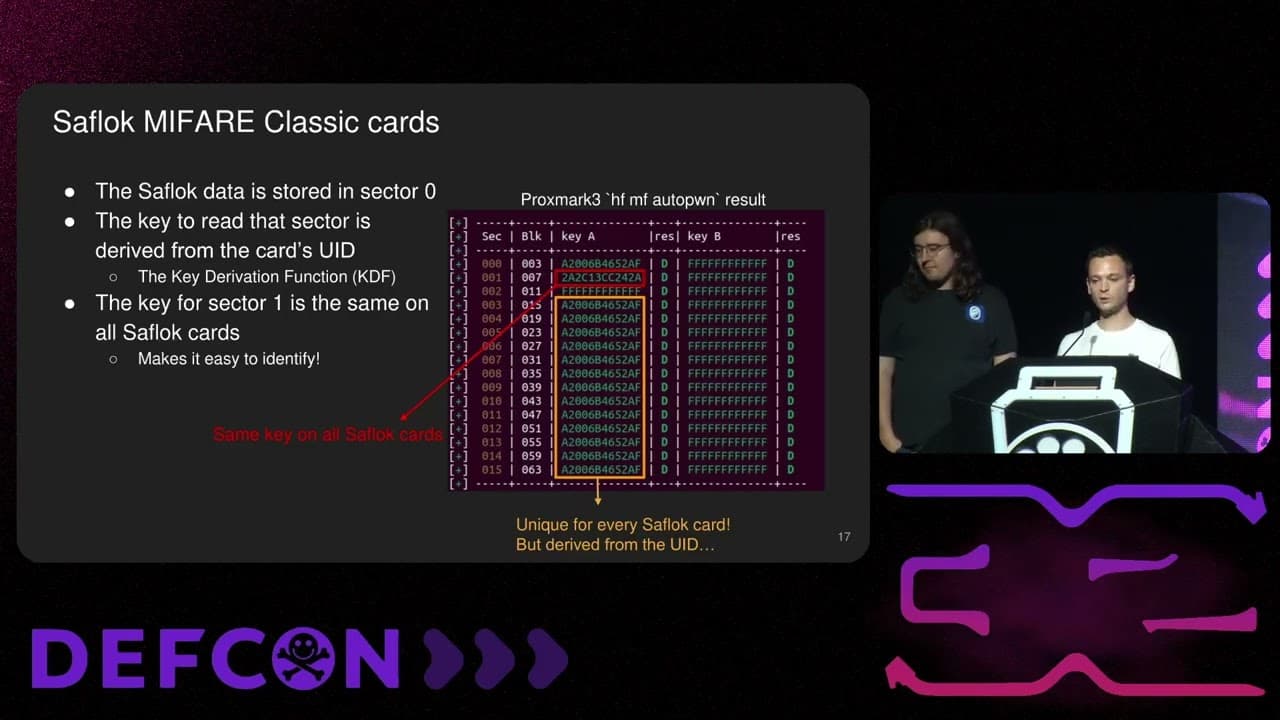
A (shallow) dive into Aircraft PKI
This talk provides an overview of the Public Key Infrastructure (PKI) used in commercial aviation to secure Field Loadable Software (FLS) and aircraft information systems. It details the authentication and integrity verification processes required by industry standards like ATA Spec 42 for updating Line Replaceable Units (LRUs). The presentation highlights the challenges of implementing secure PKI in resource-constrained embedded avionics environments and discusses the long-term implications of post-quantum cryptography in aviation.
Why Your Next Target Might Be an Aircraft Line Replaceable Unit
TLDR: Modern commercial aircraft rely on a complex web of Field Loadable Software (FLS) updates to maintain avionics, entertainment, and navigation systems. This research highlights how Public Key Infrastructure (PKI) is used to secure these updates and the critical role of ATA Spec 42 in governing these processes. For security researchers, the real-world attack surface lies in the intersection of supply chain integrity, physical access to cockpit interfaces, and the potential for long-term cryptographic obsolescence in a post-quantum world.
Aviation security is often viewed through the lens of air-gapped systems and proprietary protocols, but the reality is that modern aircraft are flying data centers. When you look at the Aircraft Information Systems Domain, you are looking at a massive, distributed network of Line Replaceable Units (LRUs) that require frequent firmware updates. These updates are not just patches for entertainment systems; they control critical sensors, maintenance logs, and navigation databases. If you are a researcher looking for the next frontier, the security of these update mechanisms is where the industry is currently struggling to balance operational agility with rigorous identification and authentication requirements.
The Mechanics of FLS Authentication
The core of the problem is how an aircraft verifies that a software update is legitimate. Manufacturers and OEMs provide Field Loadable Software (FLS) that must be signed to ensure authenticity and integrity. The process is governed by strict industry standards, primarily ATA Spec 42, which mandates that all PKI used to sign these software parts must be compliant.
In a typical engagement, a researcher would find that these updates are delivered via Portable Data Loaders (PDLs) or over-the-air mechanisms. The verification process often involves a trust chain where the aircraft validates the signature of the software part against a trusted Certificate Authority (CA). If the signature is invalid, the LRU will reject the update. This is a classic supply chain security challenge. If an attacker can compromise the signing key or inject a malicious update that passes the signature check, they gain control over the avionics domain.
The Embedded System Bottleneck
Implementing robust PKI in avionics is not as simple as deploying standard TLS libraries. These systems are resource-constrained, often running on legacy hardware with limited processing power and memory. When you consider that a single aircraft can have over 1,400 different software parts, the overhead of managing these certificates becomes a significant operational burden.
The transition to post-quantum cryptography presents a massive hurdle. Post-quantum algorithms generally require significantly larger key sizes and more computational power than current RSA or ECC implementations. If an LRU does not have the memory to store these larger keys or the CPU cycles to perform the necessary cryptographic operations, the entire security model collapses. For a pentester, this means looking for "weak" implementations where developers might have opted for shorter, faster, but ultimately vulnerable cryptographic primitives to save on hardware costs.
Where the Pentester Fits In
During a security assessment, your focus should be on the interface between the ground systems and the aircraft. The ACARS (Aircraft Communications Addressing and Reporting System) and the physical maintenance ports are the primary vectors. When an aircraft touches down, it generates a "weight on wheels" signal that triggers the avionics to establish a link to ground systems. This is the moment of truth.
If you are testing these systems, look for:
- Improper Certificate Validation: Does the LRU actually check the full certificate chain, or does it rely on a cached, potentially stale, Certificate Revocation List (CRL)?
- Physical Interface Security: Can you interact with the PDL or the maintenance port to dump firmware or intercept the update process?
- Key Management Practices: How are the signing keys stored? If they are stored on a smart card, is the PIN protected, or can you brute-force the authentication to the card?
The use of smart cards for user authentication in these environments is a positive step, but it introduces its own set of risks. If the smart card reader is exposed in a public-facing area of the aircraft, it becomes a physical target. A researcher might look for side-channel attacks on the card reader or attempt to intercept the communication between the card and the host system.
The Defensive Reality
Defenders in this space are fighting a war on two fronts: maintaining the integrity of legacy systems while preparing for the inevitable shift to post-quantum standards. The most effective defense is a strict adherence to the principle of least privilege and the implementation of hardware-based security modules (HSMs) for key storage. If you are working with a blue team in this sector, push for a comprehensive inventory of all PKI use cases. You cannot secure what you do not track.
The industry is currently in a state of transition. As we move toward more connected aircraft, the reliance on proprietary, "security through obscurity" models is fading. The future of aviation security will be defined by how well we can adapt standard cryptographic practices to the unique, high-stakes environment of the cockpit. If you are looking for a challenge that combines low-level embedded exploitation with high-level cryptographic analysis, this is it. The next time you are on a flight, remember that the entertainment system is just one small part of a much larger, and much more complex, security puzzle.
Target Technologies
OWASP Categories
Up Next From This Conference
Breaking Secure Web Gateways for Fun and Profit
Listen to the Whispers: Web Timing Attacks That Actually Work
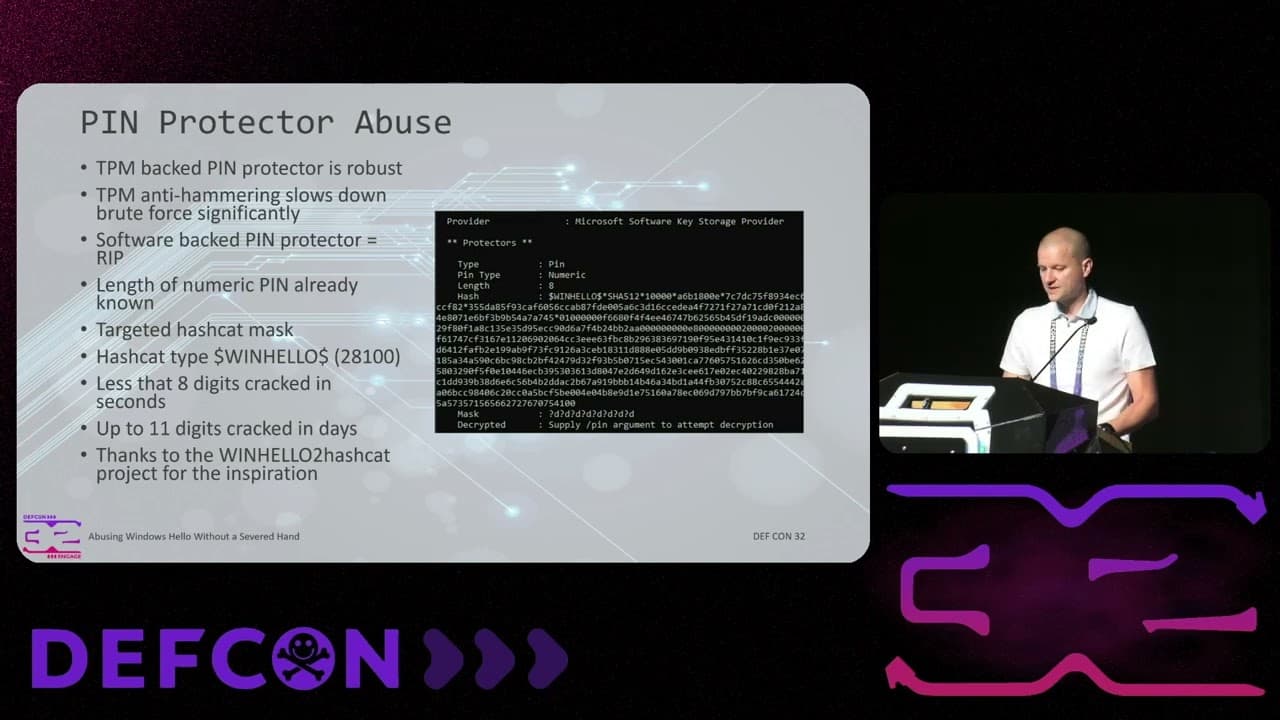
Abusing Windows Hello Without a Severed Hand
Similar Talks
Unmasking the Snitch Puck: The Creepy IoT Surveillance Tech in the School Bathroom
Post-Quantum Panic: When Will the Cracking Begin, and Can We Detect It?