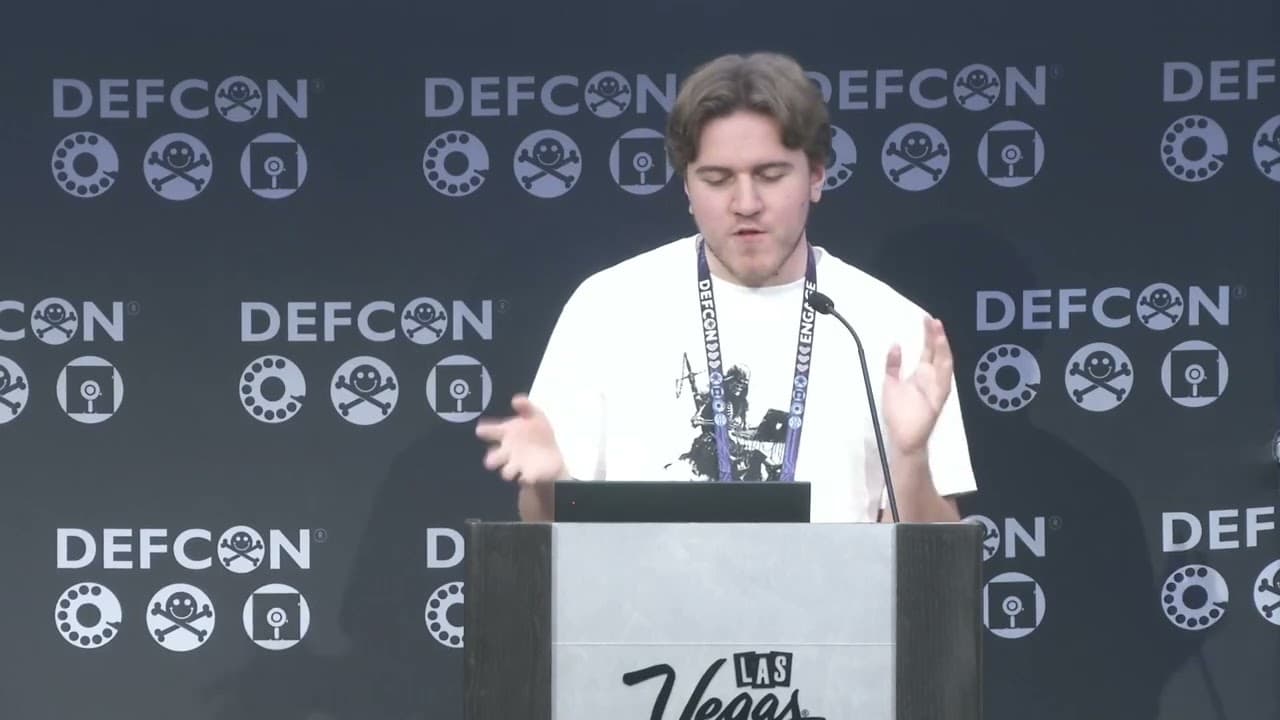
Are Your Backups Still Immutable, Even Though You Can't Access Them?
This talk demonstrates how attackers can bypass data immutability protections by compromising the underlying management infrastructure of backup appliances and cloud services. The researchers show how to gain root access to Dell PowerProtect DD and IBM DS8000 systems, as well as how to compromise AWS environments via misconfigured CI/CD pipelines. The presentation highlights that while data may be cryptographically immutable, the accessibility of that data can be effectively neutralized by an attacker, forcing ransom payments. The talk provides actionable recommendations for hardening backup infrastructure against such attacks.
Bypassing Data Immutability: How Management Infrastructure Compromise Neutralizes Backups
TLDR: Data immutability is often treated as a silver bullet against ransomware, but this research proves that compromising the underlying management plane of backup appliances and cloud services renders these protections useless. By exploiting default credentials, insecure CI/CD pipelines, and undocumented management commands, attackers can effectively delete or disable backups without ever needing to touch the immutable data itself. Pentesters should pivot their focus from attacking the data storage to auditing the management interfaces and orchestration layers that control these systems.
Data immutability is the current industry standard for ransomware resilience. The logic is simple: if you can write data once and prevent any modification or deletion for a set period, even a domain admin cannot wipe your backups. However, this security model assumes the management infrastructure controlling those backups is impenetrable. Recent research presented at Black Hat 2024 demonstrates that this assumption is fundamentally flawed. Attackers do not need to break the immutability logic if they can simply compromise the appliance or the orchestration platform that manages the backup lifecycle.
The Management Plane as the Primary Attack Vector
The research highlights a critical blind spot in modern backup architectures: the management plane. Whether it is a physical appliance like the Dell PowerProtect DD or a cloud-based service like AWS Backup, these systems rely on complex management consoles, proprietary protocols, and administrative shells.
In the case of the Dell PowerProtect DD, the researchers discovered that the system was vulnerable to command injection and privilege escalation through its administrative shell. By leveraging an undocumented registry command, reg, they could manipulate system configurations, including the execution of cron jobs running with root privileges. This allowed for the injection of a reverse shell, effectively granting the attacker full control over the appliance. Once root access is achieved, the attacker can unmount file systems or disable the services that facilitate the backup and restoration process. The data remains immutable, but it is effectively locked away from the organization, forcing a ransom scenario.
Exploiting the Orchestration Layer
Cloud environments present a different, yet equally dangerous, set of risks. The researchers demonstrated an attack path against AWS Backup that begins with an unauthenticated container registry. By pulling a container image from an insecure registry, they recovered hardcoded credentials for a GitLab administrator account.
From there, the attack path followed a classic privilege escalation flow within the CI/CD pipeline:
- Compromise a GitLab runner.
- Pivot into the AWS infrastructure account using the runner's environment credentials.
- Enumerate permissions to identify a Lambda function responsible for managing backup policies.
- Assume the role of the Lambda function to modify or delete backup policies.
This chain of events highlights that the security of your backups is only as strong as the security of your CI/CD pipeline. If an attacker can modify the infrastructure-as-code templates or the automation scripts that define your backup retention policies, they can effectively delete your recovery path. The OWASP Top 10 category of Identification and Authentication Failures is highly relevant here, as the entire chain relied on the misuse of service accounts and lack of proper credential rotation.
Technical Realities for Pentesters
When testing these systems, stop looking for ways to bypass the WORM (Write-Once, Read-Many) lock. Instead, treat the backup appliance as a standard Linux server. During an engagement, prioritize the following:
- Default Credentials: Many backup appliances ship with default administrative accounts. Check the vendor's security advisories, such as DSA-2023-412, for known issues.
- Management Interfaces: Audit the web UI and CLI for hidden or undocumented features. The researchers found that the IBM DS8000 management console was vulnerable to a simple DOM manipulation that enabled a disabled login button, bypassing client-side restrictions.
- CI/CD Pipelines: If the backup infrastructure is managed via code, the pipeline is the most likely point of failure. Look for hardcoded secrets in container images or overly permissive IAM roles assigned to runners.
The vulnerabilities identified in the IBM DS8000, tracked as CVE-2023-46169, CVE-2023-46170, CVE-2023-46171, and CVE-2023-46172, serve as a reminder that even enterprise-grade storage solutions are susceptible to basic web application vulnerabilities.
Hardening the Backup Infrastructure
Defenders must move beyond the "set it and forget it" mentality regarding immutability. The most effective defense is to treat the backup management plane with the same level of scrutiny as a production database. Implement strict MFA for all administrative access, vault your credentials, and ensure that your monitoring systems alert on any unusual activity within the management console.
Most importantly, perform regular, isolated restoration tests. If you cannot restore your data without the vendor's support, you are not truly resilient. Your backup infrastructure is just another set of servers, and like any other system, it requires a robust patch management strategy and a hardened configuration. Do not let the promise of immutability lull your team into a false sense of security. If the management plane is compromised, your immutable data is just a digital hostage.
Vulnerability Classes
Target Technologies
Attack Techniques
All Tags
Up Next From This Conference

Similar Talks

Kill List: Hacking an Assassination Site on the Dark Web

Firewalls Under Fire: China's Ongoing Campaign to Compromise Network Protection Devices