BitLocker: Leveraging Windows Recovery to Extract Secrets
This talk demonstrates multiple techniques to bypass BitLocker drive encryption by exploiting vulnerabilities in the Windows Recovery Environment (WinRE). The researchers show how to manipulate boot configuration data (BCD) and exploit the parsing of external files like Boot.sdi and ReAgent.xml to gain unauthorized access to the system. These methods allow an attacker with physical access to a locked machine to disable BitLocker and extract sensitive data without the recovery key. The presentation includes live demonstrations of these exploitation chains and provides actionable countermeasures for hardening BitLocker.
Bypassing BitLocker via Windows Recovery Environment Exploitation
TLDR: Researchers at DEF CON 2025 demonstrated how to bypass BitLocker drive encryption by exploiting flaws in the Windows Recovery Environment (WinRE). By manipulating boot configuration data and abusing the parsing of files like Boot.sdi and ReAgent.xml, an attacker with physical access can disable encryption and extract secrets without a recovery key. Security teams should prioritize enabling TPM+PIN authentication and the REVISE mitigation to prevent these downgrade and bypass attacks.
Physical access remains the ultimate trump card in any threat model. When a machine is locked, BitLocker is supposed to be the final line of defense, ensuring that even if the hardware is stolen, the data remains encrypted and inaccessible. However, the research presented at DEF CON 2025 proves that the Windows Recovery Environment (WinRE) is a massive, often overlooked attack surface that can turn a locked machine into an open book.
The Mechanics of the Bypass
The core of this research lies in the fact that WinRE is designed to be a lifesaver, but it operates with a level of trust that is fundamentally incompatible with a secure boot process. When a system enters the recovery environment, it needs to perform maintenance tasks, such as startup repairs or system resets. To do this, it must interact with the disk. The researchers identified that WinRE does not adequately validate the integrity of the configuration files it parses during this boot process.
Specifically, the exploitation chains target the way WinRE handles the Boot Configuration Data (BCD) and external files like Boot.sdi and ReAgent.xml. By modifying these files on an unprotected partition, an attacker can trick WinRE into executing arbitrary code or performing actions that effectively disable BitLocker.
Exploiting the Parsing Logic
One of the most elegant techniques shown involves the Boot.sdi file. This file is used to boot from a virtual disk into a RAM disk. The researchers found that they could append a custom, untrusted Windows Image (WIM) file to the Boot.sdi and manipulate the offset within the BCD store. Because WinRE performs no validation on the WIM file it loads, it blindly executes the attacker-controlled image.
The following pseudo-code illustrates the logic flaw in the RAM disk load procedure:
// Pseudo-code representation of the vulnerable load process
RamDiskImageBuffer = AllocateMemory(SdiSize + WimSize);
LoadFileToBuffer(SdiPath, RamDiskImageBuffer, SdiSize, NULL);
LoadFileToBuffer(WimPath, RamDiskImageBuffer + SdiSize, WimSize, WimHash);
// The WIM address is calculated without verifying the hash against the loaded Sdi
WimAddress = RamDiskImageBuffer + SdiSize + WimOffset;
Because there is no correlation between the WIM being used and the one that was hashed earlier, the system proceeds to boot the attacker's image. Once this image is running, the attacker has a full shell with the main OS volume mounted and unlocked, as BitLocker has been effectively bypassed by the recovery environment's own trust mechanisms.
Impersonating the Target OS
Another powerful primitive identified is the ability to impersonate the target OS location. WinRE iterates over disk volumes to find the BCD store. Due to the way the FindFirstVolume and FindNextVolume APIs work, the order in which volumes are returned is not guaranteed. By placing a custom, attacker-controlled BCD store on a secondary, unprotected volume, the researchers could force WinRE to use their configuration instead of the legitimate one.
This allows an attacker to point the "target OS" to a volume they control. When WinRE attempts to perform a Push Button Reset (PBR), it follows the attacker's instructions, which can include a DecryptVolume directive. This command instructs the system to decrypt the main OS volume, handing the keys to the attacker.
Real-World Applicability
For a penetration tester, these findings are significant. Any engagement involving physical access to a Windows machine—whether it is a stolen laptop or a server in a data center—now has a clear path to data extraction. The prerequisites are minimal: you need physical access and the ability to modify the disk, which can be achieved by booting from an external live environment or removing the drive and mounting it on a separate machine.
The impact is total. Once BitLocker is disabled via these methods, the encryption is effectively removed, allowing for the extraction of sensitive files, credentials, and internal tools. The vulnerabilities, tracked as CVE-2025-48800, CVE-2025-48803, CVE-2025-48804, and CVE-2025-48818, were addressed in the July Patch Tuesday updates.
Defensive Hardening
Defenders must move beyond relying solely on BitLocker's default configuration. The most effective countermeasure is to enable TPM+PIN authentication. This forces the system to require a user-provided PIN before the TPM will release the encryption keys, preventing an attacker from simply booting into a modified WinRE environment. Additionally, enabling the REVISE mitigation provides critical anti-rollback protection, ensuring that attackers cannot downgrade the system to a state where these vulnerabilities are present.
Security researchers should continue to scrutinize the boot process. The transition from firmware to the operating system is a complex sequence of handoffs, and as this research shows, every handoff is a potential point of failure. If you are auditing a system, do not assume that the recovery environment is a secure sandbox. It is a powerful tool, and like any powerful tool, it can be turned against the system it is meant to protect.
Vulnerability Classes
Tools Used
Attack Techniques
All Tags
Up Next From This Conference

DisguiseDelimit: Exploiting Synology NAS with Delimiters and Novel Tricks
Browser Extension Clickjacking: One Click and Your Credit Card Is Stolen
Can't Stop the ROP: Automating Universal ASLR Bypasses for Windows
Similar Talks

Kill List: Hacking an Assassination Site on the Dark Web
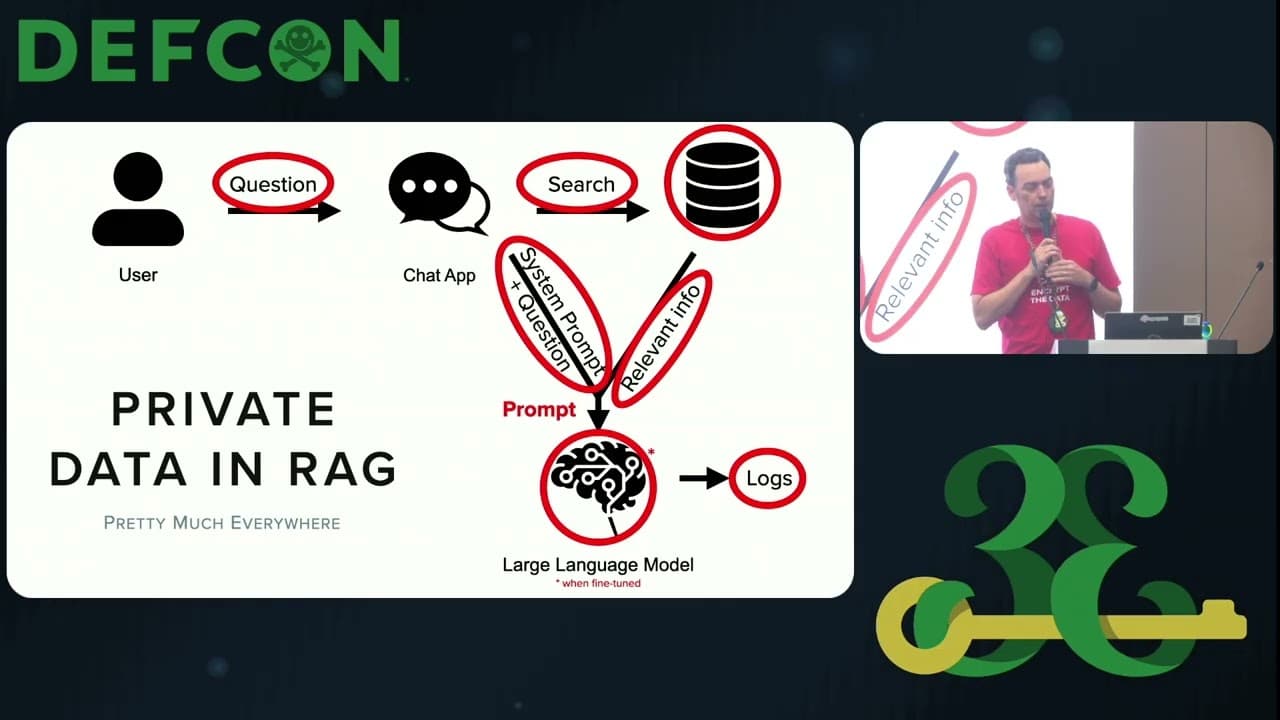
Exploiting Shadow Data in AI Models and Embeddings