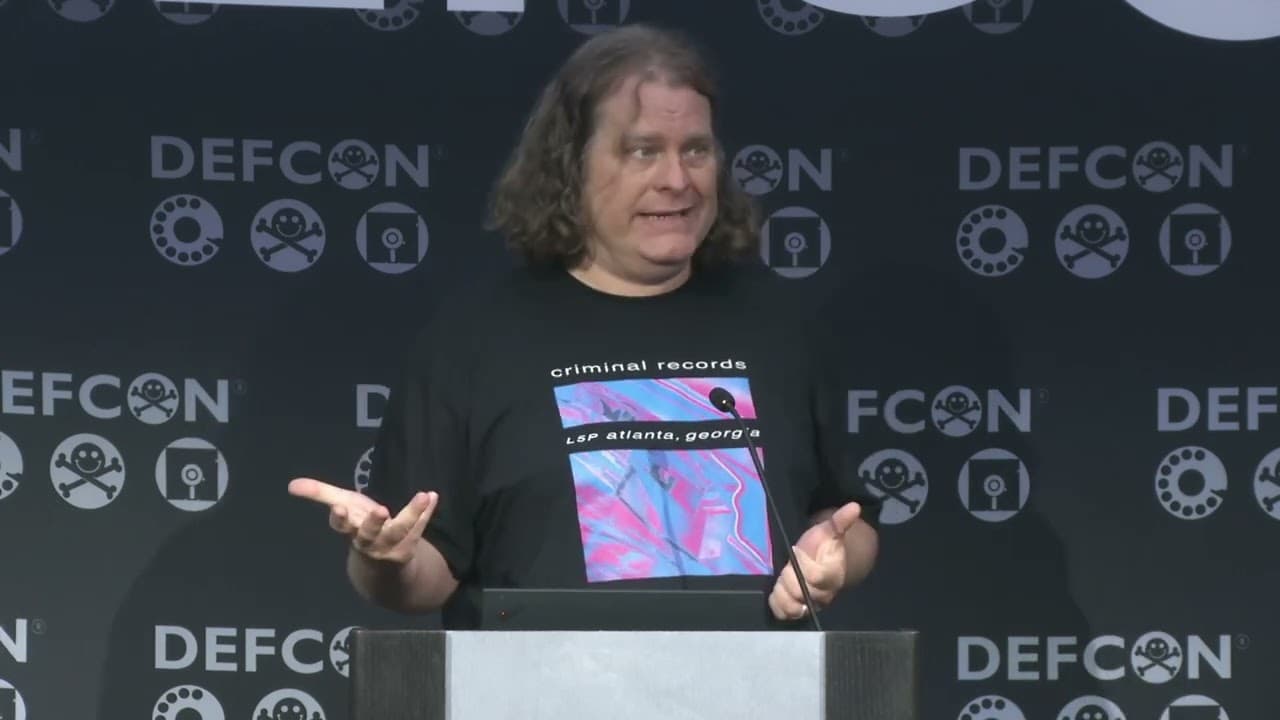
CodeCloak: A DRL-Based Method for Mitigating Code Leakage by LLM Code Assistants
This talk introduces CodeCloak, a Deep Reinforcement Learning (DRL) based method designed to mitigate sensitive code leakage when using AI-powered code assistants. The technique dynamically manipulates code prompts sent to LLM services by applying operations like PII replacement, line deletion, and variable renaming to reduce the amount of proprietary code exposed. The research demonstrates that this approach significantly reduces code leakage while maintaining high-quality, useful code suggestions from models like StarCoder and CodeLlama. The presentation includes a simulation-based evaluation showing minimal performance overhead and effective privacy protection.
How AI Code Assistants Are Leaking Your Proprietary Source Code
TLDR: AI-powered code assistants like GitHub Copilot and Tabnine often ingest large portions of your local codebase to generate context-aware suggestions, creating a significant risk of intellectual property leakage. Researchers at Black Hat 2024 demonstrated that these prompts can be intercepted and reconstructed to reveal up to 80% of a target file. Security teams must implement local filtering or proxy-based sanitization to prevent sensitive logic and PII from leaving the development environment.
Developers have adopted AI code assistants with reckless abandon. We treat these tools as productivity multipliers, ignoring the fact that they function by sending our source code to remote servers. When you type a function signature or a comment, the IDE plugin bundles your local context—often including surrounding files, class definitions, and even hardcoded secrets—into a prompt sent to the model provider. This is not just a privacy concern; it is a massive, automated data exfiltration vector.
The Mechanics of Prompt-Based Leakage
The research presented at Black Hat 2024 highlights a critical flaw in how these assistants handle context. To provide "meaningful" suggestions, the plugin must send enough information for the LLM to understand the project structure. This means the prompt is rarely just the current line of code. It is a snapshot of your work.
If an attacker can position themselves as a man-in-the-middle or compromise the service provider, they gain access to a continuous stream of your proprietary code. The researchers demonstrated that by capturing these prompts, they could reconstruct the original source files with high fidelity. Using an evaluation framework, they showed that an attacker could recover approximately 80% of the original code from the intercepted prompts. This is not a theoretical risk. It is a direct path to Intellectual Property Theft and the exposure of sensitive business logic.
CodeCloak: A DRL-Based Mitigation Strategy
To combat this, the researchers introduced CodeCloak, a method that uses Deep Reinforcement Learning (DRL) to sanitize prompts before they leave the developer's machine. Instead of blocking the assistant entirely, which kills productivity, CodeCloak acts as a transparent proxy that manipulates the prompt in real-time.
The DRL agent learns to apply specific transformations to the code segments being sent to the LLM. These transformations include:
- Replacing Personally Identifiable Information (PII) with placeholders.
- Renaming variables and function arguments to obscure business logic.
- Deleting non-essential lines of code or replacing function bodies with high-level summaries.
The goal is to strip away the "identifiable" parts of the code while keeping the syntax and structure intact enough for the LLM to still provide a useful suggestion. The researchers measured the quality of these suggestions using the CodeBLEU metric, which evaluates code similarity based on AST and data flow. They found that even after aggressive sanitization, the suggestions remained highly relevant, achieving a CodeBLEU score of roughly 75%.
Why This Matters for Pentesters
If you are conducting a red team engagement or a security assessment, stop ignoring the IDE plugins. During a recent engagement, we found that a client’s developers were using an unmanaged AI assistant that was indexing their entire internal API documentation and authentication logic.
When testing an organization, look for these plugins. If you can intercept the traffic—perhaps through a compromised workstation or a misconfigured internal proxy—you are essentially performing a passive code review of the entire application. The impact is catastrophic. You are not just finding a single vulnerability; you are mapping the entire attack surface by reading the source code as it is written.
Defensive Implementation
Defending against this requires a shift in how we view developer tools. You cannot rely on the "security posture" of the AI vendor alone. You need to enforce Broken Access Control principles at the workstation level.
- Audit IDE Plugins: Identify every AI assistant in use. If it is not enterprise-managed with strict data-retention policies, block it.
- Implement Local Sanitization: If you must use these tools, route traffic through a local proxy that strips PII and sensitive tokens before the request hits the internet.
- Policy Enforcement: Clearly define what code is "public" and what is "proprietary." If a developer is working on core authentication modules, they should be using a local, air-gapped model like CodeLlama rather than a cloud-based service.
The convenience of AI-generated code is undeniable, but it is currently being bought with the currency of your intellectual property. We are effectively training our competitors' models on our own private codebases. It is time to start treating our IDEs with the same level of scrutiny we apply to our production servers. If you are not already monitoring the outbound traffic from your development environments, you are likely already leaking. Start by auditing the data being sent to these services today.
Vulnerability Classes
Tools Used
Target Technologies
Attack Techniques
OWASP Categories
All Tags
Up Next From This Conference
BestFit: Unveiling Hidden Transformers in Windows ANSI
Wi-Fi Calling: Revealing Downgrade Attacks and Not-so-private Private Keys
The CVSS Deception: How We've Been Misled on Vulnerability Severity
Similar Talks
Kill List: Hacking an Assassination Site on the Dark Web
Unmasking the Snitch Puck: The Creepy IoT Surveillance Tech in the School Bathroom