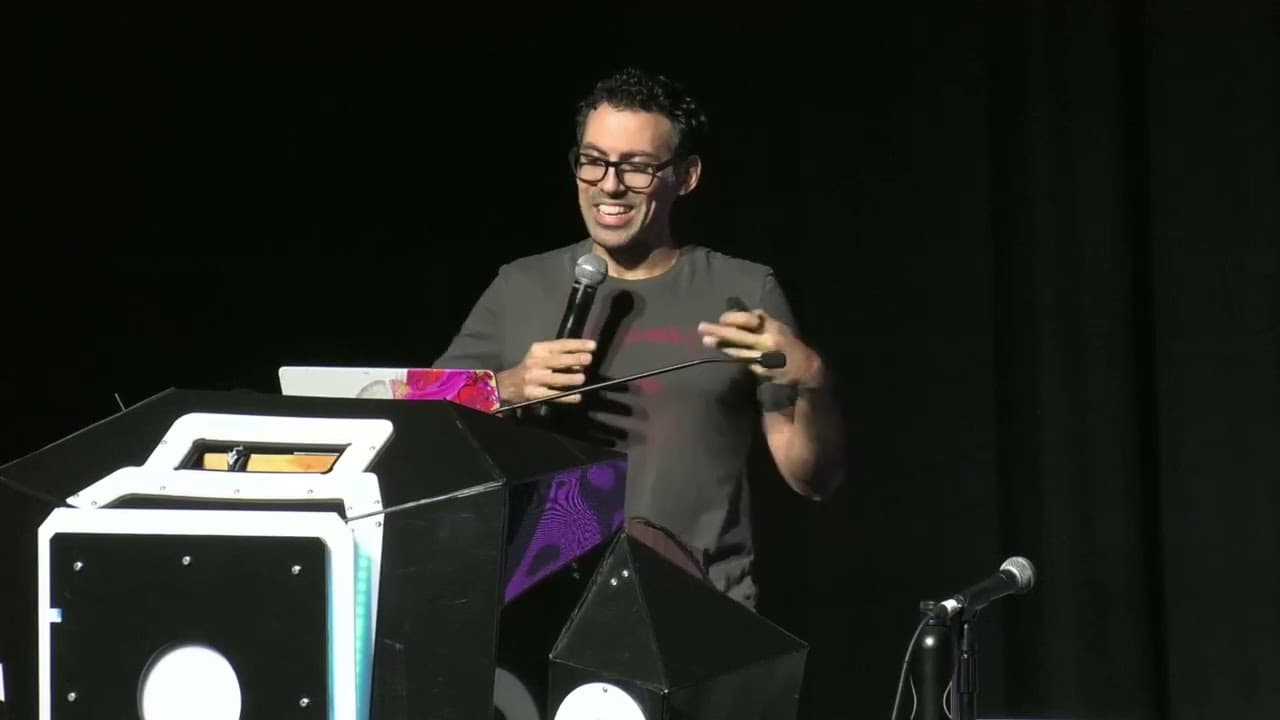
Compromising Confidential Compute
This talk demonstrates two critical vulnerabilities in Intel's Trust Domain Extensions (TDX) architecture, specifically focusing on flaws in the context-switching logic between the hypervisor and the TDX module. The research highlights how improper handling of XMM registers and Processor Trace (PT) state can lead to state corruption and potential information disclosure. The speaker introduces 'Cornelius', an open-source emulation framework designed to facilitate security research and fuzzing of the TDX module without requiring specialized hardware. The findings underscore the importance of rigorous security reviews for confidential computing technologies.
Breaking Intel TDX: How Context-Switching Flaws Compromise Confidential Compute
TLDR: Researchers at Microsoft identified critical vulnerabilities in Intel’s Trust Domain Extensions (TDX) architecture, specifically within the context-switching logic between the hypervisor and the TDX module. By exploiting improper handling of XMM registers and Processor Trace (PT) state, an attacker can achieve state corruption or full privilege escalation. The team also released Cornelius, an open-source emulation framework that allows researchers to fuzz and analyze the TDX module without needing specialized hardware.
Confidential computing is the industry’s current answer to the "data in use" problem. By offloading sensitive workloads into hardware-encrypted enclaves, cloud providers promise that even a compromised hypervisor cannot touch your data. Intel’s Trust Domain Extensions (TDX) is a primary implementation of this vision. However, the complexity of managing these isolated environments introduces new, subtle attack surfaces. The recent research into TDX context-switching proves that even hardware-backed isolation is only as secure as the code managing the transitions between privilege levels.
The Mechanics of the Context-Switching Vulnerability
At the heart of the TDX architecture is the TDX module, a piece of firmware that acts as a gatekeeper. It ensures that guest memory remains encrypted and that guest registers are hidden from the hypervisor. To move between the hypervisor and the TDX module, the CPU uses two specific instructions: SEAMCALL and SEAMRET. These instructions trigger a context switch, saving the hypervisor's state and loading the TDX module's state.
The vulnerability stems from a failure to correctly manage this state during these transitions. Specifically, the researchers found that the TDX module uses XMM registers but fails to context-switch them properly. When a SEAMCALL occurs, the CPU does not clear or save these registers. If the hypervisor stores sensitive data or pointers in XMM registers before a SEAMCALL, that data persists and becomes accessible to the TDX module. Conversely, if the TDX module writes to these registers, the values persist after a SEAMRET, potentially corrupting the hypervisor's state.
This state corruption is not just a theoretical bug. If an attacker can control the hypervisor, they can manipulate these registers to influence the execution flow of the TDX module. While the researchers noted that the second impact—leaking guest secrets—was mitigated by the fact that the TDX module does not store sensitive guest data in XMM registers, the potential for state corruption remains a significant finding. This was assigned CVE-2024-39283.
Processor Trace and Privilege Escalation
The second, more severe vulnerability involves Intel Processor Trace (PT). PT is a hardware feature that logs execution flow to memory. The researchers discovered that the SEAMCALL instruction is unconditionally recognized by the CPU, and the hypervisor can manipulate the PT control registers—specifically IA32_RTIT_CTL and IA32_RTIT_OUTPUT_BASE—to enable tracing within the TDX module itself.
On debuggable guests, the hypervisor has access to the in-memory state. By setting the TraceEn bit to 1 and pointing the output base to the SEAM range, an attacker can force the CPU to overwrite TDX memory with the PT log. Because the hypervisor controls the contents of this log, it effectively gains a "write-what-where" primitive inside the TDX module. By overwriting the instruction bytes of the TDX module, an attacker can inject shellcode, bypass security checks, and achieve full privilege escalation. This bypasses the isolation guarantees that TDX is designed to provide.
Researching TDX with Cornelius
One of the biggest hurdles in researching confidential computing is the hardware requirement. You typically need the latest Intel CPUs that support TDX, which are not always readily available or easy to instrument. To solve this, the Microsoft team developed Cornelius, an open-source emulation framework.
Cornelius allows you to run the TDX module as a virtual machine, providing full introspection capabilities. You can inspect registers, monitor memory, and even integrate sanitizers like ASAN, UBSAN, and Sancov. For a bug bounty hunter, this is a game-changer. It turns a hardware-locked target into a software-fuzzable one. You can write a fuzzer, identify crashes, and report them through Intel’s Bug Bounty Program without ever touching a physical server.
Defensive Implications
For those managing cloud infrastructure, the takeaway is clear: keep your microcode and hypervisor software updated. Intel addressed the denial-of-service vulnerability—where a malicious guest could trigger a SEAMCALL that kills the entire system—via a microcode update, tracked as CVE-2024-22374. Microsoft also patched Hyper-V to recognize VMEXIT(SEAMCALL) and handle it gracefully rather than killing the guest.
These vulnerabilities remind us that "confidential" does not mean "invulnerable." As we move more workloads into these enclaves, the security of the transition code becomes just as critical as the encryption itself. If you are working in the cloud security space, start looking at how your hypervisor handles these new CPU instructions. The next major exploit might not be in the application code, but in the very fabric of the virtualization layer that keeps your workloads apart.