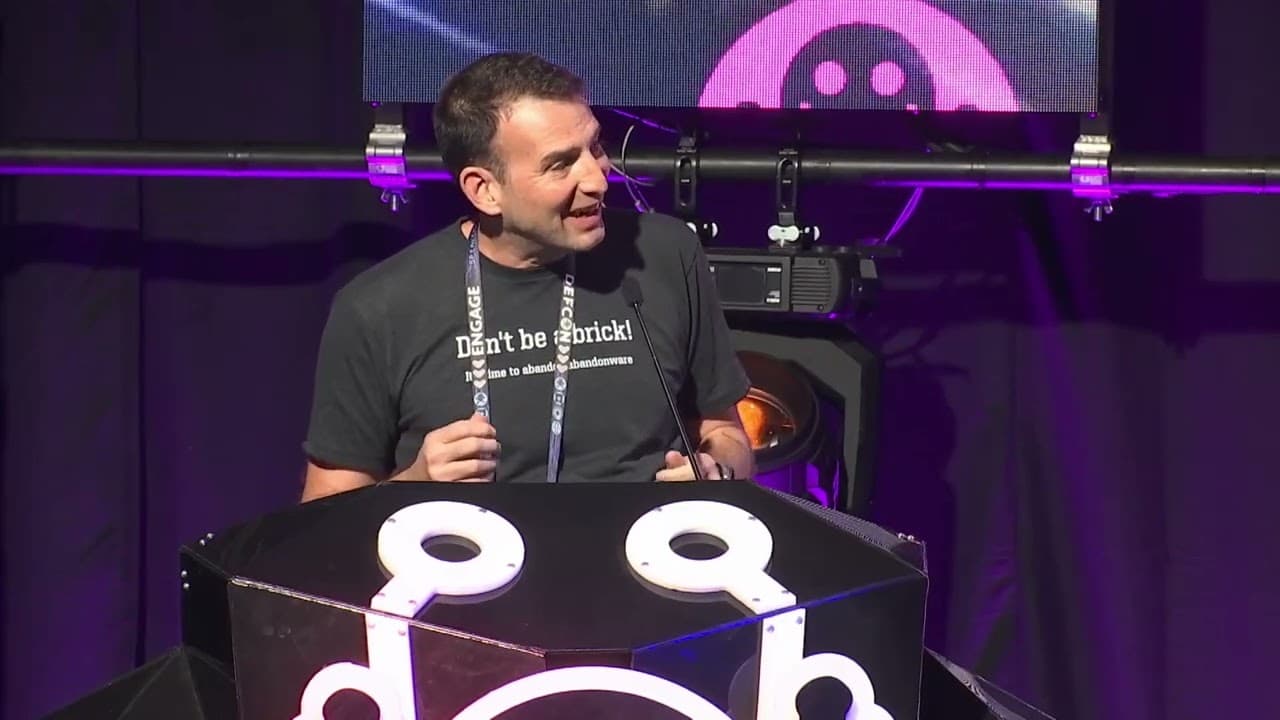
Eradicating Hepatitis C with Bioterrorism
This talk demonstrates the use of open-source chemical synthesis techniques to produce generic pharmaceutical drugs, specifically targeting high-cost medications like Sovaldi. The speaker outlines a methodology for bypassing pharmaceutical patent restrictions and high pricing structures through DIY chemical manufacturing. The presentation highlights the potential for decentralized, low-cost production of essential medicines as a form of protest against the pharmaceutical industry's pricing models. The speaker provides a practical, albeit controversial, demonstration of the synthesis process and the use of automated lab equipment.
Breaking the Pharmaceutical Monopoly: A Practical Guide to DIY Drug Synthesis
TLDR: This research demonstrates how open-source chemical synthesis techniques can bypass restrictive pharmaceutical patent and pricing models. By leveraging automated lab equipment and accessible chemical precursors, researchers can produce generic versions of high-cost medications at a fraction of the market price. This talk serves as a proof-of-concept for decentralized, low-cost medicine production as a direct challenge to industry-wide price gouging.
Pharmaceutical companies often rely on patent thickets and orphan drug status to maintain absolute control over the pricing of life-saving medications. When a single pill costs $1,000, the barrier to entry isn't just technical—it is legal and economic. The research presented at DEF CON 2024 by the Four Thieves Vinegar Collective shifts the focus from traditional policy advocacy to direct, technical intervention. They aren't just complaining about the cost of drugs; they are providing the blueprints to manufacture them.
The Mechanics of Decentralized Synthesis
At the core of this research is the Chemhacktica project, an open-source framework designed to automate the chemical synthesis process. For a security researcher or a developer, the best way to understand this is to view it as a CI/CD pipeline for chemistry. You start with a target molecule, identify the synthesis pathway, and use automated hardware to execute the reaction.
The team demonstrated the synthesis of Sovaldi (sofosbuvir), a critical treatment for Hepatitis C. The process relies on a single-step reaction that is significantly more efficient than the legacy methods used by major manufacturers. By using a high-performance liquid chromatography (HPLC) setup to verify the purity of the output, the researchers achieved a product purity of over 99%.
The technical workflow involves:
- Pathway Identification: Using open-source databases to map the synthesis route.
- Automated Reaction: Utilizing a custom-built, automated lab reactor that controls temperature and stirring speed via a web-based interface.
- Purification: Employing standard filtration techniques to isolate the active pharmaceutical ingredient (API).
The Recipe-Press tool acts as the interface for this process, allowing users to input specific chemical reactions and receive a generated set of instructions for the automated hardware. This effectively removes the need for a PhD in organic chemistry to execute a synthesis that was previously locked behind corporate R&D labs.
Why This Matters for Security Researchers
You might wonder why a cybersecurity blog is covering chemical synthesis. The answer lies in the concept of "gatekeeping." In the digital world, we deal with access control lists, firewalls, and authentication tokens. In the physical world, the pharmaceutical industry uses patents and regulatory capture to gatekeep access to health.
When you look at the economics of these drugs, the markup is not based on the cost of production—it is based on the cost of maintaining a monopoly. The researchers showed that a full course of treatment for Hepatitis C, which costs $84,000 through traditional channels, can be manufactured for roughly $300 in raw materials.
For a pentester, this is a lesson in threat modeling. If your entire security model relies on the assumption that an attacker cannot replicate your proprietary process, you have already lost. The Four Thieves Vinegar Collective is essentially performing a "red team" engagement on the pharmaceutical industry's business model. They are proving that when the cost of information (the chemical formula) and the cost of production (the hardware) drop, the monopoly collapses.
The Defensive Reality
Defending against this kind of "attack" is impossible through traditional means. You cannot patch a chemical formula, and you cannot firewall a synthesis pathway. The pharmaceutical industry’s response has been to lobby for stricter regulations on lab equipment and chemical precursors. However, as we have seen in the software world, trying to restrict the distribution of information only drives it further underground.
For those working in the medical or biotech security sectors, the takeaway is clear: the future of drug manufacturing is moving toward decentralized, small-batch production. If you are securing these environments, focus on the integrity of the supply chain for precursors and the physical security of the automated reactors. The digital interface controlling these devices is the new attack surface. If an attacker can manipulate the reaction parameters—the temperature, the timing, or the reagent ratios—they can effectively perform a data manipulation attack on the physical product, leading to dangerous or ineffective medication.
Moving Beyond the Monopoly
This research is not just about chemistry; it is about the democratization of essential technology. The Four Thieves Vinegar Collective is challenging the idea that only a handful of corporations should have the authority to decide who lives and who dies based on a pricing spreadsheet.
If you are interested in the intersection of hardware, chemistry, and open-source advocacy, the Biohacking Village at DEF CON is the place to start. The tools they are building are designed to be accessible, reproducible, and, most importantly, impossible to ignore. The next time you see a headline about a massive price hike for a generic drug, remember that the technical barrier to producing that drug is lower than you think. The only thing standing in the way is a set of rules that were written by the people who profit from them. It is time to start asking why we accept those rules as immutable.
Vulnerability Classes
Tools Used
Target Technologies
Attack Techniques
Up Next From This Conference
Breaking Secure Web Gateways for Fun and Profit
Listen to the Whispers: Web Timing Attacks That Actually Work
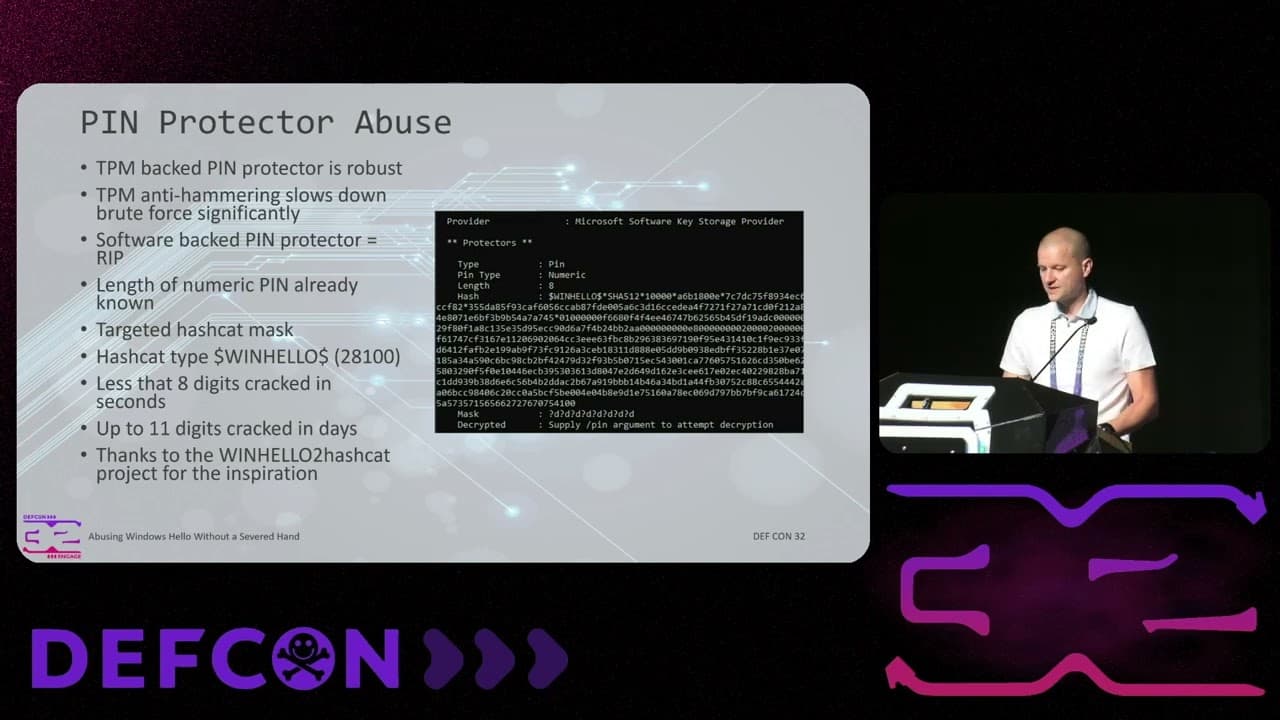
Abusing Windows Hello Without a Severed Hand
Similar Talks

Hey Bro, You got a Lighter? I need to do some Electroporation

Insider Threats Packing Their Bags With Corporate Data