Escaping the Privacy Sandbox with Client-Side De-anonymization Attacks
This talk demonstrates three novel client-side de-anonymization attacks against Google's Privacy Sandbox APIs, specifically targeting the Attribution Reporting and Shared Storage APIs. The researcher exploits side-channels and insecure worklet implementations to bypass privacy protections and track user activity across different websites. The presentation highlights how these privacy-preserving technologies can be subverted to perform ad-click fraud and user tracking. The researcher provides a proof-of-concept for these attacks, illustrating the inherent difficulty of balancing ad-tech functionality with user privacy.
Bypassing Privacy Sandbox Protections via Side-Channel Leaks
TLDR: Researchers have identified critical flaws in Google’s Privacy Sandbox APIs that allow for cross-site user tracking and de-anonymization. By exploiting side-channels in the Attribution Reporting API and insecure worklet implementations in Shared Storage, attackers can bypass intended privacy boundaries. Pentesters should audit their applications for these APIs and monitor for unexpected cross-origin data leakage.
Privacy-preserving ad-tech is a contradiction in terms. The industry has spent years trying to build a system that tracks user behavior for advertising revenue while simultaneously claiming to protect user identity. Google’s Privacy Sandbox is the latest attempt to square this circle, replacing third-party cookies with a suite of APIs designed to aggregate data and obscure individual activity. However, as with any complex system designed to balance utility and privacy, the implementation details are where the security model falls apart.
The Mechanics of the Leak
The core of the issue lies in how these APIs handle data reporting and storage. The Attribution Reporting API is designed to measure ad conversions without tracking users across sites. It does this by registering "sources" (ad views) and "triggers" (conversions) and then generating reports. The problem is that these reports are not as anonymous as they appear.
Researchers demonstrated that by using transitional debug reports, an attacker can leak specific information about a user's browsing history. When a user interacts with an ad, the browser sends a request to the ad-tech server. If the server responds with a malformed header, the browser may trigger a debug report that includes the context site—the top-level domain where the ad was viewed. This effectively bypasses the Same-Origin Policy and SafeFrame protections, allowing an attacker to link a specific user to a specific site visit.
Exploiting Shared Storage Worklets
The Shared Storage API is another component of the Privacy Sandbox, intended to allow cross-site storage without the tracking capabilities of cookies. It uses "worklets" to perform operations on stored data, with the goal of keeping the data opaque to the host site.
The vulnerability here is that these worklets can be abused if they are not properly secured. An attacker can load a malicious worklet that performs a cross-origin request to a domain they control. By passing a list of URLs to the worklet and using a side-channel—such as measuring the time it takes for the worklet to execute or observing the output of the worklet—the attacker can infer which URLs were matched. This is a classic side-channel attack that turns a privacy-preserving API into a tracking mechanism.
Real-World Impact for Pentesters
For those of us in the field, these findings change how we approach web application security assessments. If you are testing a site that integrates with Google’s ad-tech stack, you need to look beyond standard Broken Access Control vulnerabilities.
Start by inspecting the headers and network traffic for Attribution-Reporting-Eligible and Attribution-Reporting-Register-Source headers. If you find them, check if the application is using debug reports. If you can trigger these reports, you might be able to exfiltrate data that the application developers assumed was private.
When testing for Shared Storage vulnerabilities, look for the use of window.sharedStorage.set() and window.sharedStorage.worklet.addModule(). If you can influence the input to these functions, you may be able to inject your own worklet code. The goal is to see if you can exfiltrate data from the shared storage by observing the behavior of the worklet.
Defensive Considerations
Defending against these attacks is difficult because the vulnerabilities are baked into the design of the APIs themselves. The best approach for now is to minimize the use of these APIs unless they are strictly necessary for business operations. If you must use them, ensure that your ad-tech partners are not using debug reports in production environments.
Furthermore, implement a strict Content Security Policy that restricts the domains from which worklets can be loaded. By limiting the sources of your scripts, you can prevent attackers from injecting malicious worklets into your application.
The Privacy Sandbox is a massive, complex, and still-evolving set of technologies. As researchers continue to probe these APIs, we should expect to see more bypasses and side-channel attacks. The industry is essentially building a new, more complex tracking infrastructure, and it is our job to ensure that the security of that infrastructure is not just an afterthought. Keep an eye on the WICG GitHub repositories for updates and new security discussions, as this is where the future of these APIs is being debated and, inevitably, broken.
Vulnerability Classes
Target Technologies
OWASP Categories
All Tags
Up Next From This Conference

DisguiseDelimit: Exploiting Synology NAS with Delimiters and Novel Tricks
Browser Extension Clickjacking: One Click and Your Credit Card Is Stolen
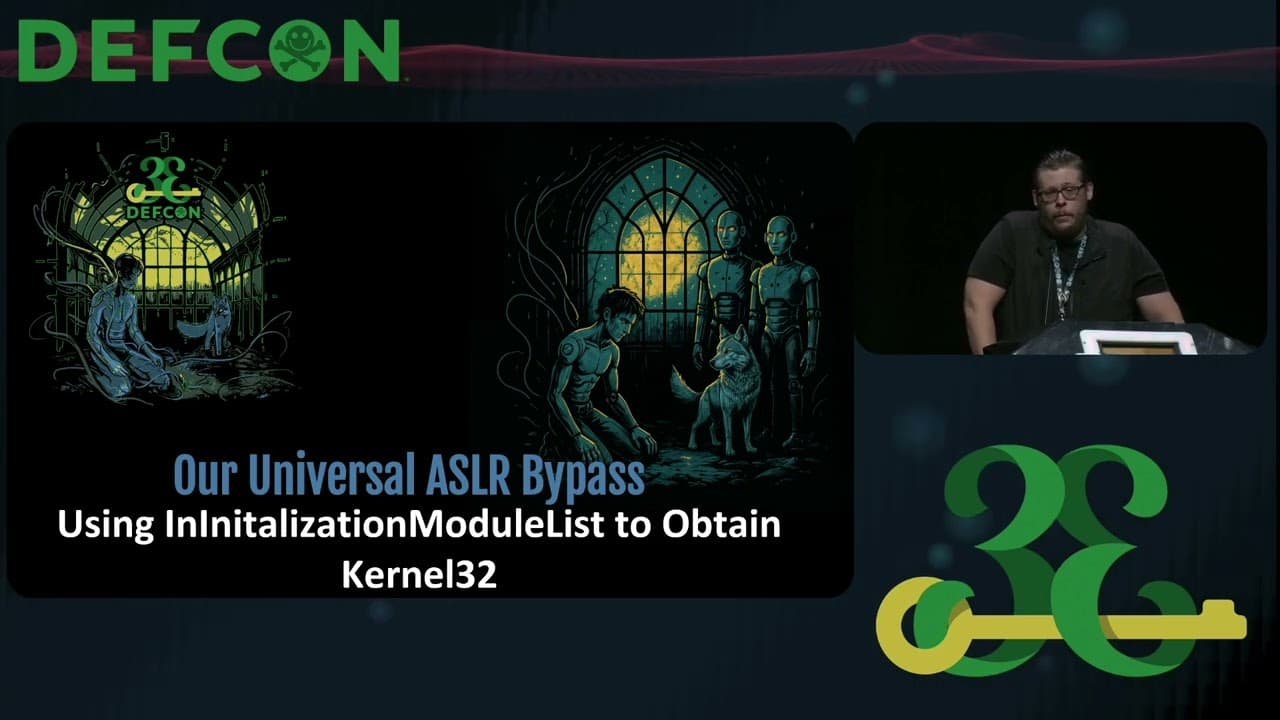
Can't Stop the ROP: Automating Universal ASLR Bypasses for Windows
Similar Talks

Surveilling the Masses with Wi-Fi Positioning Systems

Optical Espionage