Fireside Chat with the Director of the Office of the National Cyber Director
This session features a high-level discussion regarding national cybersecurity strategy, focusing on memory safety, BGP security, and firmware vulnerabilities. The speakers address the systemic challenges of securing open-source software and the importance of collaborative efforts between government and the security research community. The talk emphasizes the shift toward proactive, long-term policy initiatives to improve the nation's cyber resilience.
Beyond the Policy: Why Memory Safety and BGP Security Are Your Next Big Targets
TLDR: The Office of the National Cyber Director is shifting focus from high-level policy to the technical weeds of memory safety and BGP security. For researchers and pentesters, this signals a massive increase in funding and scrutiny for these specific attack surfaces. Expect to see more government-backed initiatives to audit critical open-source projects, making these areas prime hunting grounds for high-impact bug bounties.
Security research often feels like a game of whack-a-mole, where we chase the latest zero-day while the underlying infrastructure remains fundamentally broken. The recent discussion at DEF CON with the Office of the National Cyber Director (ONCD) confirms that the federal government is finally waking up to the same reality we have known for years: patching individual vulnerabilities is a losing battle if the core building blocks are inherently insecure.
The Shift to Memory Safety
Memory safety is no longer just a topic for academic papers or niche language evangelists. When the ONCD highlights memory safety as a national priority, they are effectively putting a target on the back of every C and C++ codebase powering critical infrastructure. For a researcher, this is a clear signal. If you are looking for your next big project, stop hunting for low-hanging fruit in web applications and start auditing the memory management of critical open-source libraries.
The industry is moving toward a future where memory-unsafe languages are considered a technical debt that can no longer be ignored. We are seeing a push to replace these components with memory-safe alternatives like Rust. However, the transition is slow and fraught with complexity. Pentesters should focus their efforts on the interfaces between these new, safe components and the legacy, unsafe code. This is where the most interesting bugs—and the most reliable exploit chains—are currently hiding.
If you want to understand the scale of the problem, look at the OWASP Memory Safety documentation. It provides a solid baseline for the types of vulnerabilities that are currently being prioritized for remediation. The goal is to move away from manual memory management, which is the root cause of the vast majority of CVE entries related to buffer overflows and use-after-free conditions.
BGP Security and the Fragility of the Internet
BGP remains the most glaring example of a protocol built on trust in an era where trust is a liability. The ONCD’s focus on BGP security is a direct response to the reality that hijacking or misconfiguring BGP routes can effectively take down entire segments of the internet. For a pentester, BGP is often treated as "out of scope" or "too hard," but that is exactly why it is so dangerous.
The technical reality is that BGP lacks inherent authentication. An attacker who can influence routing tables can perform man-in-the-middle attacks on a massive scale. While the government is pushing for RPKI adoption, the implementation is far from universal. You should be testing how your target infrastructure handles route leaks and whether they have implemented basic filtering. If you can demonstrate that a target’s traffic can be rerouted through an attacker-controlled node, you have found a vulnerability that is far more impactful than any standard XSS.
The Open-Source Supply Chain Problem
We have spent years talking about supply chain attacks, but the ONCD is now formalizing the response. The Open Source Software Security Initiative is not just a buzzword; it is a framework for how the government intends to fund and secure the libraries that run the world. For bug bounty hunters, this means that the projects you rely on are going to be under a microscope.
When you are performing a penetration test, the most effective way to gain persistence is often through a compromised dependency. Instead of looking for a vulnerability in the main application, look at the third-party libraries it imports. If you find a vulnerability in a widely used open-source package, you are not just finding a bug in one application; you are finding a bug in thousands of them. This is the definition of high-impact research.
What This Means for Your Workflow
The message from the ONCD is clear: the government is looking for technical solutions to systemic problems. They are moving away from "security by obscurity" and toward "secure by design." For you, this means the landscape is changing. You will see more transparency, more public audits, and more opportunities to contribute to the security of the tools you use every day.
Stop waiting for the next big framework to be released. Start looking at the foundational protocols and libraries that everything else is built on. The next major vulnerability will not be in a fancy new web framework; it will be in the boring, decades-old code that everyone assumed was "good enough." If you can find those bugs, you will be doing more than just collecting a bounty—you will be helping to secure the digital infrastructure that we all rely on. The tools are there, the funding is increasing, and the need for deep, technical research has never been higher. Start digging.
Vulnerability Classes
Target Technologies
Attack Techniques
All Tags
Up Next From This Conference
Breaking Secure Web Gateways for Fun and Profit
Listen to the Whispers: Web Timing Attacks That Actually Work
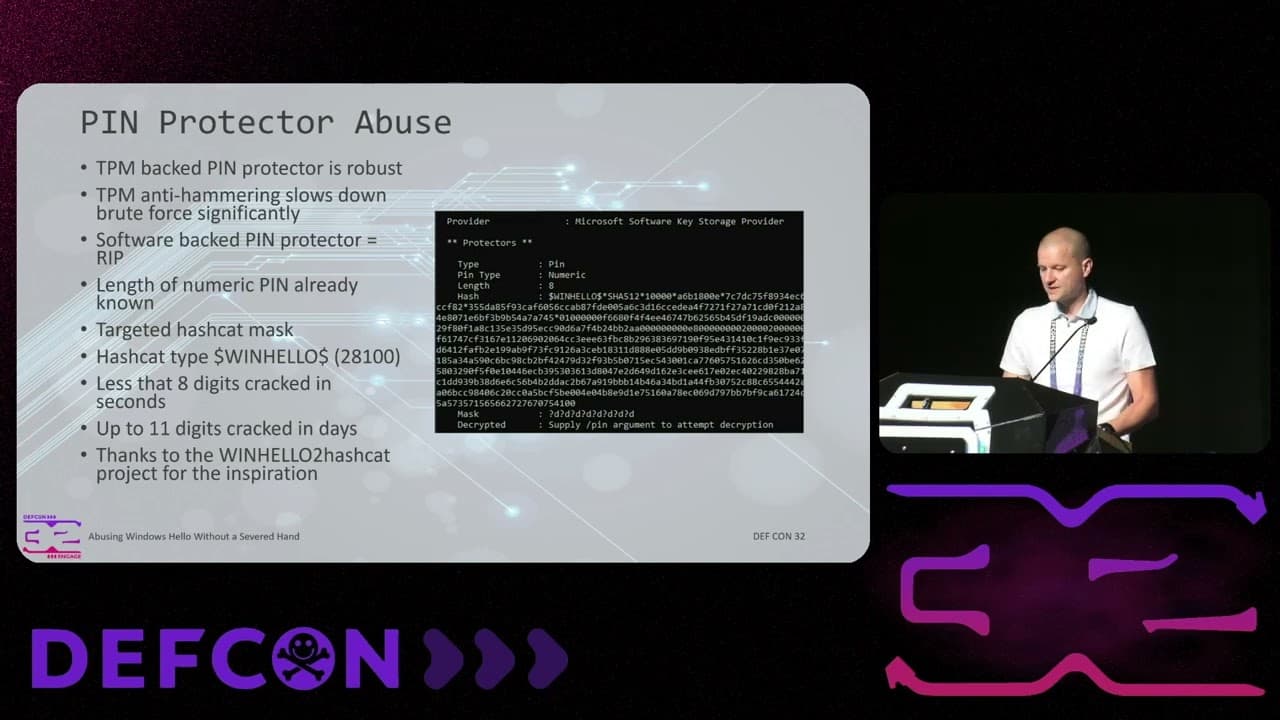
Abusing Windows Hello Without a Severed Hand
Similar Talks
Unmasking the Snitch Puck: The Creepy IoT Surveillance Tech in the School Bathroom
Post-Quantum Panic: When Will the Cracking Begin, and Can We Detect It?