
Guest Revolution: Chaining 3-bugs to compromise the Windows kernel from the VMware guest
This talk demonstrates a multi-stage exploit chain that achieves a virtual machine escape from a VMware guest to the host Windows kernel. The researchers leverage three distinct vulnerabilities: an uninitialized heap leakage in HGFS, a use-after-free in the virtual Bluetooth feature, and a heap buffer overflow in the Cloud Files Mini Filter (CLDFLT). The presentation details the exploitation strategy, including heap spraying and ROP-chaining to bypass Control Flow Guard (CFG) and achieve privilege escalation.
Chaining Three Bugs to Escape a VMware Guest and Pwn the Windows Kernel
TLDR: Researchers at Black Hat 2024 demonstrated a sophisticated three-stage exploit chain that escapes a VMware guest to achieve arbitrary code execution in the host Windows kernel. By chaining an uninitialized heap leak in HGFS, a use-after-free in virtual Bluetooth, and a heap buffer overflow in the Cloud Files Mini Filter, the team bypassed modern protections like Control Flow Guard. This research highlights the critical need for rigorous auditing of hypervisor-to-guest communication channels and the persistent risk of kernel-level privilege escalation.
Virtualization is often treated as a hard boundary, but the reality is that the hypervisor-to-guest interface is a massive, complex attack surface. When you run a guest VM, you are essentially exposing a wide array of drivers and communication protocols to a potentially malicious guest environment. The research presented at Black Hat 2024 by Gwangun Jung and Junch Lee serves as a stark reminder that if you can compromise the guest, you can often find a path to the host kernel. Their work on chaining three distinct vulnerabilities to achieve a full VM escape is a masterclass in modern exploit development.
The Exploit Chain: From Guest to Host
The researchers targeted VMware Workstation, focusing on the communication channels between the guest and the host. The chain begins with CVE-2024-22270, an uninitialized heap leakage vulnerability in the Host Guest File System (HGFS). HGFS is designed to facilitate file sharing between the host and the guest, but its implementation of the communication protocol was flawed. By triggering specific HGFS file read operations, the researchers were able to leak sensitive data from the host heap. This leak provided the necessary memory addresses to bypass Address Space Layout Randomization (ASLR), a prerequisite for any reliable exploit chain.
Once the memory layout was known, the team moved to the second stage: a use-after-free vulnerability in the virtual Bluetooth feature, tracked as CVE-2024-22267. The virtual Bluetooth implementation failed to properly manage the reference count of Universal Request Block (URB) objects. By sending a specially crafted reset command, the researchers could force the hypervisor to free an object while it was still queued for processing. This created a classic use-after-free condition, which the team leveraged to gain control over the instruction pointer.
The final stage of the chain involved CVE-2024-30085, a heap buffer overflow in the Cloud Files Mini Filter (CLDFLT). This driver, used by OneDrive to manage cloud-synced files, was vulnerable to an out-of-bounds write. By manipulating the reparse point data, the researchers could trigger a heap overflow in the Windows kernel. This was the "pwn" moment, where they transitioned from the hypervisor context into the host kernel, ultimately achieving privilege escalation.
Bypassing Modern Protections
Exploiting the Windows kernel today is significantly harder than it was a decade ago, primarily due to mitigations like Control Flow Guard (CFG). CFG restricts the targets of indirect calls, making traditional ROP chains difficult to execute. The researchers bypassed this by constructing a custom ROP chain using gadgets found within the VMware binary and non-CFG protected modules.
The key to their success was the ability to pivot the execution flow to a controlled memory region. By using the heap buffer overflow to overwrite a function pointer, they redirected the kernel's execution to their ROP chain. This chain was carefully crafted to call VirtualProtect on a memory region, changing its permissions to PAGE_EXECUTE_READWRITE. Once the memory was executable, they dropped their shellcode and jumped to it, gaining full control over the host system.
Real-World Implications for Pentesters
For those of us in the field, this research is a reminder that "VM escape" is not just a theoretical concept. During a red team engagement or a high-end penetration test, if you find yourself inside a guest VM, do not assume you are isolated. Look for shared services, drivers, and communication protocols that bridge the gap between the guest and the host.
The HGFS and virtual Bluetooth vulnerabilities demonstrate that even seemingly benign features like file sharing or peripheral emulation can be the entry point for a full system compromise. When auditing these environments, focus your efforts on the drivers that handle complex data structures or protocols. Tools like Ghidra are invaluable for reverse engineering these drivers to identify similar flaws in how they handle guest-supplied data.
Defensive Considerations
Defending against these types of attacks requires a multi-layered approach. First and foremost, keep your virtualization software and host operating system patched. The vulnerabilities discussed here were patched by the respective vendors, and applying these updates is the most effective way to mitigate the risk.
Blue teams should also focus on monitoring for suspicious activity originating from virtualized environments. Unusual file system operations, unexpected driver loads, or attempts to interact with kernel-level objects from a user-mode process within a VM should trigger alerts. While you cannot prevent every zero-day, you can significantly increase the cost of exploitation by implementing strict access controls and minimizing the attack surface of your virtualized infrastructure.
The "Guest Revolution" talk proves that the boundary between guest and host is only as strong as the code that maintains it. As researchers continue to find new ways to bridge this gap, the focus must remain on secure development practices and proactive vulnerability research. If you are building or securing virtualized environments, start by auditing the interfaces that connect your guests to the host. You might be surprised by what you find.
Vulnerability Classes
Tools Used
Target Technologies
All Tags
Up Next From This Conference

BestFit: Unveiling Hidden Transformers in Windows ANSI
Wi-Fi Calling: Revealing Downgrade Attacks and Not-so-private Private Keys
The CVSS Deception: How We've Been Misled on Vulnerability Severity
Similar Talks
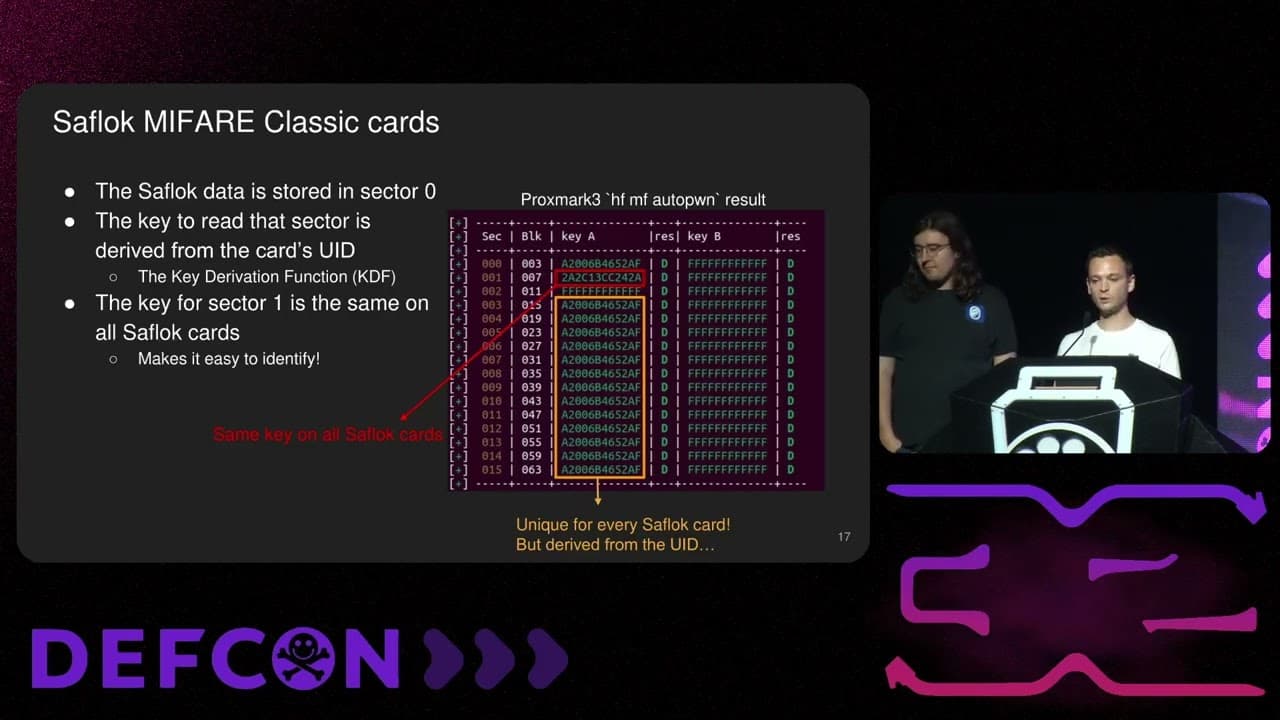
Unsaflock: Unlocking Millions of Hotel Locks

Playing Dirty Without Cheating - Getting Banned for Fun and No Profit
