Hull Integrity: Applying MOSAICS to Maritime Mission Systems
This talk discusses the implementation of the More Situational Awareness for Industrial Control Systems (MOSAICS) framework to enhance the security of maritime mission systems. It highlights the increasing integration of IT and OT networks on naval vessels, which introduces significant cybersecurity risks to critical systems like the Aegis Combat System and CANES. The presentation outlines a phased approach to standardizing security monitoring and incident response across these complex, distributed environments. The goal is to improve the resilience of naval assets by providing operators with a unified, data-driven framework for threat detection and mitigation.
The Hidden Attack Surface of Naval Combat Systems
TLDR: Modern naval vessels are increasingly integrating IT and OT networks, creating a massive, interconnected attack surface that traditional air-gapping no longer protects. The MOSAICS framework provides a standardized approach for monitoring these complex environments, but the underlying vulnerability remains the convergence of legacy OT with modern, networked IT. Security researchers and pentesters must pivot their focus toward these integrated mission systems, as the "steel is strong, but the code is weak."
Naval vessels are no longer just floating hulls; they are massive, distributed data centers packed with industrial control systems (ICS) and weapon platforms. For years, the assumption was that physical separation and air-gapping provided sufficient security. That era is over. The reality of modern maritime operations is a high-speed, integrated network where IT and OT systems share data, resources, and, unfortunately, vulnerabilities. When you look at systems like the Aegis Combat System or the Consolidated Afloat Networks and Enterprise Services (CANES), you are looking at a target-rich environment that is increasingly exposed to the same threats as any enterprise network, but with significantly higher stakes.
The Convergence Problem
The core issue is the shift from isolated, proprietary hardware to networked, software-defined mission systems. As these systems modernize, they adopt standard protocols and commercial off-the-shelf components to increase efficiency and interoperability. While this makes the ship more effective, it also introduces the same attack vectors we see in standard enterprise environments.
Consider the OWASP Top 10 categories, specifically those related to broken access control and insecure design. In a maritime context, these aren't just web application bugs; they are potential entry points into systems that control power generation, HVAC, and weapon firing solutions. When an IT network—which might be compromised via a standard phishing campaign or credential theft—is bridged to an OT network, the lateral movement potential is immense. A pentester who gains access to a CANES terminal is not just on a network; they are potentially one hop away from the sensors and actuators that keep the ship operational.
Why MOSAICS Matters for Researchers
The More Situational Awareness for Industrial Control Systems (MOSAICS) framework is a direct response to this convergence. It is not a silver bullet, but it is a necessary evolution in how we monitor these systems. The framework focuses on a phased approach: passive monitoring, active monitoring, and finally, automated response.
For a researcher, the value of MOSAICS lies in its attempt to standardize the telemetry coming off these disparate systems. If you are performing a red team engagement or a security assessment on a similar industrial environment, you should be looking at how these systems aggregate data. The goal of the framework is to get inside the "OODA loop" (Observe, Orient, Decide, Act) of an adversary. If you can cycle through your own OODA loop faster than the defender, you win. The framework aims to give the defender that same speed advantage by automating the detection of anomalous behavior in the OT space.
Assessing Integrated Mission Systems
When you are tasked with assessing these environments, stop looking for simple web shells. Start looking at the protocol level. How are the weapon systems communicating with the navigation systems? Are they using encrypted channels, or are they relying on the assumption of a "trusted" internal network?
A common finding in these environments is the lack of robust authentication between OT components. You might find that a command sent to a controller requires no more than a simple packet structure. If you can sniff the traffic, you can often replay it.
# Example of a simple packet capture analysis for proprietary OT protocols
tcpdump -i eth0 -w mission_traffic.pcap
# Use Wireshark to identify non-standard protocol headers
tshark -r mission_traffic.pcap -T fields -e data.data | xxd -r -p
The impact of exploiting these systems is not just data exfiltration; it is the loss of system integrity. If an attacker can manipulate the data being fed into the Aegis system, they can effectively blind the ship's defensive capabilities. This is why the focus on "hull integrity" in the digital sense is so critical.
The Defensive Reality
Defenders in this space are fighting an uphill battle against legacy code. You cannot simply patch a 30-year-old weapon system with a modern security agent. The focus must be on network segmentation and behavioral monitoring. If you are working with a blue team, push them to implement strict egress filtering and to monitor for any traffic that deviates from the established baseline of the mission system. The goal is to make the cost of an attack prohibitively high by forcing the adversary to interact with a system that is actively monitoring for their presence.
The next time you are looking at a complex, distributed system, don't just ask what the vulnerabilities are. Ask how the system is integrated and where the trust boundaries are drawn. The most interesting bugs are rarely in the code itself; they are in the gaps between the systems that were never meant to talk to each other. Keep digging into those gaps, because that is where the real research is happening.
Vulnerability Classes
Target Technologies
All Tags
Up Next From This Conference

Maritime Hacking Village Panel: Cyber Policy and National Security
Taiwan Resilience Project: Critical Infrastructure Security
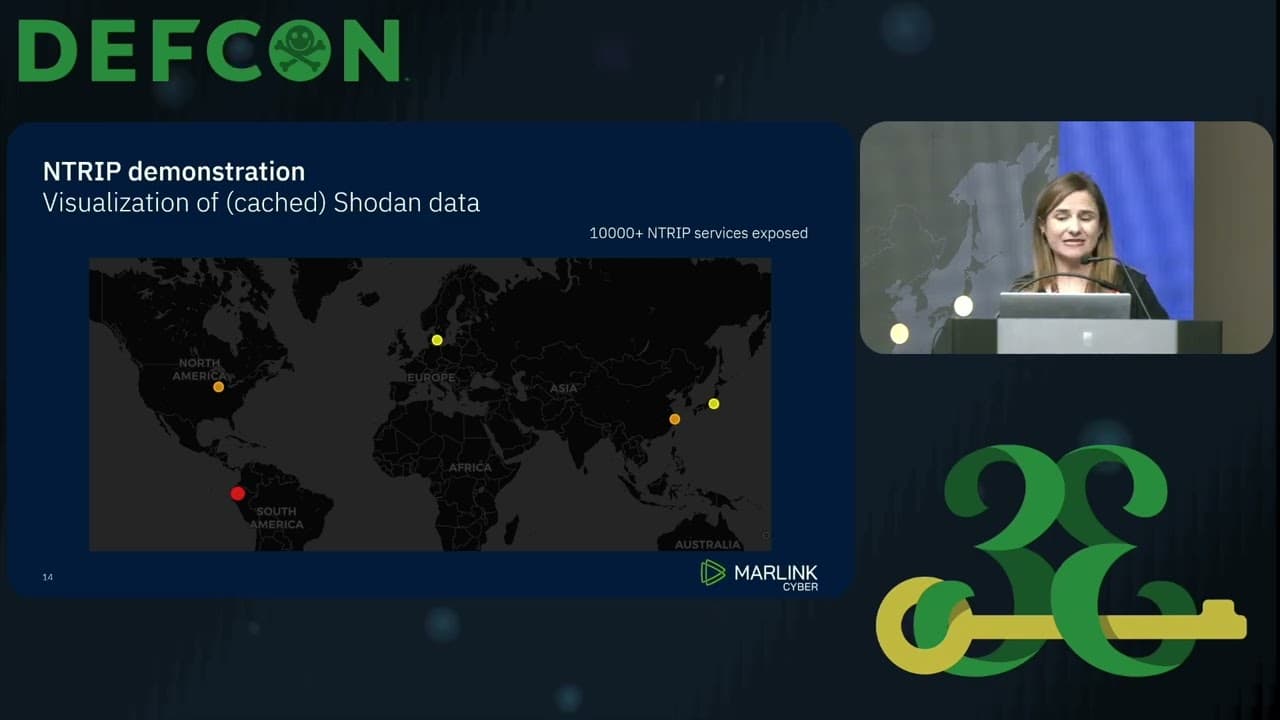
State of the Pops: Mapping the Digital Waters
Similar Talks
Kill List: Hacking an Assassination Site on the Dark Web
Counter Deception: Defending Yourself in a World Full of Lies