Mapping the Landscape: Top 10 Cybersecurity Trends in Critical Infrastructure for 2024
This presentation provides a high-level analysis of the current threat landscape for Operational Technology (OT) and critical infrastructure, focusing on the convergence of IT and OT environments. It highlights the increasing prevalence of ransomware, supply chain attacks, and the exploitation of legacy communication protocols within industrial control systems. The talk emphasizes the critical need for proactive defense strategies, including asset inspection, network segmentation, and improved incident response capabilities to mitigate the significant financial and operational impacts of security breaches.
Why Your Next Industrial Penetration Test Needs to Look Beyond the IT Perimeter
TLDR: Critical infrastructure environments are increasingly vulnerable due to the forced convergence of IT and OT, where legacy protocols and unpatched Windows systems create massive, unmonitored attack surfaces. Attackers are actively leveraging AI-driven tools like WormGPT to craft sophisticated phishing campaigns that bypass traditional security controls. Pentesters must shift focus toward identifying these cross-environment dependencies and the lack of forensic visibility in OT networks to provide meaningful security assessments.
Operational technology environments are no longer the air-gapped, isolated silos they were a decade ago. The push for real-time data analytics and remote management has forced a collision between IT and OT, creating a hybrid landscape that is often poorly understood by both security teams and external auditors. During a recent presentation at DEF CON 32, Mars Cheng detailed how this convergence is being exploited by threat actors who treat industrial control systems not as specialized hardware, but as high-value targets with predictable, exploitable weaknesses.
The core issue is that while IT security has matured, OT security remains tethered to legacy communication protocols like Modbus and proprietary vendor-specific standards that were never designed with authentication or encryption in mind. When an attacker gains a foothold in the IT network, they often find a direct path into the OT environment through misconfigured gateways or shared administrative credentials. Once inside, the lack of network segmentation allows for lateral movement that is rarely detected by standard security tooling.
The Reality of the Attack Surface
Attackers are not just relying on manual discovery anymore. The integration of generative AI tools into the reconnaissance phase has changed the game. Tools like WormGPT and FraudGPT allow adversaries to generate highly convincing, context-aware phishing lures that target specific industrial roles. These campaigns are designed to harvest valid credentials, which are then used to access engineering workstations or jump hosts.
Once an attacker has valid credentials, the technical barrier to entry drops significantly. Many OT environments rely on Windows-based HMIs and engineering workstations that are frequently left unpatched for years due to the fear of breaking critical production processes. A pentester encountering these systems should immediately look for CVE-2024-30078 or similar remote code execution vulnerabilities that are common in outdated Windows environments. If you can compromise an engineering workstation, you effectively own the logic controllers it manages.
Why Standard Pentesters Fail in OT
Most penetration tests in these environments fail because they treat the OT network like a standard enterprise subnet. You cannot simply run an aggressive vulnerability scanner against a PLC or a safety instrumented system without risking a production outage. Instead, you must focus on passive reconnaissance and traffic analysis.
During your engagement, prioritize identifying the "crown jewels" of the OT network. Look for the primary historian, the data acquisition servers, and the configuration management systems. These are the nodes where an attacker can gain the most leverage. If you find an HMI running an outdated version of Windows, document it as a critical finding. If you find cleartext communication protocols, demonstrate the risk by capturing traffic and showing how easily a command can be injected or a setpoint modified.
The lack of forensic visibility is perhaps the most dangerous aspect of current OT deployments. When an incident occurs, most organizations have no way to reconstruct the attack chain because they lack centralized logging for their industrial devices. As a researcher, you should highlight this gap. If the client cannot tell you who accessed a controller at 3:00 AM, they are effectively blind to the most common types of unauthorized access.
Moving Toward Proactive Defense
Defenders in this space are often overwhelmed by the sheer volume of devices and the complexity of the industrial processes they support. The most effective strategy is to move away from the "patch everything" mentality, which is often impossible in production, and toward a model of proactive, risk-based segmentation.
Implement strict network segmentation to ensure that an infection in the IT environment cannot reach the OT control plane. Use OWASP's guidance on IoT and industrial security to identify common misconfigurations in connected devices. Furthermore, ensure that all remote access is protected by multi-factor authentication and that every session is logged and monitored for anomalous behavior.
The goal of your next assessment should not be to see how many systems you can crash, but to map the dependencies that allow an IT-based threat to manifest as an operational failure. If you can show a client how a simple phishing email can lead to the compromise of a safety system, you have provided more value than a hundred automated vulnerability reports. Stop looking for the low-hanging fruit and start looking for the architectural flaws that define the modern industrial threat landscape.
Vulnerability Classes
Target Technologies
Attack Techniques
All Tags
Up Next From This Conference
Breaking Secure Web Gateways for Fun and Profit
Listen to the Whispers: Web Timing Attacks That Actually Work
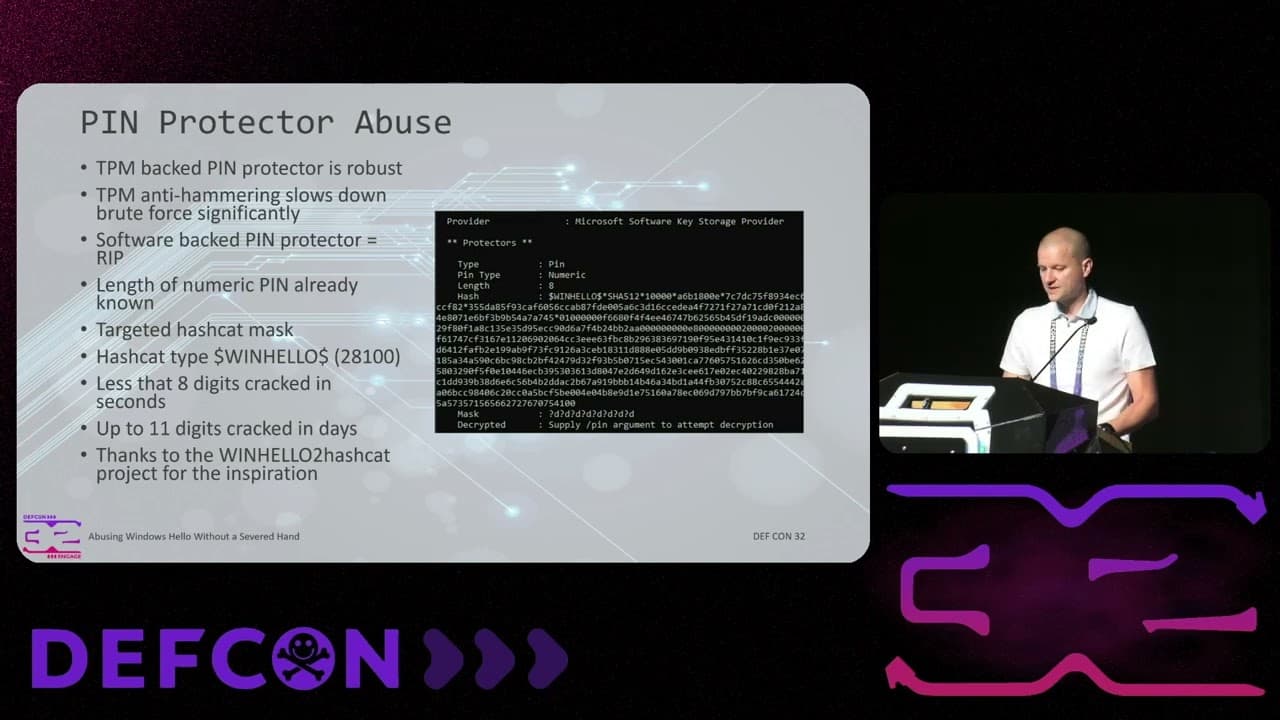
Abusing Windows Hello Without a Severed Hand
Similar Talks

Kill List: Hacking an Assassination Site on the Dark Web

Counter Deception: Defending Yourself in a World Full of Lies