Maritime Hacking Village Panel: Cyber Policy and National Security
This panel discussion explores the intersection of cybersecurity policy, national security, and the maritime industry. The speakers analyze the evolving threat landscape in the Indo-Pacific region, focusing on state-sponsored cyber activities and their impact on critical infrastructure. The discussion highlights the challenges of integrating cyber defense into traditional military operations and the need for proactive, cross-sector collaboration to mitigate risks. The panel emphasizes the importance of talent management and strategic partnerships in addressing these complex security issues.
The Strategic Shift: Why "Volt Typhoon" Isn't Just Another APT
TLDR: The recent focus on Volt Typhoon highlights a critical evolution in state-sponsored cyber operations, moving from traditional espionage to pre-positioning for disruptive attacks on critical infrastructure. This shift demands that security professionals stop treating infrastructure compromises as isolated IT incidents and start viewing them as potential precursors to kinetic conflict. Defenders must prioritize visibility into living-off-the-land techniques and lateral movement within OT/IT converged environments to mitigate these risks.
The cybersecurity industry has spent decades obsessed with the "smash and grab" model of state-sponsored hacking. We built our defenses around the assumption that an adversary wants to steal intellectual property, exfiltrate sensitive data, or hold a database for ransom. We trained our incident response teams to identify the "drunk burglar" who knocks over a vase while stealing a television. But the reality of modern nation-state activity, particularly in the Indo-Pacific, has fundamentally changed. The threat is no longer just about what they can steal; it is about what they can break, and more importantly, when they choose to break it.
The Mechanics of Pre-Positioning
The research surrounding Volt Typhoon—a state-sponsored actor primarily focused on stealth and persistence—demonstrates a shift toward pre-positioning. Unlike traditional campaigns that rely on custom malware, this actor leverages living-off-the-land (LotL) techniques. By using legitimate administrative tools already present in the environment, they bypass signature-based detection systems that look for known malicious binaries.
Mechanically, this involves gaining initial access through the exploitation of public-facing applications or compromised credentials, followed by a heavy reliance on built-in tools like PowerShell, WMI, and native networking utilities to maintain access. For a pentester, this looks less like a standard exploit chain and more like a legitimate administrative session. If you are auditing a network, you should be looking for anomalous usage of these tools. For example, a standard user account executing a series of network discovery commands is a red flag:
# Example of suspicious LotL discovery pattern
Get-WmiObject -Class Win32_NetworkAdapterConfiguration | Select-Object IPAddress
netsh interface ip show config
whoami /all
The goal here is not immediate exfiltration. It is to establish a foothold in critical infrastructure—power grids, water systems, and maritime logistics—that can be activated during a geopolitical crisis.
The Convergence of IT and OT
Maritime systems and power grids are no longer air-gapped islands. The convergence of IT and Operational Technology (OT) has created a massive, often poorly segmented attack surface. When an adversary gains access to the IT side of a maritime logistics company, they are often only a few firewall rules away from the OT systems that control port operations or vessel navigation.
This is where the "fire ant" analogy becomes relevant. A single ant (a compromised credential or a misconfigured VPN) is not a threat. But when an adversary systematically maps the network and establishes persistence across multiple nodes, they are building a fire ant colony. By the time you notice the activity, they have already achieved the level of access required to disrupt operations at scale.
Why Pentesters Need to Change Their Scope
During a standard engagement, many testers focus on the "crown jewels"—the domain controller or the customer database. In the context of national security, the crown jewels are the systems that keep the lights on or the ships moving. If you are testing an environment that touches critical infrastructure, your scope must include the lateral movement paths between the corporate network and the industrial control systems.
Look for the "soft" spots in the network architecture. Are there dual-homed systems acting as bridges between the IT and OT segments? Is there a lack of multi-factor authentication on jump boxes used by third-party contractors? These are the entry points that actors like Volt Typhoon exploit. The OWASP Top 10 remains a baseline, but you need to go beyond web vulnerabilities. You need to test the resilience of the administrative processes that govern the network.
Defensive Realities
Defenders cannot rely on traditional antivirus to stop LotL attacks. You need robust logging and behavioral analysis. If you aren't logging command-line arguments for PowerShell and monitoring for unusual parent-child process relationships, you are effectively blind to this threat. Implement strict egress filtering to prevent unauthorized outbound connections from sensitive segments. Most importantly, assume that your perimeter has already been breached. The focus must shift to detecting the "low and slow" activity that characterizes pre-positioning.
The era of assuming that cyber threats are purely digital is over. We are operating in a space where the digital and the physical are inextricably linked. As researchers and practitioners, our responsibility is to look past the noise of the latest CVE and understand the strategic intent behind the adversary's movements. If you find a way into a network, ask yourself: what would I do if I wanted to stay here for a year without being caught? That is the question the adversary is already answering.
Vulnerability Classes
Target Technologies
Up Next From This Conference

Maritime Hacking Village Panel: Cyber Policy and National Security
Taiwan Resilience Project: Critical Infrastructure Security
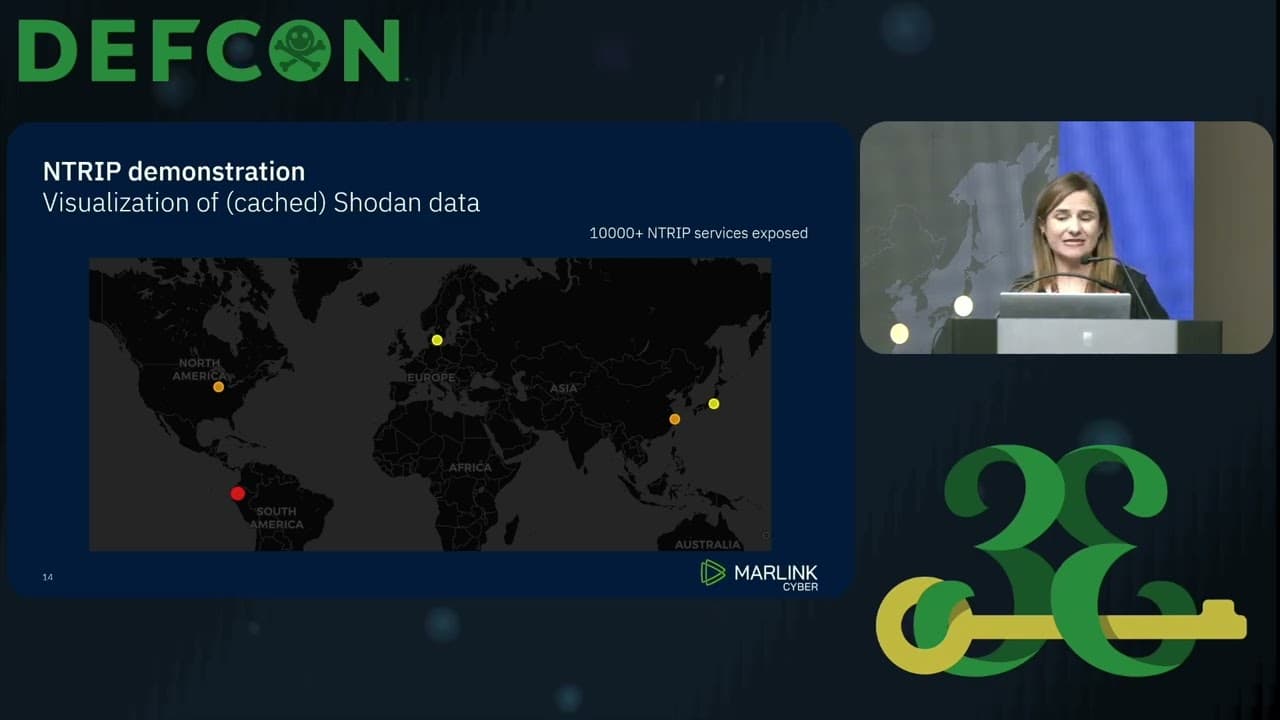
State of the Pops: Mapping the Digital Waters
Similar Talks

Unmasking the Snitch Puck: The Creepy IoT Surveillance Tech in the School Bathroom
Social Engineering A.I. and Subverting H.I.