Navigating the Complex Challenges of Setting Up Efficient and Secure OT SOC Capabilities
This talk outlines the strategic and operational challenges of establishing a Security Operations Center (SOC) for Operational Technology (OT) environments. It highlights the critical differences between IT and OT security, including the need for specialized knowledge, site-specific context, and distinct incident response playbooks. The presentation emphasizes the importance of leadership buy-in, cross-departmental communication, and the use of dedicated OT-aware tools to overcome visibility and response bottlenecks. It concludes by recommending a phased approach to building OT SOC capabilities, starting with site-specific assessments and moving toward integrated, centralized monitoring.
Why Your IT-Centric SOC Is Blind to Industrial Control System Attacks
TLDR: Most Security Operations Centers are built for IT environments and fail to account for the unique operational requirements of Industrial Control Systems. This gap leaves critical infrastructure vulnerable to specialized attacks that bypass traditional detection methods. To secure these environments, teams must move beyond generic monitoring and implement OT-specific visibility, specialized playbooks, and direct collaboration with site-level engineers.
Security researchers and penetration testers often treat the network as a monolith. We look for the same patterns, whether we are testing a cloud-native SaaS platform or a manufacturing plant. This mindset is a liability when you cross the bridge into Operational Technology. The reality of industrial environments is that they are not just "IT with different hardware." They are distinct ecosystems where a single misconfigured firewall rule or an unauthorized command message can lead to physical damage, not just data exfiltration.
The Visibility Gap in Industrial Networks
Standard IT security tools are designed to detect anomalies in traffic patterns typical of enterprise environments. When you deploy these same tools into an OT environment, you face a fundamental mismatch. Industrial protocols like Modbus, DNP3, or PROFINET do not behave like HTTPS or SMB. If your SOC is only looking for traditional indicators of compromise, you are missing the reconnaissance phase of an attack on a Programmable Logic Controller (PLC).
Attackers targeting these systems often use techniques like T0831-manipulate-i-o-image to alter the physical state of a process or T0855-unauthorized-command-message to disrupt operations. These actions are often invisible to standard EDR or SIEM configurations. To gain visibility, you need to deploy Industrial IDS solutions that are protocol-aware. These tools do not just look at packet headers; they inspect the payload to understand the specific function codes being sent to field devices.
Why Your Playbooks Are Failing
A major bottleneck in OT security is the reliance on IT-centric incident response playbooks. In an IT environment, the standard response to a compromised host is isolation. In an OT environment, isolating a controller can trigger an emergency shutdown, causing millions in losses or creating safety hazards.
Effective OT incident response requires a deep understanding of the physical process. You cannot write a playbook without knowing which systems are critical to the safety of the plant. During a test engagement, you will quickly find that the "right" answer is rarely a simple network block. It is a coordinated effort between the security team and the site engineers who understand the operational constraints. If your response plan does not include a direct line to the people who can manually override a PLC, your security posture is effectively non-existent.
The Reality of Asset Management
Asset discovery in OT is notoriously difficult. You cannot simply run an aggressive Nmap scan across a network of legacy PLCs and expect them to survive. Many of these devices have fragile TCP/IP stacks that will crash under the load of a standard vulnerability scan.
Instead of active scanning, you must prioritize passive monitoring. By mirroring traffic from industrial switches, you can build an asset inventory based on the communication patterns of the devices. This approach allows you to identify unauthorized devices or unexpected connections without risking the stability of the production line. When you do find a device, you are often dealing with supply chain vulnerabilities that cannot be patched in the traditional sense. You are left with compensating controls, which requires a level of technical depth that most IT-focused teams simply do not possess.
Bridging the Divide
Building an OT SOC is not a project you can outsource to a third party without deep site-level involvement. The most successful implementations I have seen follow a phased approach. Start by identifying the critical assets and the specific protocols they use. Then, establish a clear point of contact at each site. This person is your most valuable asset. They provide the context that your logs lack.
When you are on an engagement, stop looking for the "hacker" and start looking for the "operator." If you can explain to the site manager how a specific vulnerability could impact their production output, you will get the buy-in you need to implement better security.
Finally, stop trying to force IT solutions into OT problems. If you are using a tool that doesn't understand the difference between a read request and a write command to a PLC, you are not doing security; you are just generating noise. Invest in tools that speak the language of the plant floor and build your response strategies around the reality of physical operations. The goal is not to stop all traffic, but to ensure that the traffic you allow is authorized, expected, and safe. If you are not testing your assumptions about how these systems talk to each other, you are already behind.
Vulnerability Classes
Tools Used
Target Technologies
Attack Techniques
All Tags
Up Next From This Conference

Similar Talks

Kill List: Hacking an Assassination Site on the Dark Web
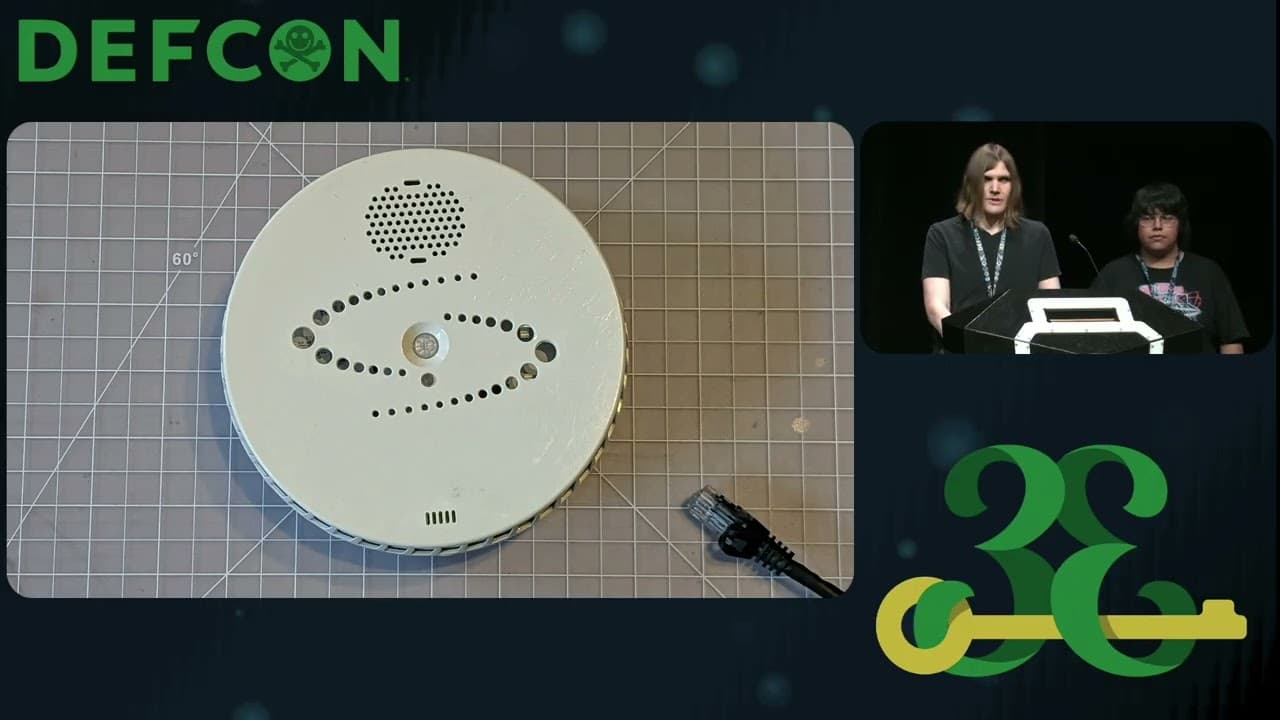
Unmasking the Snitch Puck: The Creepy IoT Surveillance Tech in the School Bathroom