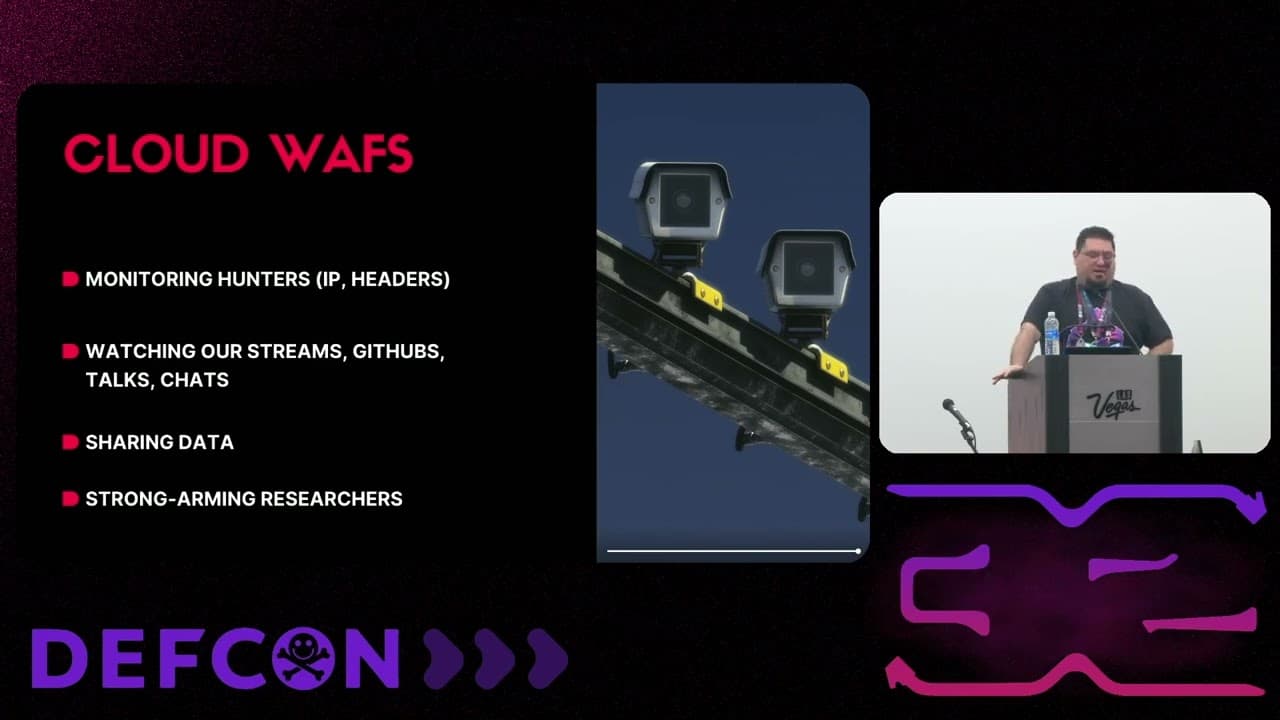
Security through Transparency: Scaling your Customer Trust Program
This talk explores the strategic implementation of a customer trust program to streamline security assessments and vendor reviews. It demonstrates how making security documentation, policies, and compliance artifacts publicly available reduces the burden of manual security questionnaires and accelerates sales cycles. The presentation emphasizes the use of transparency as a tool for building trust and operational efficiency in a cloud-native environment.
Stop Wasting Time on Security Questionnaires: The Case for Public Trust Centers
TLDR: Security teams are drowning in manual vendor risk assessments and repetitive security questionnaires that kill productivity and slow down sales cycles. By building a public-facing Trust Center that hosts your security documentation, compliance artifacts, and policy answers, you can automate the initial stages of vendor due diligence. This approach not only saves hundreds of hours for your team but also builds immediate credibility with prospects who can self-serve the information they need to clear their internal hurdles.
Security professionals often treat their internal security documentation like state secrets. We hide our SOC 2 reports, our penetration test summaries, and our internal policies behind NDAs and gated portals, forcing every single prospect to jump through the same tedious hoops. When a sales team brings in a new lead, the security team is immediately hit with a 500-question spreadsheet that asks the same things we answered for the last fifty customers. It is a massive drain on resources that provides zero additional security value.
The reality is that most of the information requested in these questionnaires is generic. If you are a SaaS provider, your customers want to know about your encryption standards, your access control policies, and your vulnerability management lifecycle. They do not need a custom, signed document to verify that you use AWS or that you have a password policy. They just need to see the evidence.
The Mechanics of a Trust Center
Building a Trust Center is essentially about moving from a push model to a pull model. Instead of waiting for a prospect to ask for your security documentation and then manually emailing them a PDF, you host that information in a centralized, searchable, and public-facing repository.
The most effective way to do this is to treat your security documentation as code. At GitLab, for example, the team maintains their GitLab Handbook as a public repository. This allows them to version control their policies and make updates transparently. When a customer asks about a specific control, they can point to a live, versioned document rather than a stale, static file.
For a pentester or a researcher, this is a goldmine. When you are performing an assessment, you want to know the target's security posture before you even touch the keyboard. A well-maintained Trust Center gives you immediate insight into their OWASP Top 10 mitigation strategies, their incident response plans, and their compliance certifications. If a company is transparent enough to publish their security practices, they are usually more mature in their implementation.
Reducing Friction in the Sales Cycle
Every hour your security team spends filling out a spreadsheet is an hour they are not spending on actual security work. The goal of a Trust Center is to make the security review process self-service. If a prospect can find your SOC 2 Type II report or your latest penetration test summary on your website, they can clear their internal compliance requirements without ever bothering your engineers.
This is not just about saving time. It is about changing the dynamic of the conversation. When you provide a prospect with a comprehensive, public-facing security portal, you are signaling that you have nothing to hide. You are demonstrating that your security program is robust enough to withstand public scrutiny. This builds trust faster than any NDA ever could.
Managing the Information Flow
One of the biggest objections to this approach is the fear of leaking sensitive information. It is a valid concern. You should never publish your actual network diagrams, your API keys, or your specific vulnerability remediation logs. The key is to curate the content.
Use a framework like the Shared Responsibility Model to determine what is safe to share. If the information is something that an attacker could easily find through OSINT or basic reconnaissance, there is no reason to keep it behind a gate. For example, knowing that you use a specific WAF or that you have a bug bounty program is public knowledge. Publishing that information in a structured way helps your customers and does not help an attacker.
For the more sensitive items, you can use a tiered access model. Keep the high-level policy documents public, but gate the detailed audit reports behind a simple, automated NDA process. Many modern Trust Center platforms now offer this functionality out of the box, allowing you to track who is accessing your documents and when.
The Future of Security Transparency
We are moving toward a world where security transparency is a competitive advantage. Customers are tired of the "black box" approach to vendor security. They want to know that the companies they rely on are secure, and they want that information to be accessible.
If you are a security leader, start by auditing the last ten security questionnaires you received. Identify the top twenty questions that appear in every single one. Those are the questions that should be answered in your public Trust Center. Once you have those covered, you will find that the number of manual requests drops significantly.
For the researchers and testers reading this, keep pushing for this level of transparency. When you are on an engagement, ask the client for their public security documentation. If they do not have it, show them why they should. A more transparent industry is a more secure industry, and it starts with us demanding better access to the information that matters. Stop treating security like a secret and start treating it like a product. The time you save will be your own.
Tools Used
Target Technologies
Up Next From This Conference
A Security RISC? The State of Microarchitectural Attacks on RISC-V
REDIScovering HeadCrab: A Technical Analysis of a Novel Malware and the Mind Behind It
TsuKing: Coordinating DNS Resolvers and Queries into Potent DDoS Amplifiers
Similar Talks
Unmasking the Snitch Puck: The Creepy IoT Surveillance Tech in the School Bathroom
Exploiting Shadow Data in AI Models and Embeddings