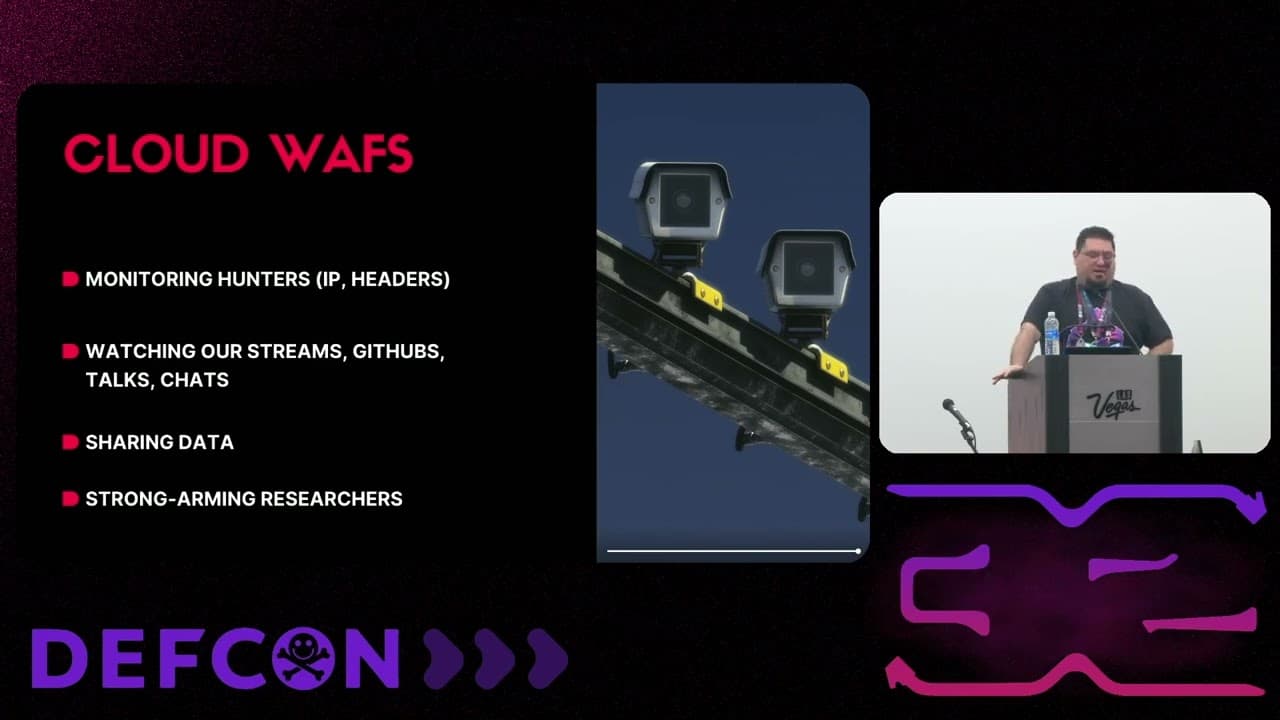
A Bridge Not Too Far: History and Insurance
This talk explores the intersection of cybersecurity risk management and the evolving landscape of cyber insurance. It draws historical parallels between the adoption of new technologies and the necessity of insurance as a risk-mitigation tool. The speaker emphasizes that cyber insurance is not a replacement for a robust security program but rather a motivator for organizations to mature their security posture. The presentation highlights the importance of minimum mandatory security controls in the current threat landscape.
Beyond the Checklist: Why Cyber Insurance is Changing Your Attack Surface
TLDR: Cyber insurance is shifting from a passive financial safety net to an active driver of security requirements. For researchers and pentesters, this means the "minimum mandatory controls" defined by insurers are becoming the new baseline for enterprise security. Understanding these requirements is essential for identifying where organizations are over-indexing on compliance while potentially missing critical, non-standard attack vectors.
Security researchers often view insurance as a boring, administrative layer that sits far above the actual bits and bytes of an engagement. It is easy to dismiss as a "C-suite problem" that has no bearing on the reality of an exploit chain. However, the landscape is shifting. Insurers are no longer just writing checks after a breach; they are actively defining the security controls that organizations must implement to qualify for coverage. When an enterprise is forced to adopt specific configurations to satisfy an underwriter, they create a predictable, standardized environment that is ripe for targeted research.
The Shift Toward Standardized Security
Insurers are currently struggling with a lack of historical data, which makes pricing risk in the digital realm notoriously difficult. Unlike life or auto insurance, where actuarial tables have been refined over centuries, cyber risk is volatile and constantly evolving. To compensate for this uncertainty, carriers have turned to rigid, checklist-based requirements.
If you are performing a red team engagement or a penetration test, you are likely encountering these "minimum mandatory controls" in every environment you touch. These typically include:
- Multi-Factor Authentication (MFA) across all remote access points.
- Endpoint Detection and Response (EDR) deployment.
- Immutable or offline backups.
- Strict network access controls.
- Regular patch management cycles.
From an offensive perspective, this is a double-edged sword. On one hand, these controls raise the bar for entry-level attackers. On the other, they create a false sense of security. Organizations often treat these requirements as the ceiling of their security program rather than the floor. When a client tells you they are "fully compliant" with their insurance requirements, they are often signaling that they have focused their budget on these specific items, potentially leaving other areas—like legacy application security or internal lateral movement paths—under-defended.
Where Compliance Meets Reality
The danger for defenders is that insurance requirements are often static, while the threat landscape is dynamic. A classic example is the SolarWinds supply chain compromise, which demonstrated that even organizations with "robust" security programs can be compromised through trusted third-party software.
When you are scoping an engagement, look for the gaps between the insurer’s checklist and the actual architecture. If an organization has implemented EDR and MFA to satisfy their carrier, where are they still vulnerable? Often, the answer lies in the "human" or "process" side of the equation. Are they actually monitoring the EDR alerts, or is it just a box they checked for the policy? Is the MFA implementation susceptible to session token theft or push fatigue?
As a researcher, your value is in identifying these nuances. Insurers are looking for "panic-proof" organizations—entities that can demonstrate they have taken reasonable steps to mitigate risk. Your job is to show them that "reasonable" is not the same as "secure."
The Pentester’s Role in Risk Maturity
Treating insurance requirements as a roadmap for your testing can be incredibly effective. If you know the client is required to have specific controls, test the efficacy of those controls under stress. Do not just verify that MFA is enabled; test if it can be bypassed via OAuth token manipulation or other modern techniques.
Furthermore, consider the "End of Life" (EOL) requirement often found in these policies. Many insurers demand that organizations phase out EOL software. If you find an EOL system on the network, you have not just found a vulnerability; you have found a potential breach of the client’s insurance policy. This is a powerful finding that forces the organization to prioritize remediation, not just for security reasons, but for financial ones.
Moving Forward
Cyber insurance is not going away. It is becoming a fundamental part of the enterprise security ecosystem. For those of us in the trenches, this means we need to get better at speaking the language of risk. When you present your findings, frame them not just in terms of technical impact, but in terms of how they undermine the controls the client is paying to maintain.
If you can show a client that their "insured" environment is still vulnerable to a simple, unpatched exploit or a misconfigured service, you are doing more than just finding a bug. You are helping them understand the difference between being compliant and being secure. Keep digging into the gaps, keep testing the assumptions, and keep pushing the boundaries of what these "mandatory" controls actually achieve. The goal is not to help them pass an audit; it is to help them survive the next inevitable breach.
Target Technologies
Up Next From This Conference
Chained to Hit: Discovering New Vectors to Gain Remote and Root Access in SAP Enterprise Software
Zero-Touch-Pwn: Abusing Zoom's Zero Touch Provisioning for Remote Attacks on Desk Phones
ODDFuzz: Hunting Java Deserialization Gadget Chains via Structure-Aware Directed Greybox Fuzzing
Similar Talks
Kill List: Hacking an Assassination Site on the Dark Web
Counter Deception: Defending Yourself in a World Full of Lies