All You Need Is Guest
This talk demonstrates how guest accounts in Azure Active Directory can be exploited to gain unauthorized access to sensitive data and internal resources. The speaker highlights how misconfigured Power Platform connections and over-shared credentials allow guest users to bypass security controls and perform data exfiltration. The presentation introduces the PowerPwn tool, which automates the discovery and exploitation of these misconfigurations in enterprise environments. The research emphasizes the critical need for organizations to implement strict data loss prevention (DLP) policies and properly manage external identities.
How Guest Accounts in Azure AD Become a Backdoor to Your Data
TLDR: Guest accounts in Azure Active Directory are often treated as low-risk, but they can be leveraged to access over-shared Power Platform connections and sensitive data. By exploiting misconfigured permissions and the ability to switch between tenants, an attacker can pivot from a simple guest invite to full data exfiltration. Security teams must audit their Power Platform environment and implement strict Data Loss Prevention (DLP) policies to prevent these lateral movement paths.
The assumption that guest users have "access to nothing by default" is a dangerous myth in modern cloud environments. When you invite a guest into your Azure Active Directory (Azure AD) tenant, you are not just giving them access to a specific file or team; you are potentially opening a door into your internal service connections. If your organization uses the Microsoft Power Platform, those guest accounts can interact with over-shared connections, applications, and automations that were never intended for external eyes.
The Mechanics of the Pivot
The attack flow begins with a standard guest invitation. Once the guest accepts, they are technically part of your tenant. While they shouldn't have access to your internal SQL servers or Azure storage, the reality is that business users often create Power Apps or Power Automate flows and share them with the entire organization. If a connection is configured to use a service account or an over-privileged user identity, that connection becomes accessible to anyone within the tenant, including the guest.
The vulnerability lies in the intersection of identity and automation. A guest user can log into the Power Apps portal and view connections that have been shared with the "Everyone" group or the entire organization. If these connections are backed by credentials that have broad read access to a database, the guest can effectively impersonate the connection owner.
Exploiting Power Platform Connections
During a recent engagement, I demonstrated how to use the PowerPwn tool to automate this discovery process. Once a guest account is active, the tool enumerates available connections. If you find a connection to a SQL Server or Azure File Storage, you can inspect the metadata to see which applications use it.
If you attempt to access an application directly, you might hit a license wall. However, this is often a hurdle, not a stop sign. By obtaining a free Power Apps Developer Plan, you can often bypass these restrictions. Once you have a valid license, you can interact with the connection programmatically.
Consider this request flow, which shows how an application fetches data through an API gateway:
GET /api/v2/datasets/customer-insights/tables/dbo.Customers/items
Host: europe-002.azure-apim.net
Authorization: Bearer <JWT_TOKEN>
The Authorization header is the key. Because the application is running on behalf of the user, the token carries the permissions of the connection owner. If you can extract this token or replay the request, you are no longer acting as a guest; you are acting as the application itself.
The Role of Client IDs and SSO
One of the most critical technical nuances is how Microsoft handles cross-app Single Sign-On (SSO). Research into the family of client IDs reveals that certain Microsoft applications share a trust relationship. If you have a valid refresh token for one application, you can sometimes exchange it for a token for another application within the same family.
For a pentester, this means you don't need to find a vulnerability in the target application itself. You only need to find a way to generate a token for a "family" member that is pre-approved to access the resource you want. The Azure CLI is a prime candidate for this. It is a public client, it is available in almost every tenant, and it is frequently pre-approved to access internal Microsoft APIs. By logging into the Azure CLI as a guest and performing a token exchange, you can often gain the necessary scope to query the API Hub and access the underlying data connections.
Defensive Strategies for the Enterprise
Defending against this requires moving beyond standard identity management. First, you must treat your Power Platform environment as a critical attack surface. Audit all connections and ensure they are not shared with the entire organization. Use the OWASP Low-Code/No-Code Top 10 to guide your security reviews.
Second, implement granular DLP policies. These policies allow you to restrict which connectors can be used together. For example, you can prevent a Power App from connecting to both a corporate SQL database and a personal OneDrive account. This effectively breaks the exfiltration path.
Finally, do not rely on the default security settings of your SaaS platforms. The "default" is almost always optimized for productivity, not security. You need to explicitly configure your external collaboration settings in Azure AD to limit what guests can see and do.
The risk is not theoretical. With millions of developers building applications on these platforms, the surface area for misconfiguration is massive. If you are performing a red team engagement, start by checking the guest access policies and then look for those "shared with everyone" connections. You will likely find more than you expect.
Vulnerability Classes
Tools Used
Target Technologies
Attack Techniques
All Tags
Up Next From This Conference
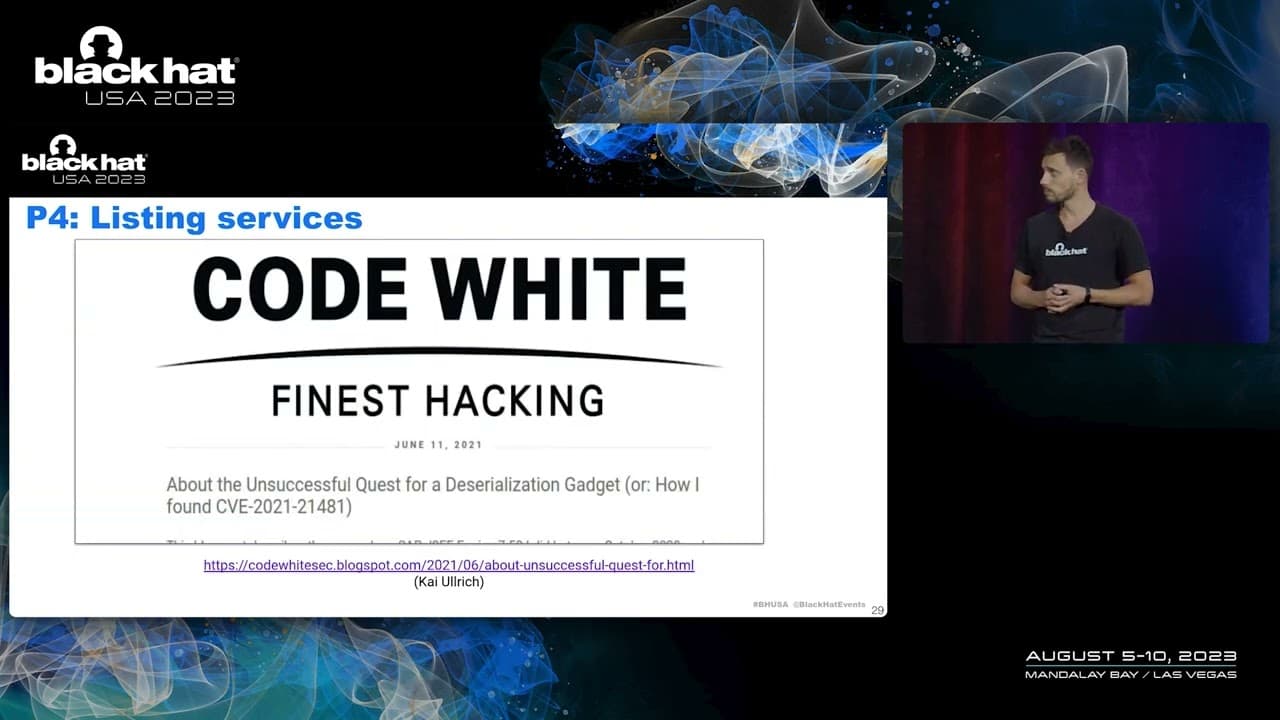
Chained to Hit: Discovering New Vectors to Gain Remote and Root Access in SAP Enterprise Software
Zero-Touch-Pwn: Abusing Zoom's Zero Touch Provisioning for Remote Attacks on Desk Phones
ODDFuzz: Hunting Java Deserialization Gadget Chains via Structure-Aware Directed Greybox Fuzzing
Similar Talks

Kill List: Hacking an Assassination Site on the Dark Web
Hacking Millions of Modems