DMCA Security Research Exemption and Election Security
This talk provides a legal analysis of the DMCA Section 1201 anti-circumvention provisions and their impact on security research for voting machines. It details the permanent and temporary exemptions that allow researchers to perform good-faith security testing without violating copyright law or the Computer Fraud and Abuse Act (CFAA). The presentation highlights the legal risks, such as contractual restrictions and the ambiguity of 'lawfully acquired' devices, that researchers must navigate when auditing election infrastructure.
Why Your Next Voting Machine Audit Needs a Legal Pre-Flight Check
TLDR: Security research on voting machines is often stifled by the legal threat of the Digital Millennium Copyright Act (DMCA) Section 1201. While permanent and temporary exemptions exist for good-faith security testing, they are riddled with ambiguities regarding "lawfully acquired" devices and contractual restrictions. Researchers must navigate these legal minefields carefully to avoid being sued by litigious vendors while attempting to disclose critical vulnerabilities.
Security researchers often treat legal constraints as an afterthought, assuming that if they find a bug, the disclosure process is straightforward. When auditing election infrastructure, that assumption can lead to a career-ending legal battle. The DMCA Section 1201, which prohibits the circumvention of technological protection measures (TPMs), remains the primary legal barrier for anyone attempting to reverse-engineer proprietary voting hardware or software.
The DMCA 1201 Minefield
Section 1201 of the DMCA makes it illegal to circumvent or bypass a technological measure that effectively controls access to a copyrighted work. For a pentester, this means that if you bypass an authentication handshake or decrypt a firmware image to find a vulnerability, you are technically in violation of the law.
The Electronic Frontier Foundation (EFF) has spent years fighting for exemptions to this rule, specifically for security researchers. These exemptions are not blanket permissions. They are narrow, conditional, and subject to change every three years. If you are conducting research on voting machines, you are operating under a temporary exemption that requires you to meet specific criteria. If you fail to meet these, you lose your legal shield, and the vendor can pursue you for copyright infringement.
Navigating the "Lawfully Acquired" Requirement
One of the most dangerous ambiguities in the current exemption is the requirement that the device being tested must be "lawfully acquired." In the context of voting machines, this is rarely as simple as buying a unit on eBay. Many vendors include "no-resale" clauses in their contracts with local election offices. If you acquire a machine from a third party that was never authorized to sell it, the vendor may argue that your possession of the device is unlawful, thereby invalidating your exemption.
When you are on an engagement, you need to document the chain of custody for every piece of hardware you touch. If you cannot prove that the device was acquired in accordance with the vendor's own contractual terms, you are potentially opening yourself up to a lawsuit. This is why many researchers now insist on written authorization from the device owner before beginning any testing. While the exemption technically allows for testing without explicit permission in some scenarios, having that paper trail is the only way to mitigate the risk of a vendor claiming you violated the Computer Fraud and Abuse Act (CFAA) or the DMCA.
The Trap of Anti-Trafficking Provisions
Section 1201(a)(2) of the DMCA, the anti-trafficking provision, is even more restrictive. It prohibits the manufacturing, offering, or distribution of any technology that is primarily designed to circumvent a TPM. This is where many researchers get into trouble. If you develop a custom tool to dump memory from a voting machine or to bypass a specific encryption scheme, you cannot simply release that tool on GitHub.
Even if your intent is purely to help the community secure these systems, the act of distributing the tool can be interpreted as trafficking in circumvention technology. The security research exemptions often do not cover the distribution of these tools. If you are building custom hardware or software to facilitate your audit, keep it internal. Do not push your exploit scripts or hardware schematics to a public repository unless you have had a lawyer review the specific language of the current exemption.
Responsible Disclosure and Legal Risk
Responsible disclosure is the standard for our community, but it is a high-risk activity when dealing with voting machine vendors. These companies are notoriously litigious. When you find a vulnerability, the standard procedure is to reach out to the vendor, provide them with a reasonable window to patch, and then release your findings.
However, the "good-faith" requirement in the security research exemption means that your disclosure must be done in a way that minimizes harm to the public. If you release a PoC that allows anyone to manipulate a vote count before the vendor has a fix in place, you are arguably failing the "good-faith" test. You are also creating a massive target for threat actors.
Before you start an audit, map out your disclosure plan. If the vendor refuses to engage or threatens legal action, you need to be prepared to involve third-party intermediaries like the CISA Coordinated Vulnerability Disclosure program. They can often act as a buffer, ensuring that the vulnerability is addressed without you having to face the vendor's legal team directly.
What to Do Next
If you are planning to audit election infrastructure, do not start with the hardware. Start with the legal documentation. Review the current Library of Congress exemptions to ensure you understand the specific boundaries of what is permitted. If you are working with a client, ensure that your contract includes indemnification clauses that cover potential legal challenges from third-party vendors.
Security research is only as valuable as the impact it has on the real world. If you get sued into silence, your research dies with you. Protect your work by understanding the law as well as you understand the code.
Target Technologies
Up Next From This Conference
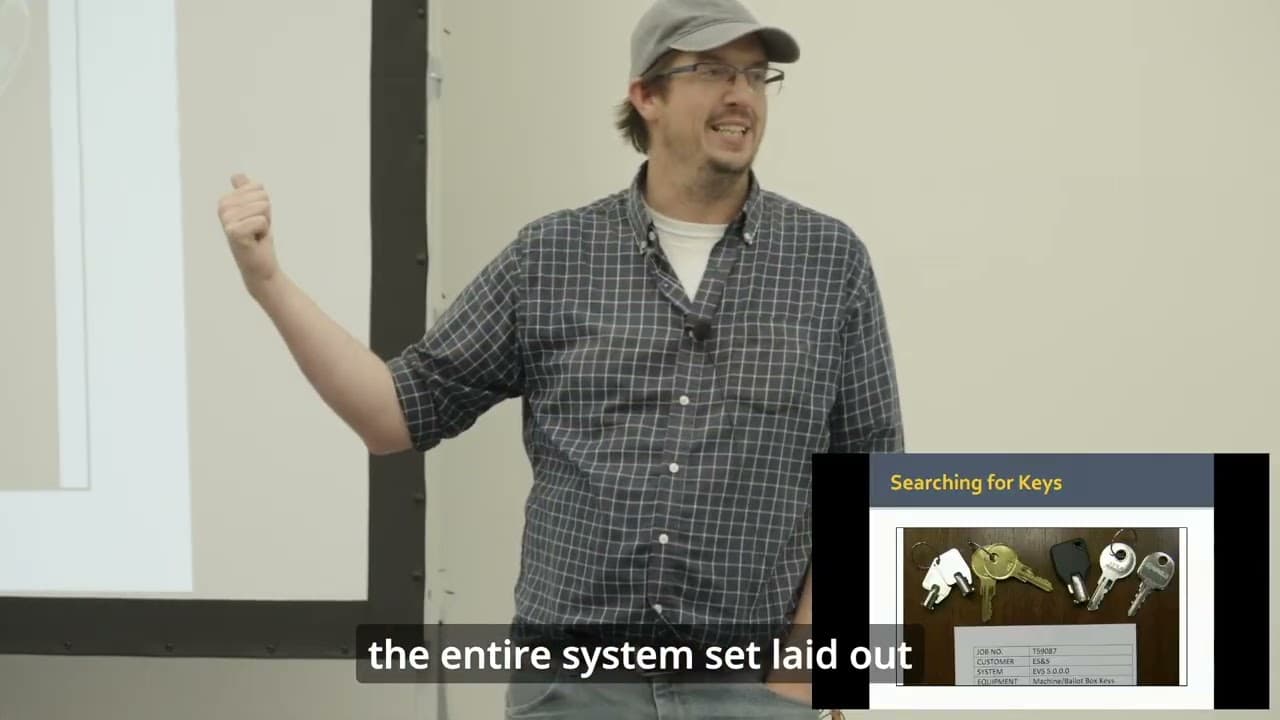
The Fortress Island of Voting System Physical Security
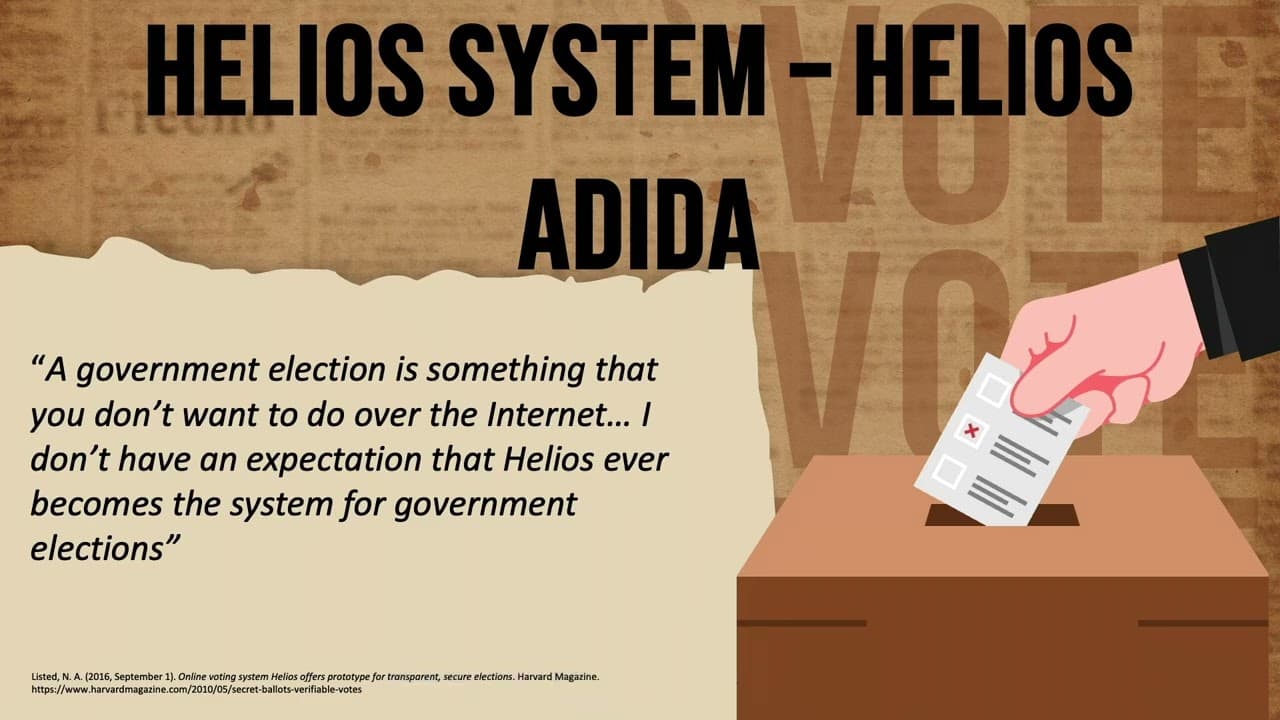
It's Not Safe Yet: Online Voting in Practice
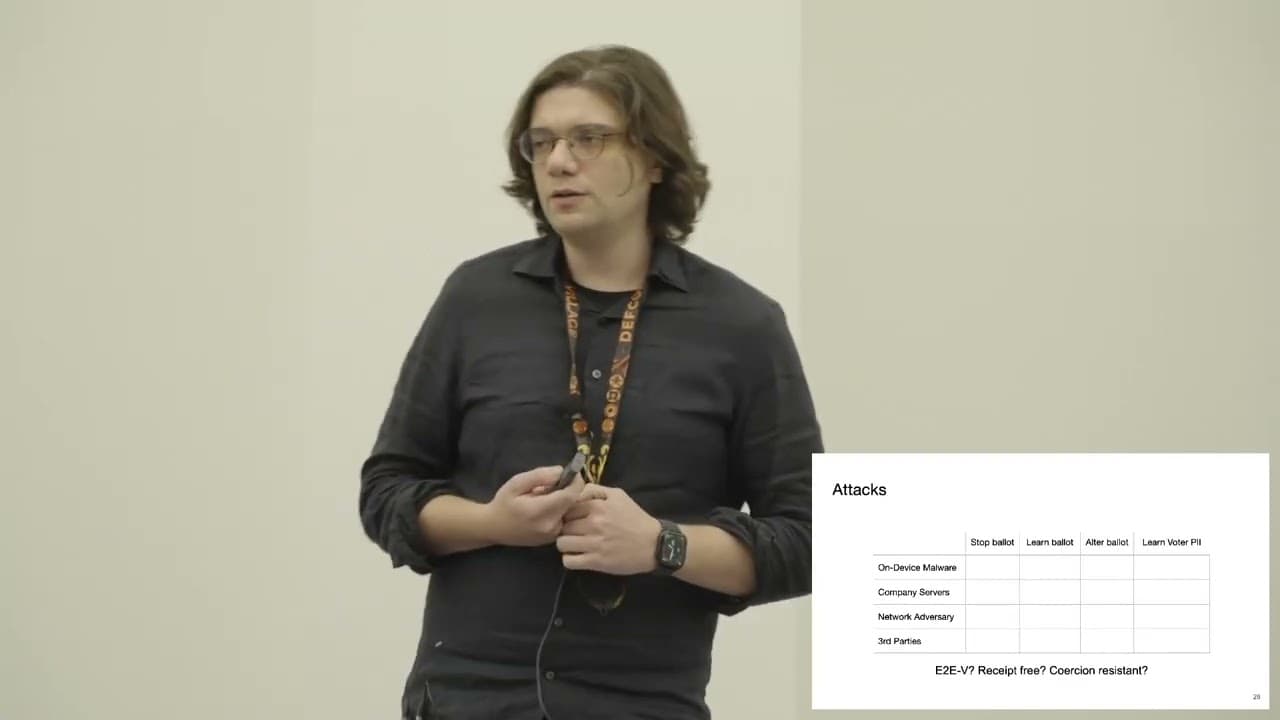
Is End-to-End Verifiability a Magic Bullet for Internet Voting?
Similar Talks
Hacking Apple's USB-C Port Controller
Unmasking the Snitch Puck: The Creepy IoT Surveillance Tech in the School Bathroom