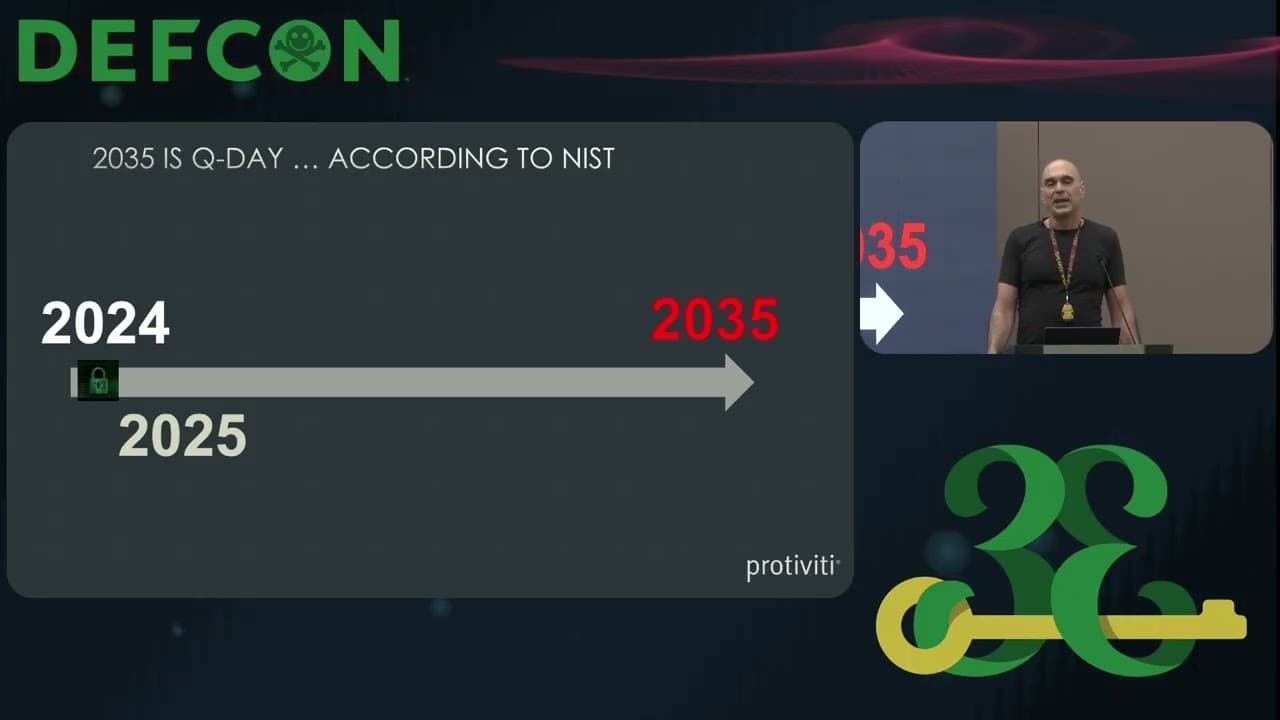
Digital Emblems: A New Standard for Asset Authentication
This talk introduces the concept of 'digital emblems' as a cryptographic alternative to physical markings for authenticating assets like cargo, documents, and people. The speaker proposes a standardized framework using existing protocols like DNS, DNSSEC, and DANE to bind digital signatures to physical assets, aiming to improve supply chain security and reduce counterfeiting. The presentation highlights the limitations of current physical marking methods and outlines how digital emblems can provide verifiable, revocable, and machine-readable authentication. The proposed system leverages existing infrastructure to minimize implementation overhead while addressing the proliferation of proprietary scanners.
Digital Emblems: Why Your Supply Chain Authentication is Broken
TLDR: Current physical asset authentication relies on easily forged markings that lack machine-readable integrity, leaving supply chains vulnerable to sophisticated tampering. This research proposes 'digital emblems' that bind cryptographic signatures to physical assets using DNSSEC and DANE to ensure verifiable, machine-readable provenance. Pentesters should look for these implementations in high-security logistics environments, as they represent a shift toward automated, cryptographically-backed trust models.
Supply chain security is currently held together by little more than stickers, stamps, and hope. Whether it is a diplomatic pouch, a crate of radioactive material, or a piece of high-value industrial equipment, the industry relies on physical markings to prove origin and integrity. These markings are trivial to forge, impossible to verify programmatically, and offer zero protection against an adversary who can simply scrape a label off one container and slap it onto another.
The research presented at DEF CON 2024 regarding digital emblems addresses this fundamental failure by moving the trust anchor from the physical surface of an object to a cryptographically signed digital record. Instead of relying on a human to look at a stamp and guess if it is authentic, the system uses a standardized framework to link a physical asset to a digital identity.
The Mechanics of Digital Emblems
Digital emblems function by creating a binding between an asset and a digital signature. The issuer creates a record that describes the asset—using attributes like serial numbers, dimensions, or location data—and signs that record. This signature is then associated with the asset through a digital label, such as a QR code, an RFID tag, or even modulated signals in existing infrastructure like airport navigation lights.
The core of this proposal is the use of DANE, which allows for the association of certificates with domain names via DNS. By leveraging DNSSEC, the system ensures that the information retrieved during the validation process has not been tampered with in transit. When a validator scans an asset, the scanner performs a lookup to verify the signature against the issuer’s public key. If the signature doesn't match or the DNSSEC chain is broken, the asset is flagged as compromised.
This approach effectively solves the "sticker-swapping" problem. If an attacker moves a digital emblem from a legitimate crate to a malicious one, the validator will immediately detect that the physical characteristics of the asset—such as weight or dimensions—do not match the signed description in the digital record. The emblem is bound to the asset's physical reality, not just its surface.
Technical Implementation and Challenges
Implementing this requires a shift in how we handle asset metadata. The research suggests that we should treat these emblems as standardized data elements. A typical implementation involves an issuer, an asset, and a validator. The validator, often a custom scanner or a mobile device, performs the following logic:
# Conceptual validation flow
# 1. Retrieve the digital emblem data from the asset (e.g., via QR scan)
# 2. Extract the issuer's public key or DANE record
# 3. Verify the cryptographic signature against the asset description
# 4. Compare physical attributes (weight, dimensions) against the signed record
The primary technical hurdle is the proliferation of proprietary scanners. Currently, every logistics company uses its own closed-source hardware and software to track assets. The digital emblem framework aims to replace this fragmentation with an open standard. By using DNS as the backbone, the system avoids the need for a centralized, proprietary database that would inevitably become a single point of failure or a target for identification and authentication failures.
Real-World Applicability for Pentesters
For those of us conducting red team engagements or physical security assessments, digital emblems change the threat model. If you are testing a facility that has adopted this standard, you can no longer rely on simple physical bypasses. You are now forced to contend with cryptographic verification.
During an engagement, your focus shifts from "can I forge this label?" to "can I compromise the issuer's signing key or perform an adversary-in-the-middle attack on the validation process?" If the validator is not properly checking the DNSSEC chain, you might be able to spoof the emblem data. Furthermore, if the physical-to-digital binding is weak—for instance, if the validator doesn't actually verify the physical weight of the object against the signed metadata—you can still bypass the security by using a legitimate emblem on a fraudulent asset.
Defensive Considerations
Defenders must ensure that their validation infrastructure is as secure as the assets they are protecting. This means strictly enforcing DNSSEC validation and ensuring that the public keys used for verification are stored in a hardware security module (HSM) or a similarly protected environment. If the validation logic is implemented in a mobile app, that app must be hardened against reverse engineering and tampering.
The shift toward digital emblems is a necessary evolution for supply chain security. It forces us to stop trusting physical markings and start trusting verifiable, cryptographic proofs. While it won't stop a determined attacker from physically destroying an asset, it makes the process of counterfeiting and unauthorized substitution significantly more difficult. For the security community, this is a space to watch. As these standards mature, we will see them integrated into more critical infrastructure, and with that integration will come new, fascinating attack surfaces for us to explore.
Vulnerability Classes
Attack Techniques
OWASP Categories
Up Next From This Conference
Breaking Secure Web Gateways for Fun and Profit
Listen to the Whispers: Web Timing Attacks That Actually Work
Abusing Windows Hello Without a Severed Hand
Similar Talks

Inside the FBI's Secret Encrypted Phone Company 'Anom'

Unmasking the Snitch Puck: The Creepy IoT Surveillance Tech in the School Bathroom