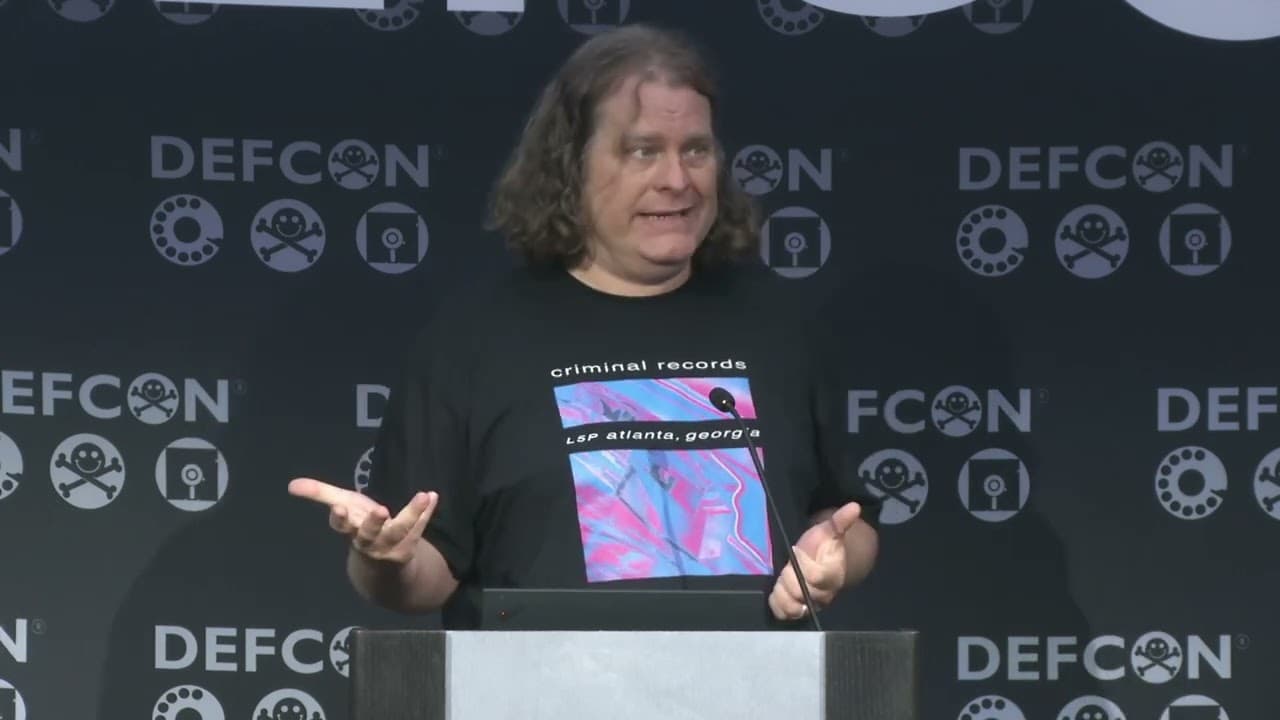
Entrepreneur's Dilemma: Managing Growth and Dedication to Product Quality
This presentation is a non-technical business narrative detailing the growth and operational challenges of the cybersecurity company ReversingLabs. The speaker discusses the company's evolution from a bootstrapped startup to an enterprise-level organization, focusing on the importance of product quality and strategic decision-making. The talk does not demonstrate any specific technical vulnerabilities, exploits, or offensive security techniques. It is a vendor-focused leadership talk.
Beyond the Hype: Why Software Supply Chain Security is Still a Mess
TLDR: Modern software supply chain security remains a critical blind spot for most organizations, as demonstrated by the persistent abuse of code signing certificates and the lack of visibility into third-party dependencies. Attackers continue to leverage trusted vendor identities to bypass perimeter defenses, turning legitimate software updates into delivery vehicles for malware. Pentesters and researchers should prioritize auditing binary provenance and certificate chain validation during engagements to identify these often-overlooked entry points.
Security research often focuses on the latest zero-day or a clever bypass in a web application framework. While those are important, the most effective attacks against enterprise environments today rarely involve breaking complex crypto or finding a memory corruption bug. They involve subverting the trust we place in the software we install. The industry has spent years building better firewalls and endpoint detection, yet we still struggle to answer a fundamental question: is this binary actually what the vendor claims it is?
The Persistence of Code Signing Abuse
Code signing was supposed to be the solution to the problem of untrusted binaries. By requiring a cryptographic signature from a verified vendor, operating systems could ensure that code hadn't been tampered with since it left the developer's build server. In practice, this mechanism has become a primary target for attackers. If you can steal a legitimate signing certificate, you effectively gain the ability to bypass security controls that are configured to trust "signed" code by default.
This is not a new technique. Researchers have documented the abuse of code signing for over a decade. The core issue is that once a certificate is compromised, the trust model collapses. Attackers don't need to find a new exploit if they can simply sign their malicious payload with a certificate that the target's security software already trusts. This is exactly what happened in the SolarWinds Orion supply chain attack, where the build pipeline itself was compromised to inject a backdoor into legitimate updates.
For a pentester, this means that looking for "signed" binaries is no longer a sufficient check for legitimacy. You need to look for anomalies in the signing process itself. Are the timestamps consistent? Is the certificate chain valid and not revoked? More importantly, does the binary exhibit behavior that contradicts its stated purpose?
The Visibility Gap in Dependencies
The complexity of modern software makes it nearly impossible to manually audit every line of code in a production environment. Most applications are built on a foundation of open-source libraries, many of which have their own deep trees of dependencies. This is the "dependency hell" that OWASP has been warning about for years.
When you are performing an assessment, the most valuable findings often come from mapping these dependencies. A single vulnerable library, such as those tracked in CVE-2021-44228, can provide an entry point into an otherwise hardened system. The challenge is that these vulnerabilities are often hidden deep within the stack, far removed from the application's primary business logic.
To effectively test for these risks, you need to move beyond simple vulnerability scanning. You should be looking at how the application handles external data and whether it performs any validation on the components it loads at runtime. If an application dynamically loads libraries or plugins, that is a prime target for an attacker to inject a malicious component.
Practical Steps for Pentesters
If you are conducting a red team engagement or a penetration test, start by treating the software update mechanism as a high-value target. During your reconnaissance phase, identify all third-party software running in the environment. Don't just look for outdated versions; look for the signing certificates used by those vendors.
Use tools like Sigcheck from the Sysinternals suite to verify the signatures of binaries on the target system. If you find a binary that is unsigned or signed by an unknown entity, that is an immediate red flag. Furthermore, monitor the network traffic generated by these applications. If a "trusted" application is reaching out to an unknown domain or downloading additional payloads, you have likely found a potential supply chain compromise.
Defenders need to implement more rigorous controls around binary execution. This includes using Application Control policies to restrict execution to only those binaries that are signed by a known, trusted certificate. It also means implementing robust monitoring for any changes to the system's trust store. If an attacker manages to install a rogue root certificate, they can effectively bypass all signature validation checks.
Moving Forward
The industry's reliance on "trust by default" for signed binaries is a structural weakness that attackers will continue to exploit. We need to shift our mindset from verifying the signature to verifying the behavior. This requires better tooling for binary analysis and a more proactive approach to managing the software supply chain.
As researchers, we need to keep pushing for better transparency in how software is built and distributed. We should be asking vendors for Software Bill of Materials (SBOM) and demanding better security practices in their build pipelines. Until we can guarantee the integrity of the software we run, we will continue to be vulnerable to these types of attacks. The next time you are on an engagement, don't just look for the low-hanging fruit. Dig into the software stack and see what is really running under the hood. You might be surprised by what you find.
Up Next From This Conference
Chained to Hit: Discovering New Vectors to Gain Remote and Root Access in SAP Enterprise Software
Zero-Touch-Pwn: Abusing Zoom's Zero Touch Provisioning for Remote Attacks on Desk Phones
ODDFuzz: Hunting Java Deserialization Gadget Chains via Structure-Aware Directed Greybox Fuzzing
Similar Talks

Kill List: Hacking an Assassination Site on the Dark Web
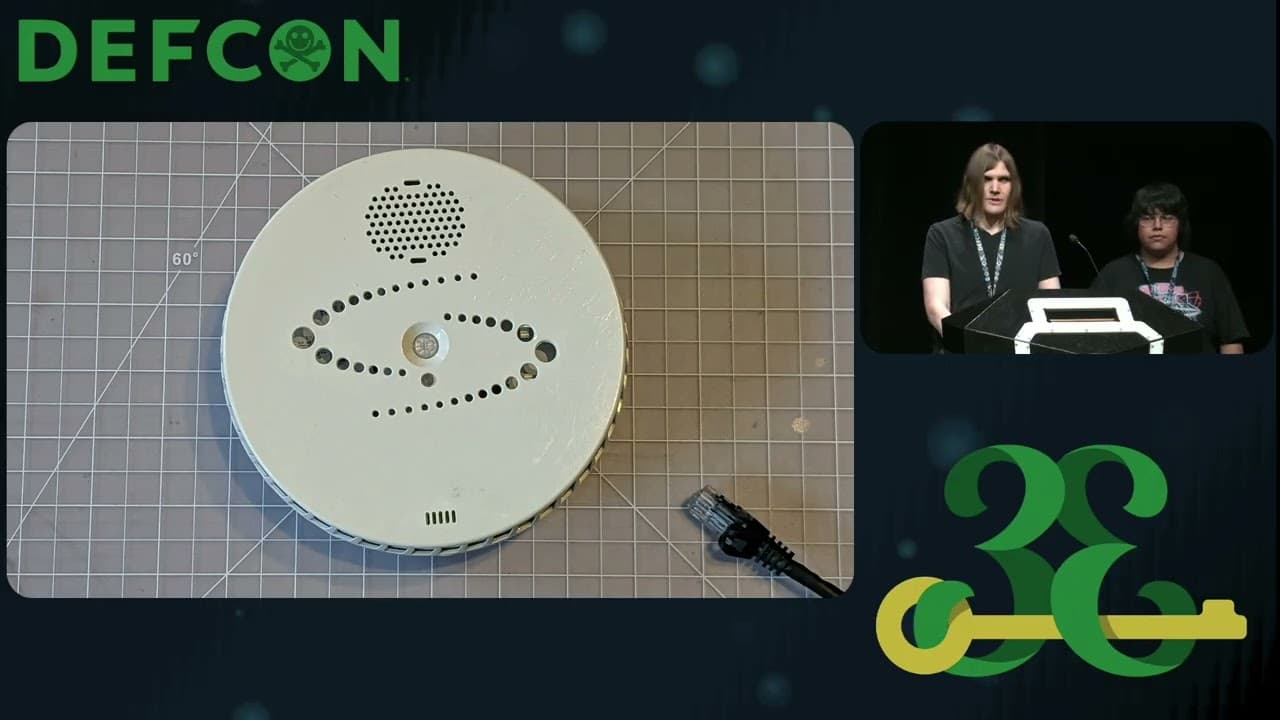
Unmasking the Snitch Puck: The Creepy IoT Surveillance Tech in the School Bathroom