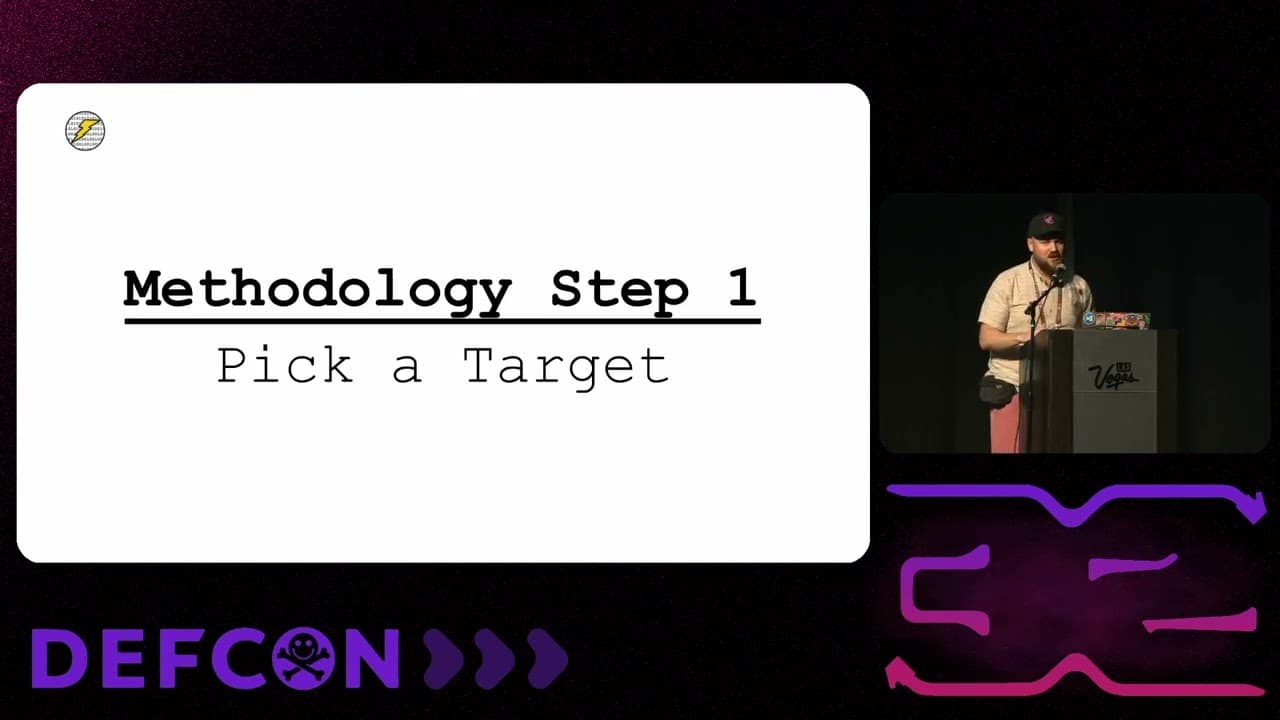
Game Hacking 101
This talk provides an introductory overview of game hacking techniques, focusing on memory manipulation, reverse engineering, and the cat-and-mouse game between developers and cheaters. It explores how game logic can be exploited for speedrunning and modding, while highlighting the security implications of client-side trust in multiplayer environments. The presentation emphasizes the educational value of these techniques for understanding broader software security concepts like memory corruption and obfuscation.
Why Game Hacking is the Ultimate Training Ground for Memory Corruption
TLDR: Game hacking is far more than just cheating in multiplayer matches; it is a masterclass in reverse engineering, memory manipulation, and understanding how client-side trust leads to catastrophic security failures. By dissecting game logic and memory structures, researchers can identify vulnerabilities that mirror those found in high-stakes enterprise software. This post explores how techniques like memory patching and binary analysis provide a low-barrier, high-reward environment for sharpening offensive security skills.
Security researchers often overlook game hacking as a trivial pursuit for script kiddies, but that is a mistake. The cat-and-mouse game between game developers and hackers is one of the most intense arenas for offensive security research. When you strip away the UI, you are left with a complex, high-performance application running on a user-controlled system. If you want to understand how to find memory corruption bugs or bypass integrity checks in enterprise software, you should be looking at how games handle their internal state.
The Mechanics of Memory Manipulation
At its core, game hacking is about identifying where the game stores its state in memory and modifying it to achieve an unintended outcome. Whether it is health, ammo, or player coordinates, these values are just numbers sitting in RAM. Tools like Cheat Engine allow researchers to perform a scan for a known value, trigger a change in the game, and then scan for the new value to isolate the specific memory address.
Once you have the address, the real work begins. You are not just changing a number; you are often looking for the instruction that writes to that address. By setting a hardware breakpoint on access, you can find the exact function responsible for updating that value. This is where you find the logic bugs. For example, if a game calculates player speed based on a float, and you can find the function that performs that calculation, you can patch the binary or hook the function to return whatever value you want.
Reverse Engineering and Binary Analysis
Most modern games are built on engines like Unity, which often use C# for game logic. This is a gift for researchers. Because C# compiles to Intermediate Language (IL), you can use tools like ILSpy or dotPeek to decompile the game’s DLLs back into readable source code.
When you can read the source, you stop guessing and start knowing. You can see exactly how the game validates input, how it handles network synchronization, and where it stores sensitive data. If you are a pentester, this is the equivalent of having the source code for a proprietary application you are auditing. You can identify Broken Access Control vulnerabilities where the client is trusted to report its own position or status to the server, allowing for trivial manipulation of the game state.
The Reality of Client-Side Trust
The most critical lesson from game hacking is the danger of trusting the client. In multiplayer environments, developers often offload heavy computation to the client to save on server costs. This creates a massive attack surface. If the server does not perform rigorous validation on every packet received from the client, the game is fundamentally broken.
We see this constantly in the wild. A player sends a packet claiming they are at a specific coordinate, and the server blindly accepts it. Or, a player sends a packet claiming they have dealt a certain amount of damage, and the server applies it without checking if the player even has line-of-sight to the target. This is not just a game issue; it is the same logic flaw that allows for API abuse in web applications. If you can manipulate the client, you can manipulate the server.
Defensive Strategies for Developers
Defending against these attacks is notoriously difficult because the attacker has total control over the execution environment. You cannot stop someone from attaching a debugger to their own process. However, you can make it significantly harder.
The industry standard is to move toward server-authoritative architectures. If the client is just a dumb terminal that sends inputs and receives state updates, the impact of memory manipulation is minimized. For the remaining client-side logic, developers use obfuscation and integrity checks to detect when the binary has been tampered with. While these are not silver bullets, they force the attacker to spend more time on the research phase, which is often enough to deter casual cheaters.
What This Means for Your Next Engagement
If you are a researcher, stop viewing game hacking as a distraction. The skills you develop—hooking functions, analyzing memory, and deconstructing binaries—are directly transferable to your day job. The next time you are staring at a black-box application, ask yourself how you would approach it if you could see the memory and decompile the logic.
Start by picking an open-source game or a simple Unity project and try to modify its behavior. Use Unity Explorer to inspect the game state in real-time. You will quickly realize that the same logic flaws that allow you to walk through walls in a game are the same ones that allow you to bypass authentication in a web portal. The environment changes, but the underlying vulnerabilities remain the same. Go find them.
Vulnerability Classes
Target Technologies
OWASP Categories
Up Next From This Conference
Similar Talks
Hacking Apple's USB-C Port Controller
Unmasking the Snitch Puck: The Creepy IoT Surveillance Tech in the School Bathroom