Intro to Physical Security: Bypass Methods and Remediations
This presentation provides a comprehensive overview of various physical security bypass techniques, including carding, under-the-door tools, and hinge manipulation. It examines vulnerabilities in common door hardware such as latches, deadbolts, crashbars, and enterphone systems. The talk emphasizes the importance of proper installation and security-minded design to mitigate these physical access risks. Practical demonstrations illustrate how simple, low-cost tools can be used to exploit these common physical security weaknesses.
Beyond the Lock: Why Physical Security is Your Easiest Entry Point
TLDR: Physical security is often the weakest link in an otherwise hardened infrastructure, yet it is frequently ignored by digital-first red teams. This post breaks down common bypass techniques for door latches, crashbars, and enterphone systems that allow for rapid, low-cost physical access. Understanding these mechanical vulnerabilities is essential for any researcher looking to perform a comprehensive assessment of a facility.
Security researchers often spend weeks hunting for a complex remote code execution vulnerability in a web application, only to realize that the entire building could have been compromised in under thirty seconds with a piece of wire. Physical security is not just about high-end biometrics or badge readers; it is about the mechanical reality of the doors, hinges, and sensors that protect the server room. If you are conducting a red team engagement, your physical access assessment should be as rigorous as your network penetration test.
The Mechanics of Latch and Deadlatch Bypasses
Most commercial doors rely on a simple spring-loaded latch to keep them closed. When a door is properly installed, the latch is held in place by a deadlatch—a small, spring-loaded plunger that prevents the main latch from being depressed when the door is shut. However, poor installation is the norm, not the exception. If the strike plate is misaligned or the gap between the door and the frame is too wide, the deadlatch fails to engage.
Once the deadlatch is bypassed, you can use a latch slip or a traveler's hook to depress the main latch. The technique is straightforward: insert the tool into the gap, hook the latch, and pull or push depending on the door's orientation. In a red team scenario, this is often a "first-look" vulnerability. If you can see the latch, you can likely open the door.
Wire-Based Bypasses for Crashbars and Handles
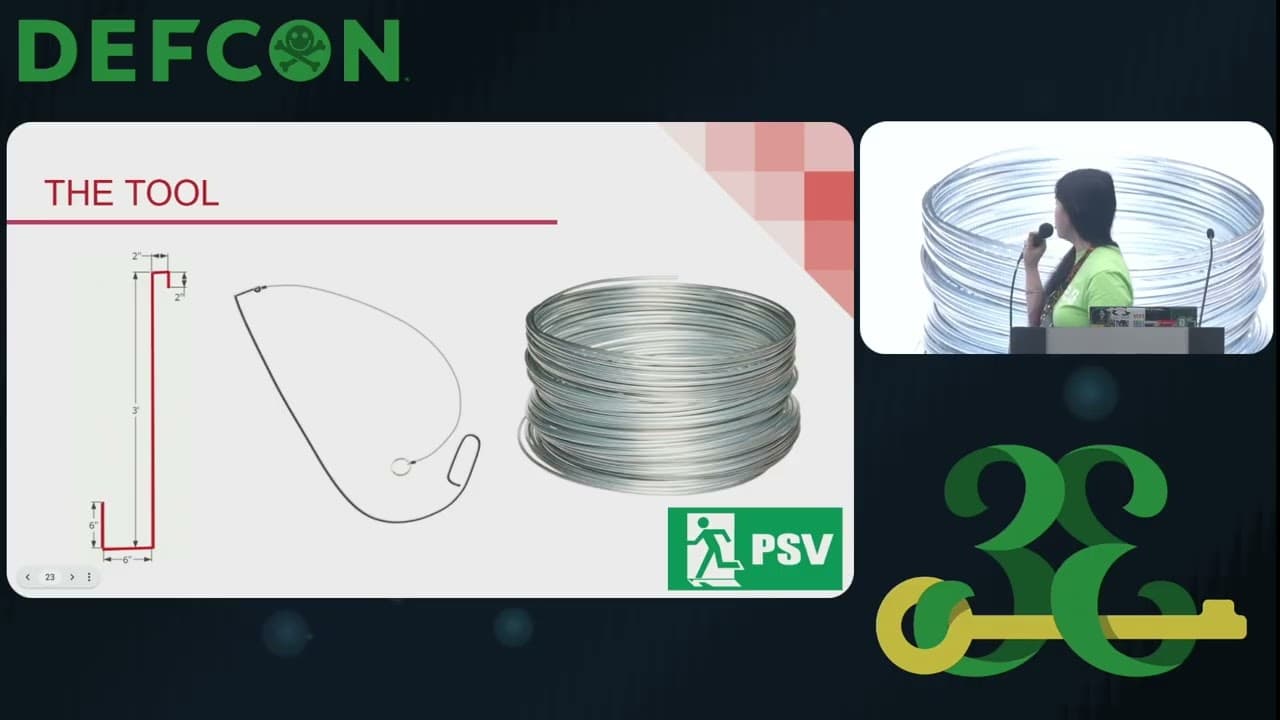
Crashbars—the horizontal bars found on emergency exits—are designed for life safety, not security. They are meant to open instantly from the inside, which makes them inherently vulnerable to manipulation from the outside. If there is any gap at the bottom or side of the door, you can feed a wire-based tool through the opening.
The goal is to hook the bar and apply pressure. Because these bars are designed to release the latch with minimal force, a simple traveler's hook or a custom-bent coat hanger can provide enough leverage to actuate the mechanism. For doors with lever handles, a J-tool can be used to reach around the door and pull the handle down from the inside. This mimics the motion of a person exiting the building and is often the most reliable way to bypass a door that is otherwise locked tight.
Exploiting Enterphone Systems and REX Sensors
Enterphone systems are the gatekeepers of modern apartment complexes and office buildings. Many of these systems are installed with default master codes that are easily found in manufacturer documentation. If the building manager has not changed the default code, you have immediate, authorized access to the system's configuration menu.
Even if the code is changed, the hardware itself is often vulnerable. By opening the enterphone panel—usually with a standard service key—you can access the internal circuitry. Most of these boards have an access relay port. By identifying the relay and using a piece of conductive material to jump the circuit, you can trigger the door to unlock. This is a non-destructive, high-speed entry method that leaves no physical trace.
Request-to-Exit (REX) sensors, which are documented by OWASP as a common point of failure, present a similar risk. These sensors use passive infrared (PIR) to detect heat signatures. If you can introduce a heat source—such as a can of canned air held upside down to create a rapid temperature shift—you can trick the sensor into thinking someone is exiting the building. The door will unlock automatically.
The Defensive Reality
Defending against these attacks requires a shift in mindset. It is not enough to install a lock; you must ensure it is installed correctly. A deadlatch is useless if it does not engage with the strike plate. Retrofitting doors with latch guards can prevent the use of slip tools by covering the gap between the door and the frame.
For REX sensors, the best defense is to use dual-technology sensors that require both PIR and radar detection to trigger an unlock. This prevents simple temperature-based spoofing. Finally, if you are responsible for a facility, audit your master keys and default codes. If your enterphone system is still using the factory-default master code, you are effectively leaving the front door open.
Physical security is a constant game of cat and mouse. Every time a new hardware defense is introduced, a new bypass technique emerges. As a researcher, your value lies in identifying these gaps before an adversary does. Stop looking at the digital perimeter as the only boundary and start testing the physical hardware that actually keeps the bad actors out. If you find a door that is propped open or a REX sensor that triggers with a blast of cold air, you have found your entry point. Document it, report it, and help your client fix the mechanical reality of their security posture.