Keynote: A Conversation with the National Cyber Director
This keynote features a high-level discussion on the current state of national cybersecurity strategy, focusing on the shift toward proactive defense and resilience. The speakers address the integration of cybersecurity into national security policy, the importance of memory-safe programming languages, and the role of the Cyber Safety Review Board. The talk emphasizes the need for a unified, cross-sector approach to building a defensible digital ecosystem and the government's commitment to transparency in its implementation plans.
Beyond the Policy: Why Memory Safety is the New Perimeter
TLDR: The recent keynote at Black Hat 2023 featuring the National Cyber Director shifted the conversation from abstract policy to the concrete necessity of memory-safe programming languages. By moving away from reactive patching cycles and toward proactive, secure-by-design architectures, the government is signaling a fundamental change in how critical infrastructure will be evaluated. For researchers and pentesters, this means the focus is shifting from finding simple memory corruption bugs to auditing the architectural integrity of systems built on modern, memory-safe foundations.
Security research often feels like a perpetual game of whack-a-mole. We spend our careers hunting for buffer overflows, use-after-free vulnerabilities, and heap sprays, only to see the same classes of bugs reappear in the next major release of a critical library or kernel. The recent keynote at Black Hat 2023 featuring the National Cyber Director, Kemba Walden, and Jason Healey, brought a refreshing, if overdue, perspective to this cycle. Instead of discussing the latest threat intelligence reports or the nuances of specific nation-state campaigns, the conversation centered on a structural shift: the transition to memory-safe programming languages as a baseline requirement for critical infrastructure.
The Shift from Patching to Architecture
For years, the industry has operated under the assumption that vulnerabilities are an inevitable byproduct of software development. We build, we ship, we get pwned, and then we patch. This cycle is fundamentally broken. The government’s current stance, as articulated during the keynote, is that we can no longer afford to treat memory safety as an optional feature.
When you look at the OWASP Top 10, memory-related vulnerabilities have consistently been the root cause of the most devastating exploits. By mandating or strongly encouraging the use of memory-safe languages like Rust, Go, or Swift for new development, the goal is to eliminate entire classes of vulnerabilities before they ever reach production. This is not just about writing better code; it is about changing the economic incentives of software development. If a language prevents a buffer overflow by design, the cost of that vulnerability drops to zero for the attacker, and the cost of remediation drops to zero for the defender.
Why This Matters for Pentesters
If you are a penetration tester or a bug bounty hunter, you might worry that this shift will put you out of a job. That is a misunderstanding of the landscape. Memory safety does not eliminate bugs; it changes the nature of the bugs we find.
When a system is written in a memory-safe language, you stop looking for traditional memory corruption and start looking for logic flaws, race conditions, and insecure API implementations. These vulnerabilities are often more subtle and require a deeper understanding of the application's business logic. A pentester who can only find stack-based buffer overflows will struggle in a world of memory-safe code, but a researcher who understands how to manipulate state machines or exploit improper authorization will find a target-rich environment.
Consider the NVD database entries for recent vulnerabilities. While many still relate to memory management, we are seeing a steady increase in vulnerabilities related to improper input validation and business logic errors. As we move toward memory-safe stacks, the "easy" bugs will vanish, and the "hard" bugs—the ones that require deep, manual analysis—will become the new standard.
The Role of Transparency and Accountability
One of the most interesting points raised during the talk was the government's commitment to transparency. By publishing implementation plans and specific action items on the White House website, the administration is inviting the security community to hold them accountable.
This is a significant departure from the "security through obscurity" model that has dominated government policy for decades. For the research community, this is an opportunity to provide feedback on what is actually working and what is just "security theater." If you see an implementation plan that relies on outdated or ineffective controls, you now have a clear channel to point out why those controls will fail in a real-world engagement.
What to Do Next
The transition to memory-safe development is not going to happen overnight. We are looking at a multi-decade effort to modernize the digital ecosystem. However, the direction is clear. If you are building tools or conducting research, start looking at how your targets are handling memory. If you are working with clients, start asking about their roadmap for adopting memory-safe languages.
The most effective researchers are those who anticipate where the industry is going, not where it has been. The era of the "low-hanging fruit" memory bug is slowly coming to a close. The next generation of critical vulnerabilities will be found in the gaps between secure components, in the logic that connects them, and in the assumptions developers make about how their systems interact with the world. Start sharpening your skills in logic analysis and protocol auditing now, because that is where the next big bugs are hiding.
Target Technologies
All Tags
Up Next From This Conference
Chained to Hit: Discovering New Vectors to Gain Remote and Root Access in SAP Enterprise Software

Zero-Touch-Pwn: Abusing Zoom's Zero Touch Provisioning for Remote Attacks on Desk Phones
ODDFuzz: Hunting Java Deserialization Gadget Chains via Structure-Aware Directed Greybox Fuzzing
Similar Talks
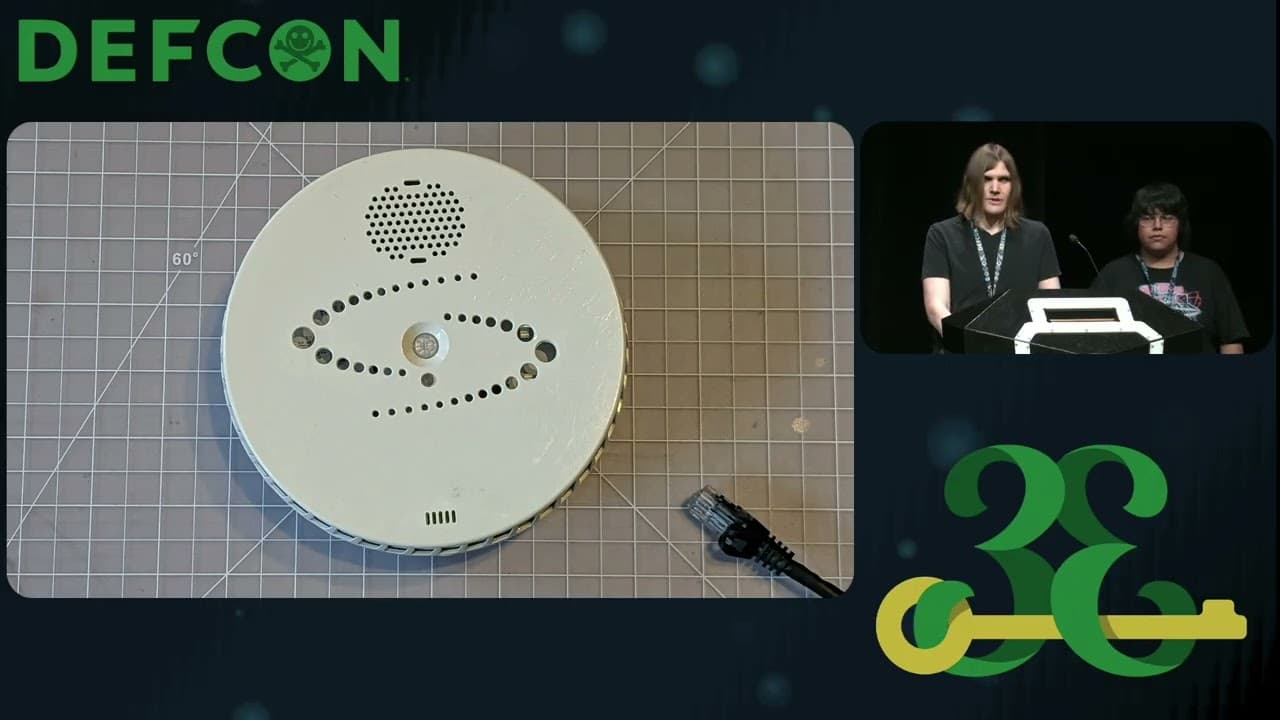
Unmasking the Snitch Puck: The Creepy IoT Surveillance Tech in the School Bathroom
Google First-Party Secrets Disclosure