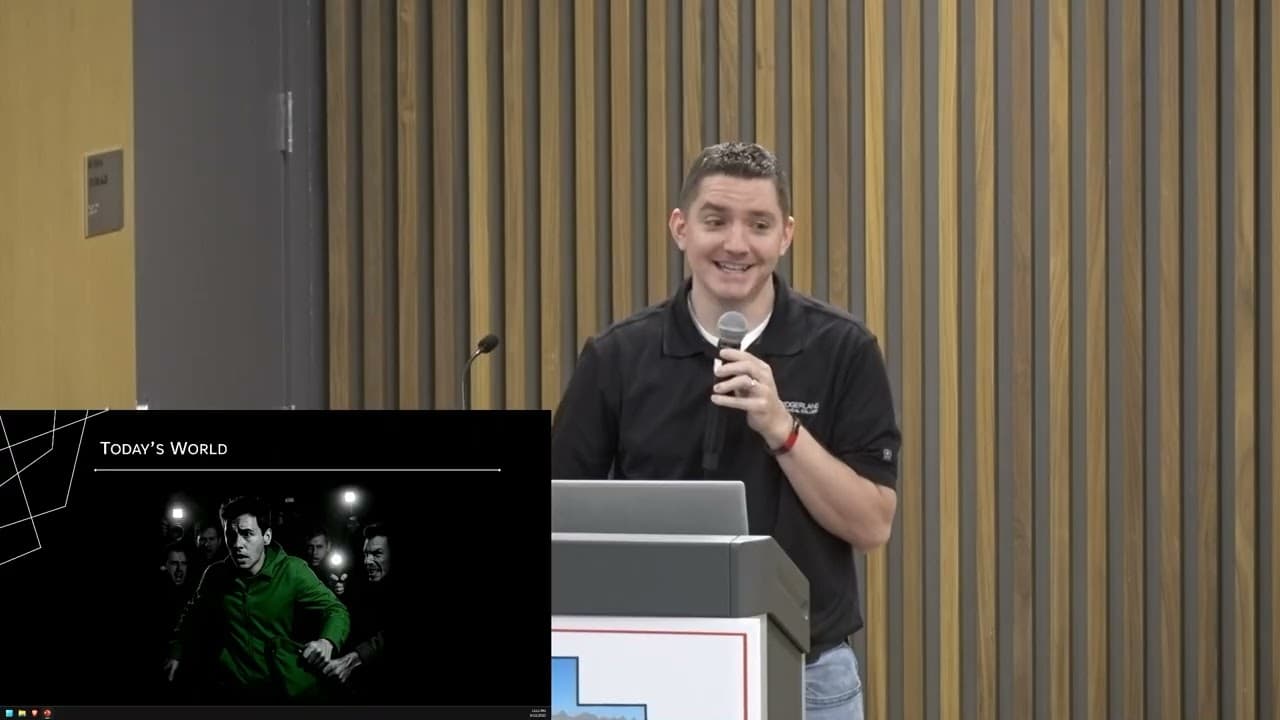
Kidnapping Without Hostages: Virtual Kidnapping and the Dark Road Ahead
This talk analyzes the mechanics of virtual kidnapping, a form of cyber-enabled extortion that leverages social engineering and deepfake technology to manipulate victims into paying ransoms. The attack exploits human psychological triggers and publicly available OSINT data to create convincing, high-pressure scenarios without the need for physical hostage-taking. The research highlights how generative AI and automated tools enable the scalability of these attacks, making them a low-risk, high-reward threat. The presentation demonstrates the use of deepfake audio and video creation tools to facilitate these extortion campaigns.
The Mechanics of Virtual Kidnapping: How OSINT and Generative AI Automate Extortion
TLDR: Virtual kidnapping is a high-reward, low-risk extortion scheme that uses OSINT and generative AI to simulate hostage scenarios without physical contact. Attackers harvest biometric and personal data from social media to create deepfake audio and video, then use automated scripts to scale their campaigns. Pentesters and researchers should recognize these social engineering patterns to better simulate realistic threat models for clients.
Modern extortion has moved beyond simple phishing. The research presented at Black Hat 2023 on virtual kidnapping exposes a terrifyingly efficient pipeline that turns publicly available data into a weaponized extortion engine. By combining OSINT, voice modulation, and generative AI, attackers can now simulate a high-stakes hostage crisis that bypasses traditional security controls entirely. This is not a theoretical threat; it is a scalable business model that exploits the most vulnerable part of any security architecture: the human element.
The Anatomy of a Virtual Kidnapping Pipeline
Virtual kidnapping relies on the psychological manipulation of a target by convincing them that a loved one is in immediate physical danger. Unlike traditional kidnapping, the victim is never actually taken. The attacker relies on the target's panic to force a quick, irrational decision, typically involving a wire transfer or cryptocurrency payment.
The process begins with data harvesting. Attackers use OSINT techniques to identify high-value targets, such as executives or individuals with a significant public footprint. They scrape social media platforms like TikTok, Instagram, and Twitter to collect audio samples, video clips, and personal relationships. This data is the fuel for the attack. With enough high-quality audio, an attacker can use tools like ElevenLabs or open-source voice cloning models to generate a convincing, distressed voice of the victim's relative.
The technical execution is surprisingly straightforward. Attackers use FaceSwap or similar deepfake frameworks to manipulate video content if needed, though audio is often sufficient to trigger the necessary emotional response. The goal is to create a "human process compromise" where the target is so overwhelmed by the perceived threat that they bypass standard verification procedures.
Scaling the Attack with Generative AI
What makes this research particularly alarming is the shift toward automation. The talk demonstrated how attackers use ChatGPT to generate custom, high-pressure scripts tailored to specific victims. By feeding the model details about the victim's location, family structure, and recent activity, the attacker can generate a script that sounds authentic and urgent.
The scalability comes from the ability to automate the entire workflow. An attacker can use a simple Python script to iterate through a list of targets, pull their metadata, generate a unique extortion script, and even automate the delivery of the call via a VoIP gateway.
# Conceptual workflow for automated extortion targeting
def generate_extortion_script(victim_name, location, relative_name):
    prompt = f"Write a 30-second distressed script for a kidnapping extortion call. The victim is {relative_name}, the parent is {victim_name}, and the location is {location}."
    return chatgpt.generate(prompt)
This automation reduces the cost per attack to near zero. When an attacker can run thousands of these simulations simultaneously, the success rate only needs to be a fraction of a percent to generate significant revenue.
The Role of Telecom Infrastructure
A critical component of this attack is the manipulation of telecommunications. Attackers often use SIM swapping to take control of a victim's phone number. By redirecting the victim's calls to their own infrastructure, they can ensure that if the target tries to call the "kidnapped" relative, the call is intercepted or answered by the attacker. This provides the ultimate validation of the kidnapping story.
For a pentester, this highlights a massive gap in how we assess security. We spend our time testing web applications and network perimeters, but we rarely test the resilience of an organization's employees against sophisticated, AI-driven social engineering. During an engagement, you should be testing whether your client’s staff can identify these red flags:
- The caller refuses to let the target speak directly to the hostage.
- The background noise (crying, screaming) is repetitive or sounds "cued" rather than organic.
- The attacker demands immediate payment via non-reversible methods.
Defensive Strategies and Reality Checks
Defending against this requires a shift in how we handle personal data. Organizations must train employees to recognize that their public social media presence is a direct input for these attacks. If a high-profile executive posts their entire life on Instagram, they are essentially providing the training data for their own extortion.
Blue teams should implement strict verification protocols for any request involving urgent financial transfers. If an employee receives a call claiming a family member is in danger, the protocol must be to hang up and call the family member on a known, verified number. This simple step breaks the attacker's control over the situation.
Virtual kidnapping is a stark reminder that as our defensive tools get better at blocking automated exploits, attackers will simply move further up the stack to exploit human biology. We are entering an era where the "human process" is the most critical attack surface. If you are not including social engineering simulations that leverage generative AI in your red team engagements, you are missing the most effective attack vector currently in play. The technology to execute these attacks is free, accessible, and already being used at scale. It is time to start treating it with the seriousness it deserves.
Vulnerability Classes
Target Technologies
Attack Techniques
OWASP Categories
All Tags
Up Next From This Conference

A Security RISC? The State of Microarchitectural Attacks on RISC-V

REDIScovering HeadCrab: A Technical Analysis of a Novel Malware and the Mind Behind It

TsuKing: Coordinating DNS Resolvers and Queries into Potent DDoS Amplifiers
Similar Talks
Inside the FBI's Secret Encrypted Phone Company 'Anom'

Kill List: Hacking an Assassination Site on the Dark Web