
Learnings from Duo
This presentation provides a retrospective on the growth and operational strategies of Duo Security, focusing on the transition from a startup to a scaled enterprise. It discusses the challenges of building security products for the mass market, emphasizing the importance of usability and customer-centric design in security adoption. The talk highlights the evolution of go-to-market strategies, the necessity of maintaining organizational cohesion during rapid growth, and the role of cultural values in sustaining long-term success. It serves as a business-oriented case study for security entrepreneurs rather than a technical exploit demonstration.
Why Your MFA Implementation Is Likely Failing Your Users
TLDR: Most organizations treat Multi-Factor Authentication (MFA) as a checkbox exercise, ignoring the friction it introduces to the end-user experience. This talk breaks down the operational reality of scaling authentication, arguing that security must be designed for humans rather than just for network endpoints. If your MFA flow is painful, your users will find ways to bypass it, rendering your security controls useless.
Security professionals often fall into the trap of designing systems that are technically sound but operationally impossible. We build complex, multi-layered authentication schemes that look great on a whiteboard but fail the moment a real user tries to log in. Jon Oberheide’s retrospective on building Duo Security serves as a masterclass in why usability is not just a feature, but a fundamental security requirement. When you force users to jump through hoops, you aren't creating a more secure environment; you are creating a culture of workarounds.
The Friction Problem in Authentication
Authentication failures are consistently ranked among the top risks in the OWASP Top 10. While we focus on the mechanics of session hijacking or credential stuffing, the biggest vulnerability is often the user's desire to get their job done. If an MFA prompt takes thirty seconds to load, requires a physical token that is always in the wrong bag, or triggers a push notification that never arrives, the user will eventually demand an exception or find a way to disable the requirement.
Duo’s success wasn't built on inventing a new cryptographic primitive. It was built on the realization that the "push" notification—the simple green button on a mobile device—was the key to mass adoption. By reducing the friction of the second factor, they moved MFA from an IT burden to a seamless part of the login flow. For a pentester, this is a critical observation. When you are assessing an environment, don't just look for bypasses in the code. Look for the friction points. Where are the users complaining? Where are the help desk tickets piling up? That is where you will find the most likely candidates for credential theft or social engineering.
Scaling Security Without Breaking the Workflow
Building a security product that scales requires moving beyond the "1% mindset." Many security tools are designed for massive enterprises with dedicated SOC teams and unlimited budgets. They assume the person operating the tool has a PhD in networking and nothing else to do all day. In reality, most organizations are managed by IT generalists wearing twenty different hats. If your tool requires a week of training to configure, it will be misconfigured.
The technical takeaway here is that security architecture must be "customer-out." You start with the user's workflow and build the security controls around it, rather than forcing the user to adapt to your security constraints. During an engagement, if you find that a client has implemented a complex, proprietary MFA solution that is rarely used, you have found a high-value target. These systems are almost always poorly maintained, lack proper logging, and are ripe for exploitation because the IT team is too busy managing the friction to manage the security.
The Reality of Modern Authentication
We are currently seeing a shift toward passwordless authentication and FIDO2-compliant hardware keys, as documented in the FIDO Alliance specifications. These technologies are the logical evolution of the "push" model because they remove the user from the loop entirely, replacing shared secrets with public-key cryptography. However, the same rule applies: if the enrollment process is a nightmare, the deployment will fail.
For those of us in the field, the lesson is clear. When you are writing a bug bounty report or a penetration test finding, don't just point out that MFA is missing. Explain the operational impact of the current state. If you can demonstrate that the current authentication flow is so cumbersome that it encourages users to share credentials or use weak passwords, you have a much stronger argument for remediation.
Moving Beyond the Checkbox
Security is a team sport, and that includes the people who have to use your controls every day. If you are a founder or a lead researcher, stop treating your users as the enemy. They are the ones who will ultimately decide if your security posture is effective. If they find your controls too difficult, they will route around them, and no amount of technical hardening will save you.
Focus on the fundamentals. Are your authentication logs actually being monitored? Is the MFA enrollment process verified? Are there clear paths for account recovery that don't involve a social engineering attack on the help desk? These are the questions that matter. The next time you are looking at an authentication bypass, ask yourself if the vulnerability exists because the system is broken, or because the system was designed to be so difficult that the user had no choice but to break it.
Target Technologies
OWASP Categories
All Tags
Up Next From This Conference
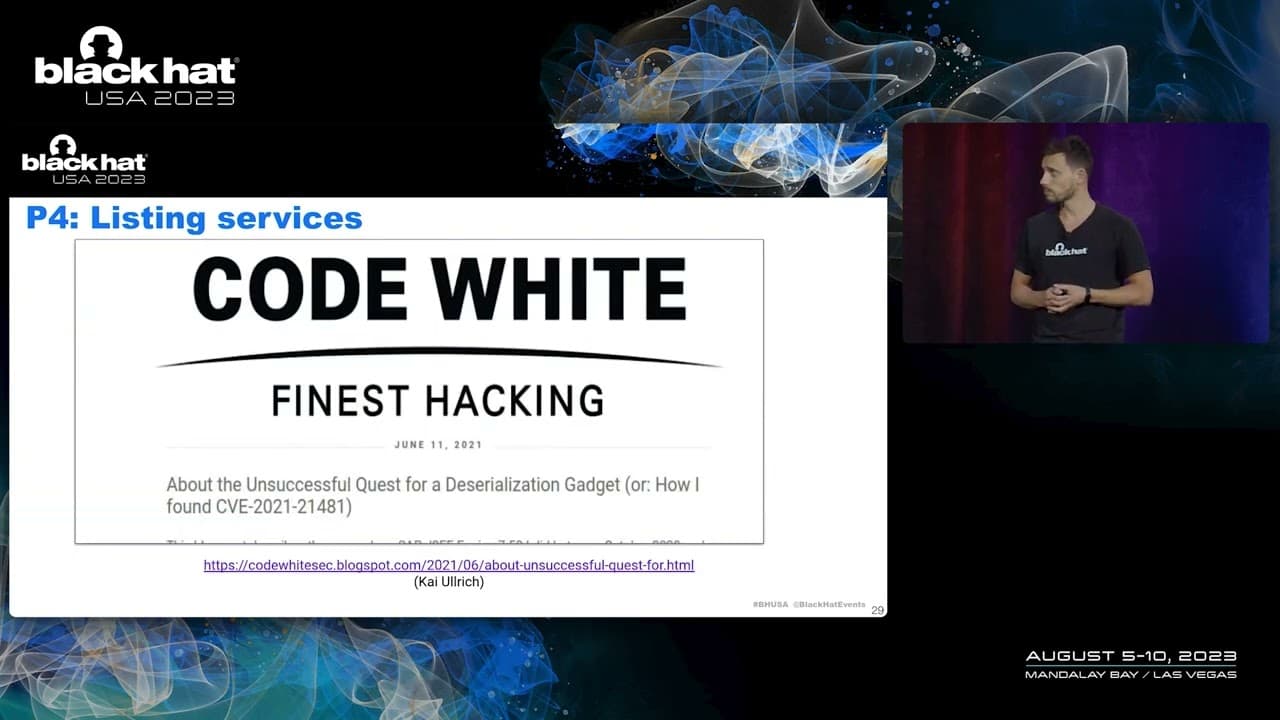
Chained to Hit: Discovering New Vectors to Gain Remote and Root Access in SAP Enterprise Software
Zero-Touch-Pwn: Abusing Zoom's Zero Touch Provisioning for Remote Attacks on Desk Phones
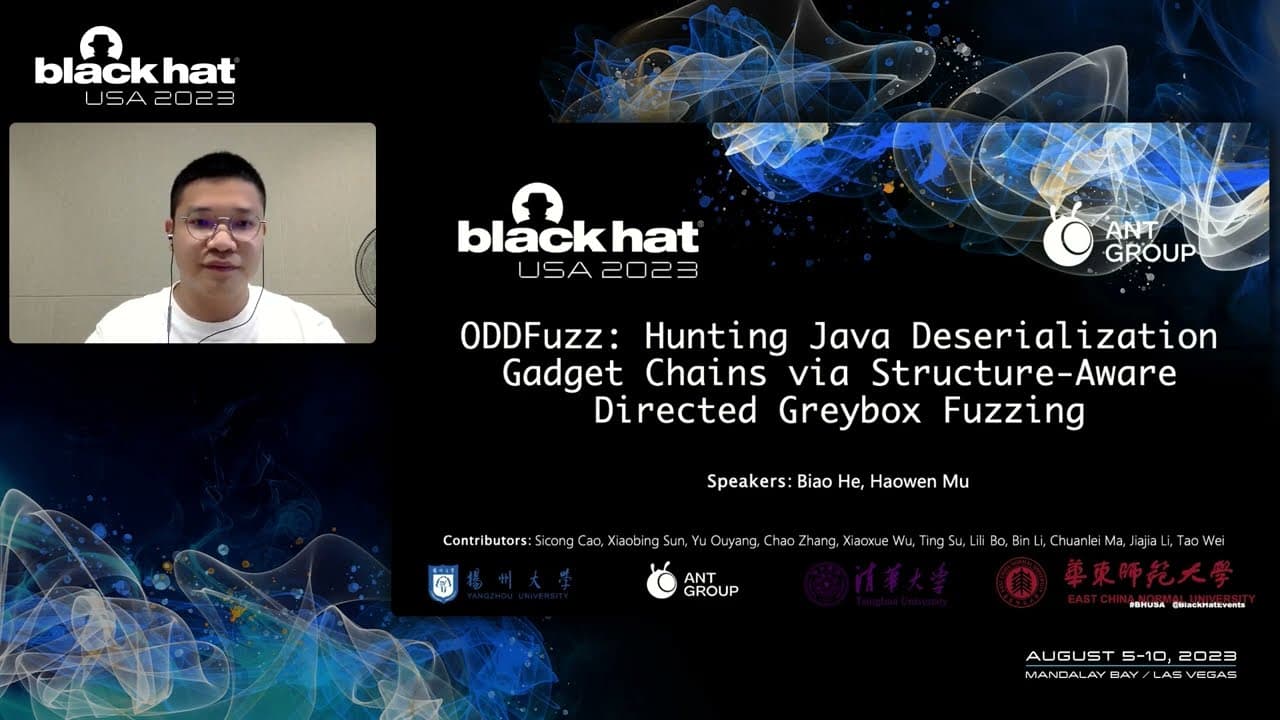
ODDFuzz: Hunting Java Deserialization Gadget Chains via Structure-Aware Directed Greybox Fuzzing
Similar Talks
Google First-Party Secrets Disclosure

From Doxing to Doorstep: Exposing Privacy Intrusion Techniques Used by Hackers for Extortion
