Manufacturing: Lessons Learned, Lessons Given
This talk analyzes the cybersecurity landscape within the manufacturing sector, focusing on the unique challenges posed by the convergence of IT and OT environments. It highlights how the industry's production-centric mindset often leads to the neglect of security, making it a prime target for ransomware attacks. The speaker discusses the shift toward cloud-based infrastructure and AI, emphasizing the need for security to be integrated into the manufacturing process itself rather than treated as an afterthought.
Why Manufacturing Networks Are the New Frontier for Ransomware Operators
TLDR: Manufacturing environments are increasingly vulnerable to ransomware because their flat, poorly segmented networks allow attackers to pivot from IT systems directly into operational technology. While many organizations focus on IT security, they often ignore the underlying industrial protocols that keep production lines running. Pentesters should prioritize mapping these interdependencies, as compromising a single ERP system can often lead to a full-scale shutdown of physical manufacturing processes.
Production-centric mindsets in the manufacturing sector have created a massive, unaddressed attack surface. For years, the industry operated under the assumption that the "air gap" between IT and operational technology (OT) provided sufficient protection. That assumption is dead. Modern manufacturing relies on constant data flow between the front office and the plant floor, and attackers are exploiting this connectivity to turn IT compromises into physical, operational disasters.
The Myth of IT and OT Convergence
Many security professionals talk about IT and OT convergence as if it were a new phenomenon. In reality, most manufacturing networks were never truly separated. They were simply built with different priorities. When you look at a typical plant floor, you see a mix of legacy serial connections running protocols like Modbus and modern, IP-based systems. The "convergence" is not a technical integration project; it is the reality of a network that has been duct-taped together over decades to support real-time production requirements.
Attackers do not care about the distinction between IT and OT. They care about the path of least resistance. When a ransomware operator gains access to an enterprise network, they look for the ERP system. If that ERP system has a direct line to the plant floor to pull production schedules or push firmware updates, the attacker has a direct path to the heart of the business.
Why Ransomware Operators Target Manufacturers
Ransomware operators love manufacturing because the cost of downtime is astronomical. If a hospital or a bank goes offline, the impact is severe, but if a high-volume manufacturing line stops, the company loses millions of dollars every hour. This pressure makes them highly likely to pay a ransom quickly.
The attack flow is often straightforward. An attacker gains initial access through a standard phishing campaign or an exposed RDP port. Once inside, they perform internal reconnaissance to identify the ERP environment. Because these networks are often flat, they can move laterally without encountering significant segmentation. They do not need to understand the nuances of a PLC to cause damage; they only need to encrypt the servers that manage the production data. If the ERP system cannot communicate with the machines on the floor, the production line stops.
The Role of the Pentester
During a red team engagement or a penetration test, you should stop treating the IT and OT environments as separate silos. Instead, focus on the interdependencies. If you are testing a manufacturing client, your primary goal should be to map the connections between the corporate network and the industrial control systems.
Ask yourself these questions:
- Does the ERP system have a direct connection to the plant floor?
- Are there jump hosts that bridge the two environments?
- What happens if I gain administrative access to the domain controller that manages the plant floor workstations?
If you can demonstrate that a compromise of the corporate email server leads to the ability to push unauthorized commands to a production controller, you have found the critical path. This is the finding that gets the attention of the C-suite.
Defensive Realities
Defenders in this space are fighting an uphill battle. The most effective strategy is not to buy more expensive security appliances, but to implement strict network segmentation. If you cannot physically separate the networks, use firewalls to enforce granular access control lists (ACLs) that restrict traffic between the IT and OT zones to only what is strictly necessary.
Furthermore, organizations must move away from the idea that security ends at the "fence line" of the plant floor. Every device, from the Wi-Fi-enabled sensor to the legacy controller, is a potential node in the network. If you are a defender, you need to assume that the corporate network is already compromised and build your defenses accordingly.
Moving Forward
Manufacturing is currently in a state of transition. As companies adopt more cloud-based infrastructure and AI-driven automation, the complexity of their networks will only increase. This shift provides a massive opportunity for security researchers to identify new classes of vulnerabilities.
If you are a researcher, look at the protocols that bridge the gap between the cloud and the plant floor. These are the weak points where the most significant impact can be achieved. The industry is starting to wake up to these risks, but the pace of change is slow. Until manufacturers treat cybersecurity as a core component of their production process rather than an IT overhead, they will remain the most attractive target for ransomware operators. Keep digging into these interdependencies, because that is where the next major research breakthroughs will happen.
Vulnerability Classes
Target Technologies
Attack Techniques
Up Next From This Conference
Breaking Secure Web Gateways for Fun and Profit
Listen to the Whispers: Web Timing Attacks That Actually Work
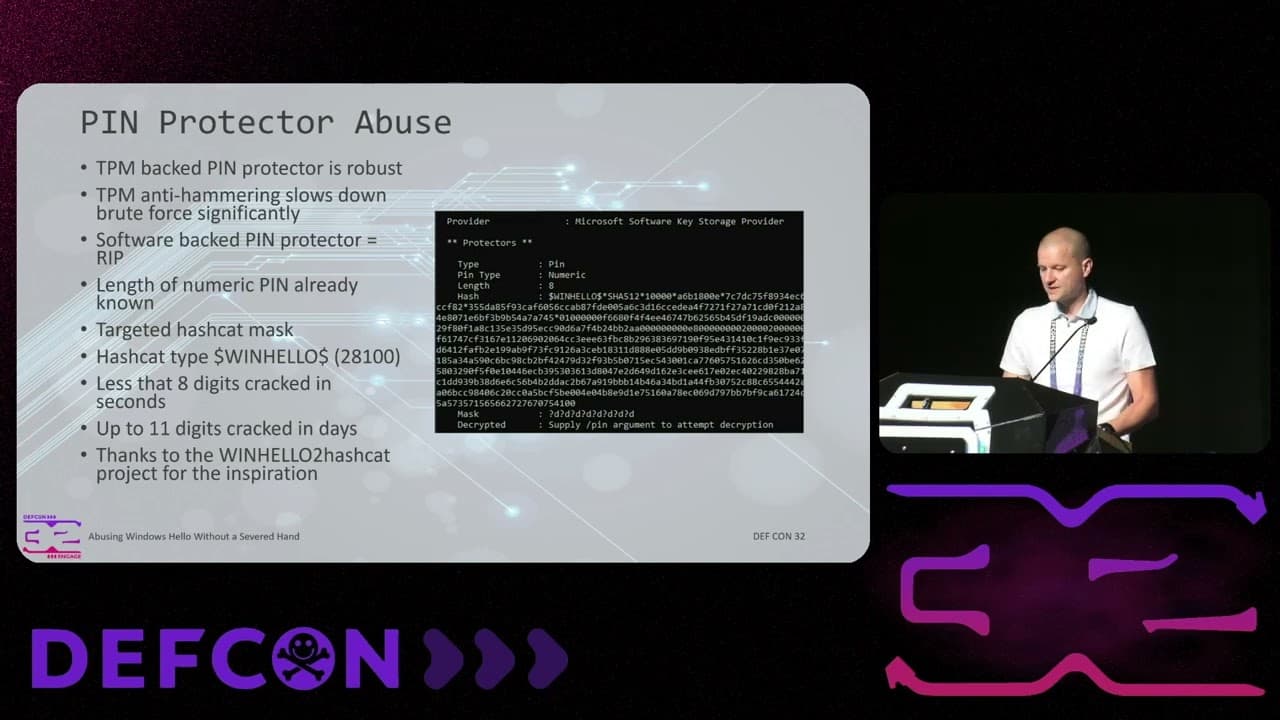
Abusing Windows Hello Without a Severed Hand
Similar Talks
Inside the FBI's Secret Encrypted Phone Company 'Anom'

Kill List: Hacking an Assassination Site on the Dark Web