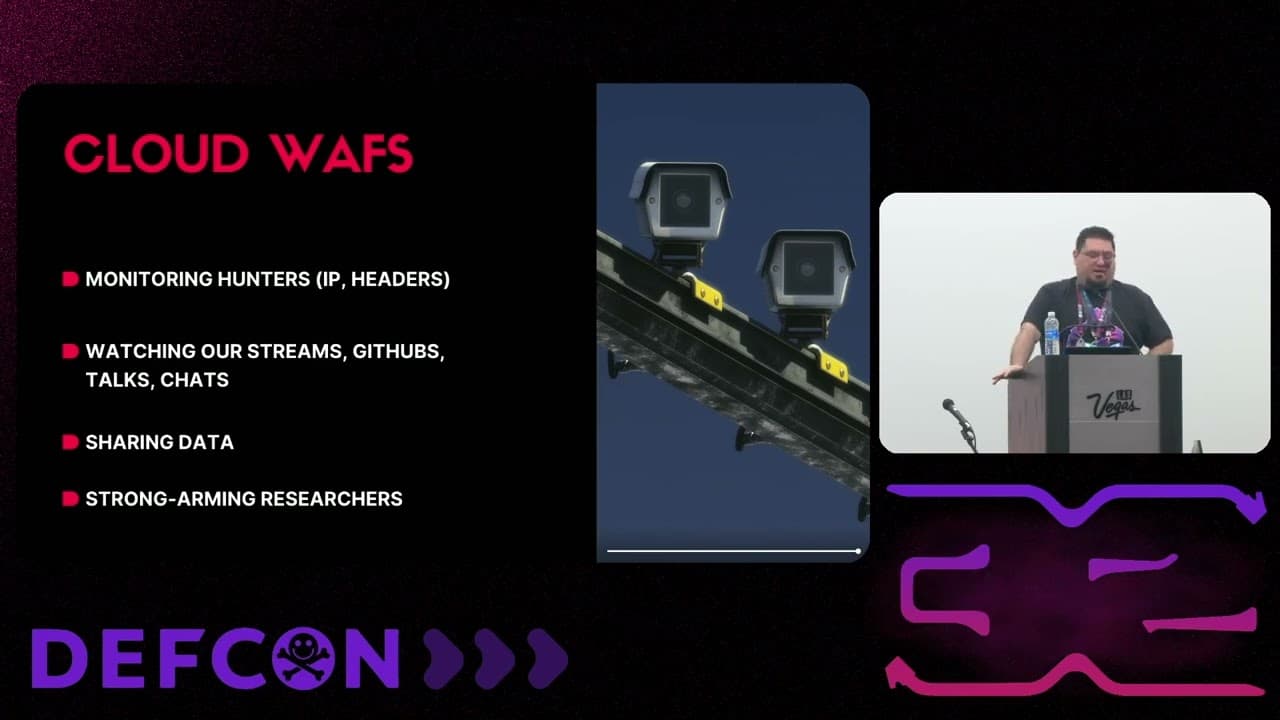
OT SOC and Incident Response
This panel discussion explores the challenges of implementing and maintaining a Security Operations Center (SOC) within Operational Technology (OT) environments. It highlights the critical need for specialized logging, asset management, and cross-functional collaboration between IT and OT teams to effectively detect and respond to incidents. The speakers emphasize the importance of understanding OT-specific risks and the necessity of building relationships with field personnel to improve incident response capabilities.
Why Your OT Incident Response Plan Is Probably Failing
TLDR: Operational Technology (OT) environments are often managed by legacy systems that lack modern logging capabilities, making incident response a nightmare for security teams. This panel discussion highlights that effective OT security requires moving beyond standard IT-centric monitoring to build deep relationships with field engineers who understand the physical process. Pentesters and researchers should focus on the intersection of IT and OT, where lateral movement often occurs due to misconfigured gateways and a lack of visibility into industrial protocols.
Security teams often treat Operational Technology as just another segment on the network, but that assumption is a fast track to a catastrophic failure during an incident. When you are performing a penetration test on an industrial environment, you are not just looking for open ports or unpatched services. You are looking for the point where a digital command translates into a physical action. If you cannot distinguish between a legitimate control signal and an unauthorized command message, you are effectively blind to the most critical risks in the environment.
The Visibility Gap in Industrial Control Systems
Most IT security professionals are accustomed to having a wealth of telemetry at their fingertips. You have EDR, you have centralized logging, and you have a clear understanding of the asset inventory. In an OT environment, that reality is inverted. Many of the devices running critical infrastructure, such as Programmable Logic Controllers (PLCs) or Human-Machine Interfaces (HMIs), were never designed with security in mind. They often lack the compute power to generate meaningful logs, and even when they do, those logs are frequently siloed or non-existent.
During the panel, the speakers emphasized that over half of the equipment in many OT environments is decades old. These devices are not going to be replaced anytime soon, and they certainly are not going to be upgraded to support modern authentication or encryption standards. If you are a researcher looking for bugs, you are not going to find a neat API to fuzz. You are dealing with proprietary protocols and legacy hardware that can crash if you look at it the wrong way. The risk here is not just data exfiltration; it is the potential for T0831-manipulation-of-control or T0855-unauthorized-command-message injection that could lead to physical damage.
Why Your SOC Needs to Get Out of the Office
One of the most practical takeaways from the discussion is the necessity of building relationships with the people who actually maintain the hardware. If you are a pentester, you might be tempted to run a scanner and call it a day. That is a mistake. You need to talk to the line engineers. They know the quirks of the system. They know that a specific HMI might throw a false positive every time a certain pump starts up. If you do not have that context, your incident response process will be overwhelmed by noise, and you will miss the actual attacker moving laterally from the IT network into the OT environment.
The panel highlighted a scenario where an analyst saw an alert in the IT security stack but failed to investigate the OT side because they did not know how to use the specialized tools required to interpret the industrial traffic. This is a massive blind spot. If you are conducting an engagement, you should be asking the client how they handle the handoff between IT and OT teams. If there is no communication, there is no security.
The Reality of Lateral Movement
When you are testing these environments, focus on the gateways. These are the bridges between the IT and OT worlds. Attackers are not trying to hack a PLC directly from the internet; they are compromising a jump box or a misconfigured VPN on the IT side and then using that access to pivot into the OT network. Once they are inside, they look for T0866-exploitation-of-remote-services to gain a foothold on the engineering workstations.
If you are looking for a way to demonstrate impact, focus on the HMI. If you can gain control of an HMI, you can often manipulate the process without needing to touch the underlying PLC code directly. This is where the real danger lies. A well-crafted, unauthorized command message sent from a compromised engineering workstation can be indistinguishable from a legitimate operator action.
Defending the Unpatchable
Defenders in the OT space are in a tough spot. They cannot simply patch their way out of trouble. Instead, they must focus on network segmentation and behavioral monitoring. If you are working with a blue team, suggest that they implement strict access controls on the jump boxes and monitor for any traffic that deviates from the established baseline of the industrial process.
The most effective defense is not a fancy new tool; it is a deep understanding of the process. If the security team knows that a specific controller should only ever talk to one specific HMI, they can set up a rule to block everything else. It is simple, it is effective, and it is often overlooked.
Stop trying to force IT solutions onto OT problems. If you want to be effective in this space, you have to get your hands dirty. Go to the site, talk to the engineers, and learn how the physical process works. If you do not understand the system you are trying to protect or attack, you are just guessing. The next time you are on an engagement, find the person who has been there for twenty years and ask them what keeps them up at night. That is where you will find the real vulnerabilities.
Target Technologies
Attack Techniques
Up Next From This Conference
Similar Talks

Kill List: Hacking an Assassination Site on the Dark Web

Counter Deception: Defending Yourself in a World Full of Lies