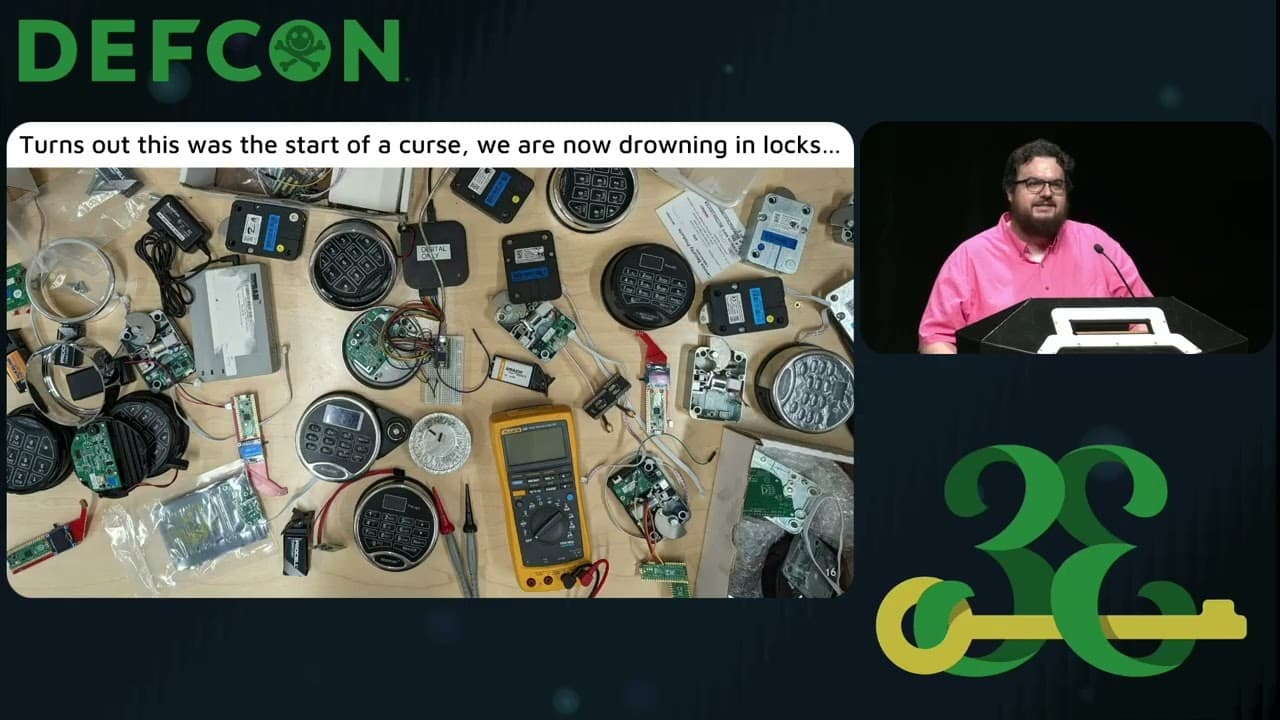
Physical Security and Lockpicking Basics
This interview discusses the fundamentals of physical security, specifically focusing on the mechanics of handcuffs and various lockpicking techniques. The speaker explains how to bypass standard-issue and ASP-style handcuffs using keys, shims, and improvised tools like bobby pins. The discussion emphasizes the importance of understanding physical security vulnerabilities to improve personal security and highlights the role of the TOOOL organization in educating the community.
Why Your Physical Security Assessment Needs to Include Handcuff Bypasses
TLDR: Physical security is often the weakest link in a penetration test, yet many teams ignore common hardware like handcuffs and padlocks. This post breaks down how to bypass standard-issue and ASP-style handcuffs using simple tools like shims and keys. Understanding these mechanical vulnerabilities is essential for any red teamer looking to provide a comprehensive assessment of physical access controls.
Security professionals often obsess over digital perimeters, firewalls, and complex authentication bypasses while ignoring the physical hardware that secures their most sensitive assets. During a recent engagement, I watched a team spend days hunting for a zero-day in a web application while the server room door was secured by a lock that could be opened in seconds with a basic shim. This disconnect between digital and physical security is a massive blind spot. If you are performing a red team engagement or a physical security audit, you need to understand how to evaluate the hardware that stands between an attacker and your client's data.
The Mechanics of Handcuff Bypasses
Handcuffs are not magic. They are mechanical devices that rely on a simple ratchet and pawl system. When you close a pair of handcuffs, the teeth on the swinging arm engage with a spring-loaded pawl, preventing the arm from opening. To release the cuff, you either use a key to lift the pawl or use a shim to physically push the pawl away from the teeth.
Standard-issue handcuffs, like those often used by law enforcement, are surprisingly vulnerable to basic manipulation. The TOOOL (The Open Organisation Of Lockpickers) community has spent years documenting these vulnerabilities. The most common technique involves inserting a thin, flat piece of metal—a shim—into the gap between the swinging arm and the body of the cuff. By sliding the shim into the mechanism, you can depress the pawl and allow the arm to swing freely.
ASP-style handcuffs, which are often marketed as more secure, use a slightly different internal design. However, they are still susceptible to similar bypass techniques. The key to success here is understanding the internal geometry of the lock. If you are testing these devices, you do not need expensive, specialized equipment. A simple bobby pin or a custom-cut piece of metal can often suffice. The goal is to mimic the action of the key by interacting directly with the locking mechanism.
Technical Considerations for Pentesters
When you are on-site, you might encounter a variety of locking mechanisms. It is important to distinguish between single-locked and double-locked cuffs. A single-locked cuff is the standard state where the ratchet can move in one direction. A double-locked cuff, however, engages a secondary pin that prevents the ratchet from moving at all, making it much harder to shim.
If you are tasked with a physical security assessment, your workflow should look like this:
- Reconnaissance: Identify the specific models of locks and handcuffs in use. Are they standard-issue or high-security variants?
- Tool Selection: Choose the appropriate tool for the job. For padlocks, this might mean a standard lockpick set. For handcuffs, a dedicated shim or a handcuff key is often more effective.
- Execution: Apply tension or manipulate the internal components to release the mechanism.
For those interested in the technical details of how these locks fail, the NIST National Vulnerability Database often tracks physical security vulnerabilities that have been assigned CVEs, though many physical bypasses are considered "features" of the design rather than software bugs. You can find extensive documentation on the mechanics of various locks through the OWASP Physical Security resources.
Real-World Risk and Defensive Strategy
The risk here is not just about someone escaping from handcuffs. It is about the broader implication that physical hardware is often poorly vetted. If a facility uses cheap, easily bypassed padlocks on critical infrastructure, an attacker does not need to be a master lockpicker to gain access. They just need to know which tools to bring.
Defenders need to move away from "security through obscurity." Just because a lock is made of hardened steel does not mean it is secure. When selecting hardware for your facility, look for independent testing results and avoid models that have known, documented bypass techniques. If you are responsible for physical security, perform regular audits of your locks and replace any that are easily compromised.
Moving Forward
Physical security is a skill that every pentester should have in their toolkit. It changes how you look at a building, a server rack, or a locked cabinet. When you understand how a lock works, you stop seeing it as an impenetrable barrier and start seeing it as a mechanical puzzle.
If you want to get better at this, start by joining a local group. The TOOOL community is an excellent resource for anyone looking to learn the ropes. They hold regular meetings where you can practice on a variety of locks in a safe, legal environment. Do not wait for a client to ask for a physical assessment before you start learning these skills. Start practicing now, and you will be surprised at how much more effective you become at identifying and exploiting physical security weaknesses. The next time you are on an engagement, take a closer look at the locks you encounter. You might find that the most effective way into the network is through the front door.
Vulnerability Classes
Target Technologies
Attack Techniques
Up Next From This Conference
Breaking Secure Web Gateways for Fun and Profit
Listen to the Whispers: Web Timing Attacks That Actually Work
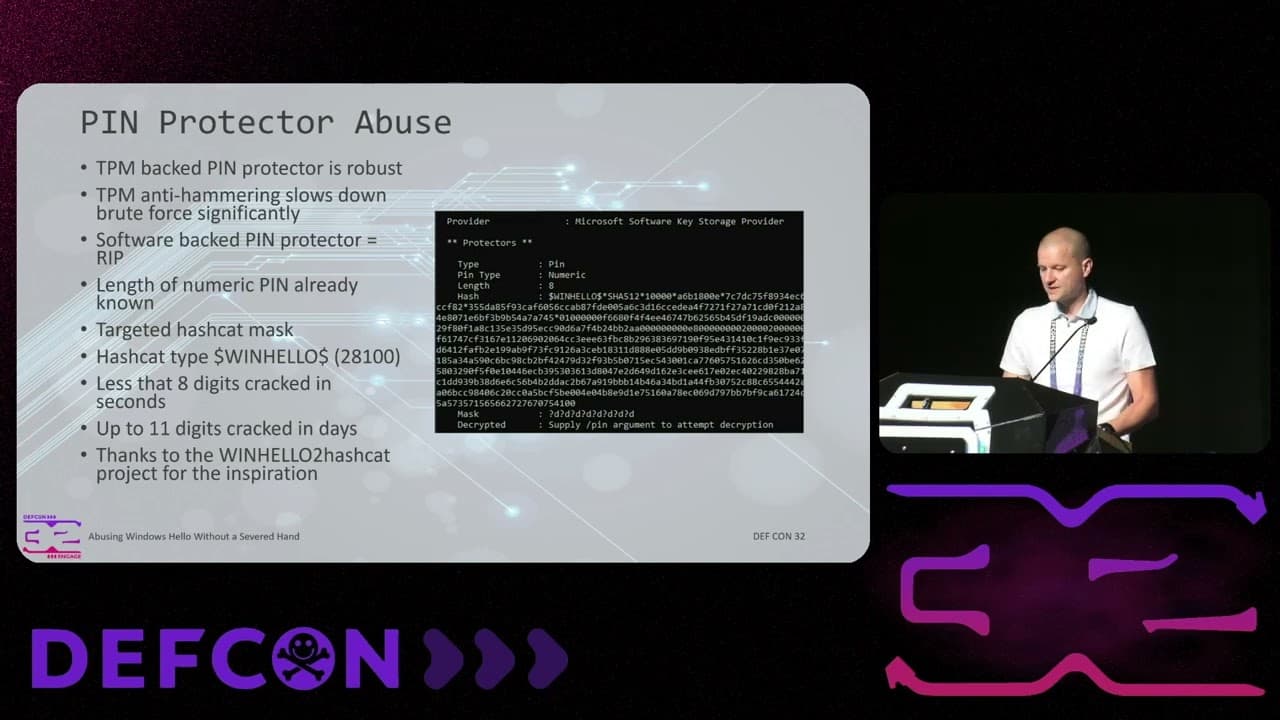
Abusing Windows Hello Without a Severed Hand
Similar Talks
Anyone Can Hack IoT: A Beginner's Guide to Hacking Your First IoT Device

Optical Espionage