Reflections on a Decade in Bug Bounties: Experiences and Major Takeaways
This talk provides a retrospective on the evolution of the bug bounty landscape, focusing on the transition from simple, low-impact findings to complex, high-impact vulnerabilities. It highlights the importance of understanding target business logic, effective report writing, and the necessity of persistence in bug hunting. The speakers demonstrate practical examples of finding and reporting vulnerabilities like SQL injection, path traversal, and SSRF in real-world applications.
Beyond Low-Hanging Fruit: Why Business Logic Bugs Are the Future of Bug Bounties
TLDR: Modern bug bounty programs are shifting away from automated, low-impact findings toward complex, business-logic-driven vulnerabilities. This post breaks down how researchers are moving past simple scanners to identify high-impact issues like SSRF and account takeovers by deeply understanding application workflows. Success in today's landscape requires persistent research, manual verification, and the ability to articulate clear, actionable impact to triage teams.
Automated scanners are the baseline, not the finish line. If you are still relying on Burp Suite to fire off generic payloads at every endpoint you find, you are competing with every other researcher on the platform for the same low-hanging fruit. The real money and the most critical findings are hidden in the business logic of the application. When a target is hardened against common injection attacks, the path to a high-severity bug is almost always found by understanding how the application handles its own data, state, and third-party integrations.
The Shift from Automated Scanning to Logic Analysis
The evolution of bug bounty programs over the last decade shows a clear trend. Companies are increasingly effective at patching common vulnerabilities like reflected XSS or basic SQL injection. What remains are the flaws in how these systems are architected. A prime example is the transition from finding simple SQL injection to identifying complex Server-Side Request Forgery (SSRF) or account takeover vectors that bypass standard authentication.
During recent research, I encountered an e-commerce platform that appeared secure against standard automated fuzzing. By manually tracing the profile modification workflow, I identified a parameter, country_id, that was not properly sanitized. Instead of just throwing a generic payload at it, I analyzed how the application processed this input. By injecting a single quote, I triggered a database error that revealed the underlying structure. This wasn't just a blind injection; it was a gateway to dumping the database because I understood the context of the request.
SSRF and the Power of Internal Metadata
One of the most potent techniques for researchers today involves exploiting the trust applications place in their own internal infrastructure. Many cloud-native applications use AWS Lambda or similar serverless functions. If an application allows user-controlled input to influence a request, you can often pivot that request to hit internal metadata services.
In one instance, I found an application that performed reconnaissance on subdomains and generated screenshots of the parent domain. By manipulating the input to point toward the local loopback address or the AWS metadata service, I could force the application to leak sensitive environment variables. The key here was not the tool, but the realization that the application was performing an action on my behalf that it shouldn't have been. When you find an endpoint that fetches remote resources, stop and ask: what happens if I point this at the internal network?
Mastering the Art of the Report
A brilliant finding is worthless if the triage team cannot reproduce it or understand its impact. Many researchers fail because they submit a "proof of concept" that is essentially a wall of text or a single screenshot without context. If you are reporting an A01:2021-Broken Access Control issue, you must explain the business impact.
Do not just say "I can access this page." Say, "I can access this page, which allows me to modify the billing address for any user, leading to a direct financial loss for the company." Triage teams are often overwhelmed. If you make their job easier by providing clear, step-by-step reproduction instructions and a concise explanation of the risk, your report is far more likely to be accepted.
Persistence and the Mental Game
Burnout is the silent killer of a successful bug bounty career. It is easy to get discouraged after a string of rejected reports or duplicates. When you hit a wall, step back. The most successful researchers I know are not the ones who find the most bugs in a week; they are the ones who stay in the game for years.
If you are stuck, use the community. Platforms like Subfinder are excellent for initial reconnaissance, but they are just the start. Engage with other researchers, read disclosed reports on platforms like HackerOne or Bugcrowd, and focus on learning one new technology stack at a time. If you spend 40 hours deeply analyzing a single target, you will inevitably find something that an automated scanner missed.
Stop chasing the quick win. Start building a deep, technical understanding of how your targets function. The next time you find a 403 Forbidden error, don't just move on to the next subdomain. Treat it as a puzzle. What is the application trying to hide? Why is it hiding it? The answers to those questions are where the real vulnerabilities live. Keep digging, keep documenting, and keep refining your process. The bugs are there if you are willing to put in the time to find them.
Vulnerability Classes
Target Technologies
Attack Techniques
OWASP Categories
Up Next From This Conference
Breaking Secure Web Gateways for Fun and Profit
Listen to the Whispers: Web Timing Attacks That Actually Work
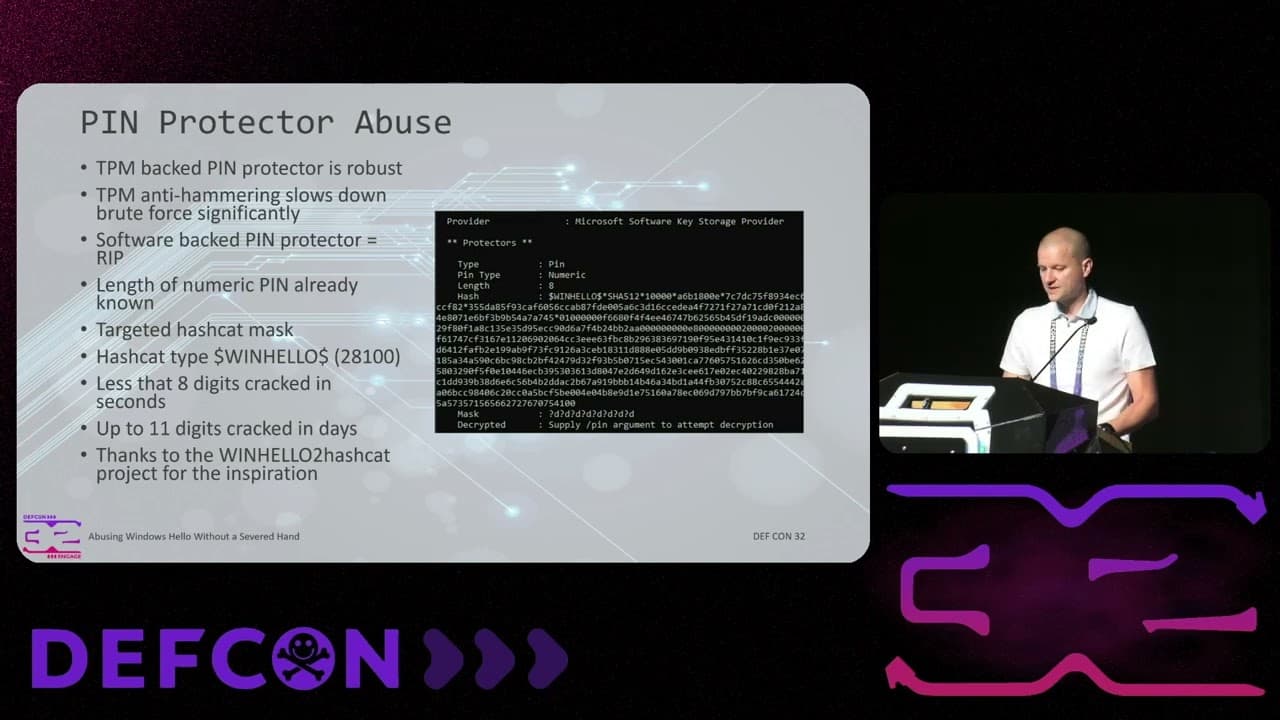
Abusing Windows Hello Without a Severed Hand
Similar Talks
Kill List: Hacking an Assassination Site on the Dark Web
Unmasking the Snitch Puck: The Creepy IoT Surveillance Tech in the School Bathroom