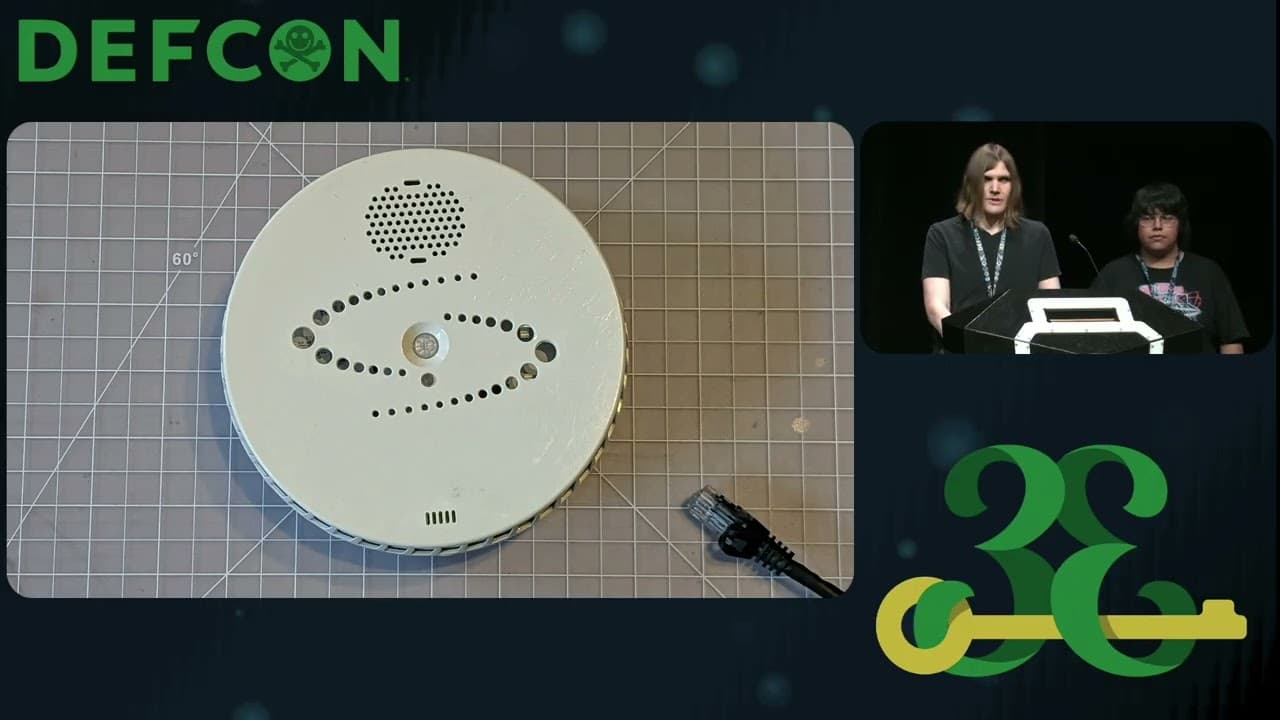
Review Board Game Show
This video is a non-technical game show segment from Black Hat Asia 2024, featuring a trivia competition for the conference's review board members. The questions cover various cybersecurity topics, including conference statistics, talk tracks, and specific research presentations from the event. It does not contain technical demonstrations, vulnerability research, or offensive security techniques.
Beyond the Hype: Why AI and Mobile Security Are Dominating the Research Landscape
TLDR: Recent research trends from Black Hat Asia 2024 reveal a massive shift in focus toward AI-driven attack vectors and mobile application security. While traditional bug hunting remains critical, the rise of LLM-based exploitation and mobile-first computing environments requires a fundamental change in how we approach our testing methodologies. This post breaks down why these areas are seeing an influx of high-quality submissions and what you need to focus on to stay ahead of the curve.
Security research is not a static field. If you are still spending your entire engagement cycle hunting for basic reflected XSS or blind SQL injection, you are missing the shift in where the real, high-impact vulnerabilities are hiding. The recent discussions at Black Hat Asia 2024 made one thing abundantly clear: the industry is pivoting hard toward the intersection of AI frameworks and mobile ecosystems. This is not just about new tools; it is about a fundamental change in the attack surface that organizations are deploying today.
The AI Pivot: From Theoretical to Practical Exploitation
For years, AI security was relegated to academic papers and theoretical discussions about adversarial machine learning. That era is over. We are now seeing a surge in research focused on the practical exploitation of Large Language Models (LLMs) and their integration into enterprise workflows. The shift is moving away from "can I trick the chatbot" toward "how can I use this model to gain unauthorized access to internal systems."
One of the most pressing areas for researchers is the supply chain of AI models. When developers pull pre-trained models from repositories like Hugging Face, they are often treating them as trusted binaries. This is a massive mistake. Attackers are now looking at how to inject malicious payloads into these models, effectively turning a helpful assistant into a persistent backdoor. If you are testing an application that utilizes these models, your scope must include the model source and the pipeline used to deploy it.
Mobile as the New De Facto Computing Environment
Mobile devices have long since surpassed desktops as the primary computing platform for most users, yet many security teams still treat mobile application testing as an afterthought. The research presented at the conference highlights that mobile apps are no longer just thin clients for web services. They are complex, feature-rich environments that handle sensitive data, manage authentication tokens, and interact with hardware in ways that desktop browsers never did.
The complexity of these environments creates a massive surface area for privilege escalation. We are seeing more research into how custom manufacturer features—often added on top of standard Android builds—introduce vulnerabilities that bypass standard security controls. If you are performing a mobile penetration test, you need to look beyond the application code. You need to understand the underlying OS modifications and how they interact with the OWASP Mobile Application Security (MAS) project.
Why Your Testing Methodology Needs an Update
The transition toward AI and mobile-centric research is not just a trend; it is a response to how modern infrastructure is being built. When you look at the current bug bounty landscape, the highest payouts are no longer going to the researchers who find the most bugs, but to those who find the most impactful ones. Impact is increasingly found in the gaps between these new technologies and the legacy systems they are being bolted onto.
For a pentester, this means your reconnaissance phase needs to evolve. You cannot just run a scanner and call it a day. You need to map out the entire data flow, especially where AI models are making decisions or where mobile apps are interacting with local hardware. If you are not looking at how an LLM handles user input or how a mobile app manages its local storage, you are leaving the most critical vulnerabilities on the table.
The Defensive Reality
Defenders are struggling to keep up with this pace. Most organizations are deploying AI features faster than they can secure them, and mobile security is often hampered by the need for rapid feature releases. As a researcher, your role is to highlight these gaps before they are weaponized. This means providing clear, reproducible proof-of-concepts that demonstrate the risk to the business, not just the technical flaw.
If you want to be effective, stop looking for the low-hanging fruit. Start digging into the integration points. Look at how the application handles the output of an AI model. Look at how the mobile app validates the integrity of the OS it is running on. The most interesting bugs are found where the developers assumed the platform was secure, but the reality is much more complex.
Stay curious, keep digging into the underlying architecture, and stop treating AI and mobile as separate silos. They are the new reality of the attack surface, and the researchers who master them now will be the ones defining the security standards of the next decade. If you are looking for a place to start, check out the latest CVE entries for mobile OS components to see where the industry is currently failing to patch effectively. The patterns are there if you know where to look.
Up Next From This Conference

How to Read and Write a High-Level Bytecode Decompiler

Opening Keynote: Black Hat Asia 2024

AI Governance and Security: A Conversation with Singapore's Chief AI Officer
Similar Talks

Inside the FBI's Secret Encrypted Phone Company 'Anom'
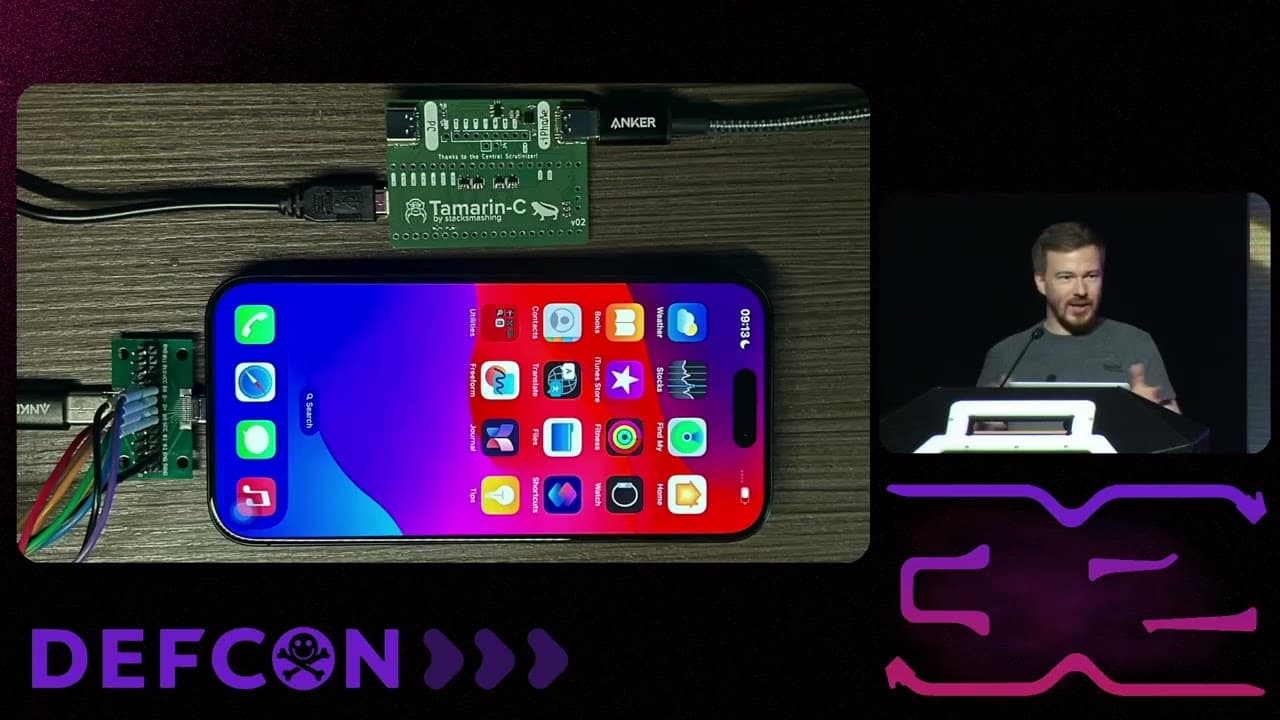
Hacking Apple's USB-C Port Controller