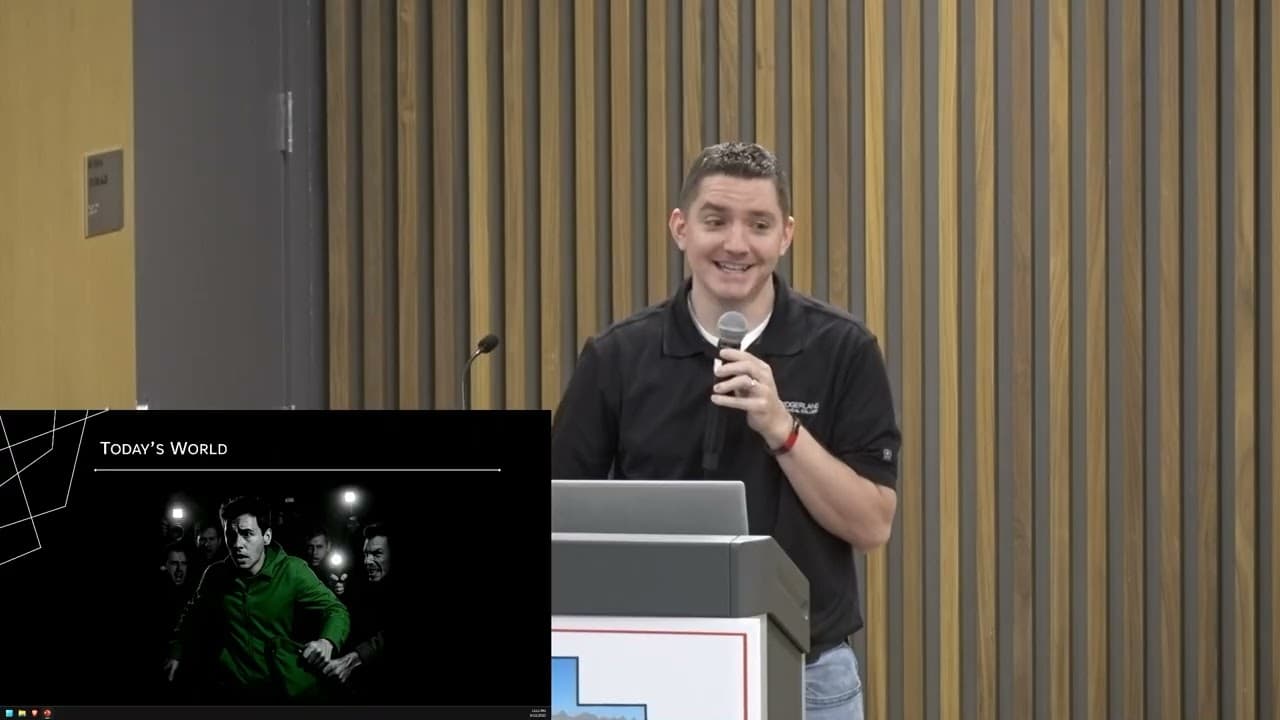
Student Engagement Doesn't Have to Suck
This talk is a non-technical presentation regarding the integration of AI-powered teaching assistants into educational environments. The speaker discusses the use of virtual reality and AI chatbots to improve student engagement and retention rates. No technical vulnerabilities, exploits, or offensive security techniques are demonstrated.
Why Your Next AI-Powered Classroom Assistant Is a Security Nightmare
TLDR: Educational institutions are rushing to deploy AI-powered teaching assistants and virtual reality platforms without considering the underlying security architecture. These systems often lack basic data isolation, creating massive potential for unauthorized access to sensitive student records and PII. Security researchers and pentesters should prioritize auditing the API integrations and data handling practices of these emerging ed-tech platforms before they become standard infrastructure.
Educational technology is currently undergoing a massive, unvetted transformation. We are seeing a rapid push to integrate AI-powered teaching assistants and virtual reality environments into higher education, often under the guise of improving student engagement and retention. While the pedagogical goals might be noble, the technical implementation is frequently a disaster waiting to happen. When you look at the architecture of these platforms, you rarely see the security rigor required for handling sensitive student data. Instead, you see a collection of third-party API calls, poorly configured cloud buckets, and a complete lack of data segregation.
The Architectural Flaw in Ed-Tech AI
Most of these AI-powered teaching assistants function as wrappers around large language models. The primary issue is not the model itself, but the data pipeline feeding it. In many of these deployments, the system is designed to ingest course materials, student transcripts, and internal communications to provide "personalized" support. When a student interacts with a chatbot, the system often fails to implement strict context boundaries. If a student can manipulate the prompt or exploit an insecure API endpoint, they might gain access to data that should be restricted to faculty or administrative staff.
Consider the OWASP Top 10 for LLMs, specifically the risks associated with prompt injection and insecure output handling. In an educational context, this is not just about a chatbot giving a wrong answer. It is about a student potentially exfiltrating the entire course database or accessing the private notes of their professor. If the application does not properly sanitize inputs or enforce role-based access control at the API level, the AI becomes a massive, automated exfiltration tool.
Why Pentesters Should Care
During a penetration test of an educational platform, your focus should shift from the front-end interface to the backend API calls that facilitate the AI interaction. Most of these tools use standard REST APIs to communicate with the LLM backend. You should be looking for:
- Insecure Direct Object References (IDOR): Can you change a parameter in an API request to view another student's interaction history or a professor's private grading rubric?
- Excessive Data Exposure: Does the API return the entire JSON object for a student record when it only needs to return a name and ID?
- Lack of Rate Limiting: Can you brute-force the chatbot to dump large volumes of data or exhaust the API quota, leading to a denial-of-service for other students?
If you are testing a platform that integrates with OpenAI's API, check how the system handles the system role in the message history. If the application allows user-supplied content to be injected into the system prompt, you have a clear path to bypassing intended constraints.
The Reality of Data Privacy
Educational institutions are bound by strict regulations like FERPA in the United States. When a vendor claims their platform is "secure," they are often referring to encryption at rest and in transit. They rarely address the risk of the AI model itself leaking information through training data or insecure query responses. As a researcher, you need to ask: where is the data going? Is it being used to train the vendor's model? If so, your client's proprietary course content and student data are effectively being leaked into the public domain.
Defenders need to treat these AI integrations as high-risk assets. This means implementing strict egress filtering to ensure that the AI service is only communicating with authorized endpoints. It also means conducting regular audits of the data being sent to the LLM. If you are not logging and monitoring the queries being sent to these assistants, you have no visibility into potential data exfiltration.
Moving Beyond the Hype
The current trend of "AI-first" education is moving faster than the security community can keep up with. We are seeing a massive influx of tools that prioritize features over security, and the result will be a series of high-profile data breaches involving student information. If you are a bug bounty hunter, look for these platforms in the wild. They are often poorly secured, and the vendors are frequently small startups that lack the resources to implement a mature security program.
Stop treating these tools as harmless classroom aids. Start treating them as what they are: complex, data-hungry applications that are currently operating with minimal oversight. The next time you see a university announcing a new "AI-powered" initiative, assume the security is non-existent until proven otherwise. Your job is to find the gaps before the bad actors do. Investigate the API endpoints, test the prompt boundaries, and hold these vendors accountable for the data they are handling. The security of our educational infrastructure depends on it.
Tools Used
Target Technologies
Up Next From This Conference
Breaking Secure Web Gateways for Fun and Profit
Listen to the Whispers: Web Timing Attacks That Actually Work
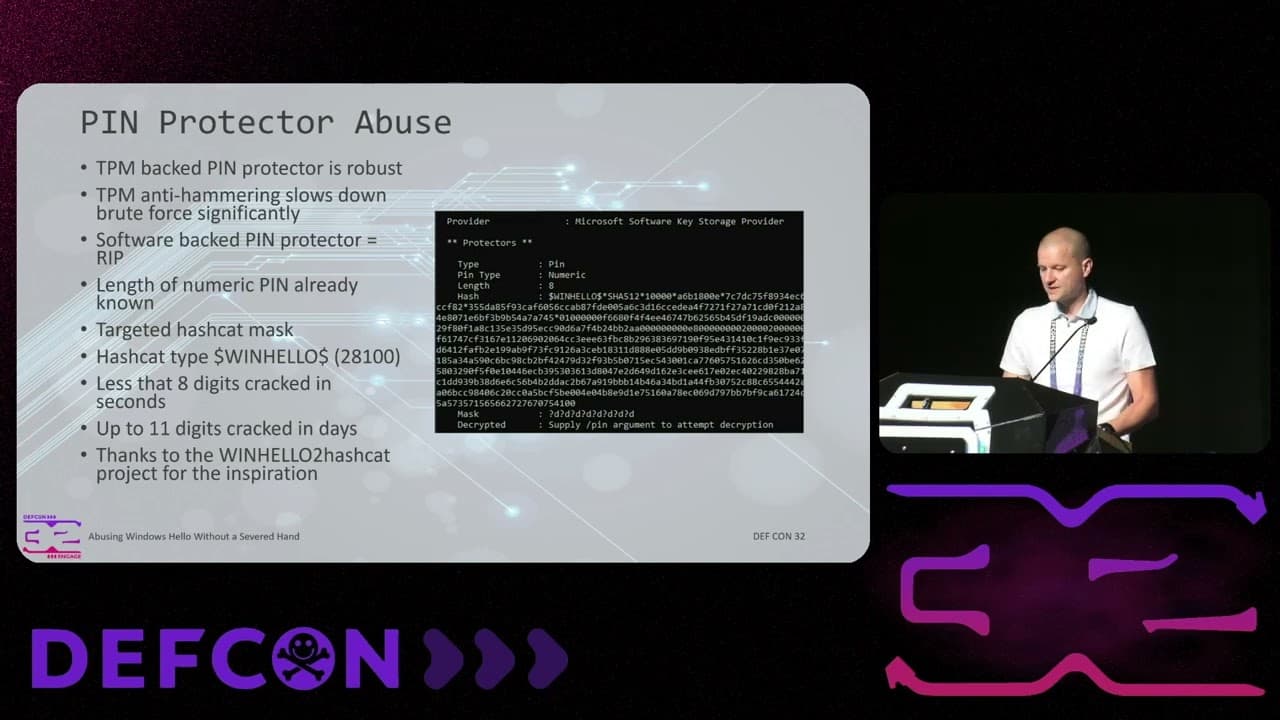
Abusing Windows Hello Without a Severed Hand
Similar Talks
Inside the FBI's Secret Encrypted Phone Company 'Anom'
Unmasking the Snitch Puck: The Creepy IoT Surveillance Tech in the School Bathroom