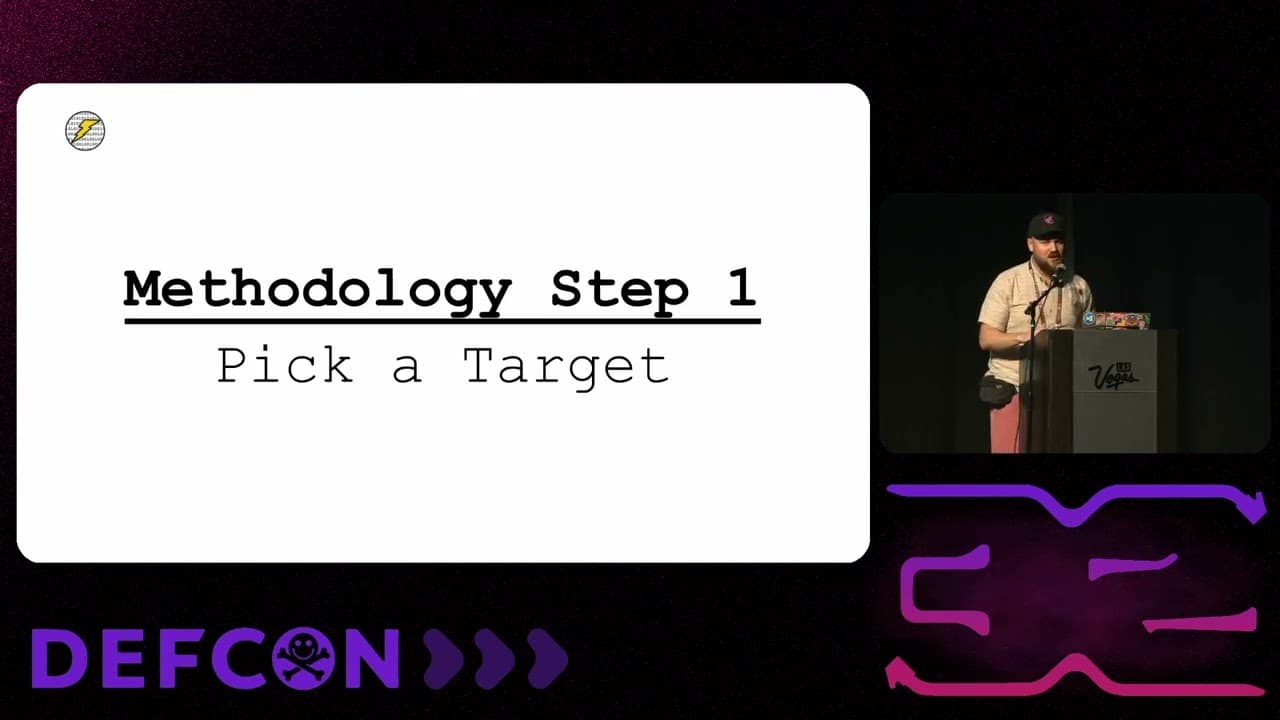
What Game Hackers Teach Us About Offensive Security and Red Teaming
This talk explores the technical parallels between game cheating and malware development, specifically focusing on process injection and memory manipulation techniques. It examines how game cheats utilize Windows API calls to achieve stealth and persistence, mirroring tactics used by advanced persistent threats. The presentation highlights how red teamers can leverage game hacking methodologies, such as memory scanning and signature bypassing, to improve their own offensive operations. The speaker also discusses the cat-and-mouse dynamic between game anti-cheats and cheat developers, drawing comparisons to EDR and malware detection.
Why Game Cheats Are the Best Teachers for Red Teamers
TLDR: Game hacking is essentially a high-stakes, real-world laboratory for advanced Windows exploitation and stealth techniques. By analyzing how cheats bypass modern anti-cheat systems, red teamers can gain a deeper understanding of process injection, memory manipulation, and EDR evasion. This research proves that the cat-and-mouse game between cheat developers and anti-cheat vendors mirrors the exact same struggle between attackers and EDR solutions.
Security researchers often overlook the gaming industry, dismissing it as a niche area of software development. That is a mistake. The technical sophistication required to bypass modern anti-cheat systems is on par with, and often exceeds, the techniques used by advanced persistent threats. When you look at how a game cheat operates, you are looking at a masterclass in Windows internals, process injection, and stealth.
The Mechanics of Stealth
Game cheats generally fall into two categories: internal and external. An internal cheat is essentially a DLL injected directly into the game process. Once inside, it can hook functions, read memory, and manipulate game state in real-time. This is the classic T1055.001 DLL injection pattern. The cheat loader is responsible for the heavy lifting: opening a handle to the game process, allocating memory, writing the path to the malicious DLL, and finally creating a remote thread to load it.
External cheats, however, are where the research gets interesting. These tools operate in a separate process, interacting with the game memory via Windows APIs or, increasingly, through custom hardware. This is where the parallel to red teaming becomes undeniable. Just as a red teamer might use Mimikatz to dump credentials from the lsass.exe process, a game hacker uses similar memory-reading techniques to find player coordinates or health values.
Hardware-Assisted Evasion
The most advanced game cheats have moved beyond software-based injection to avoid detection by kernel-level anti-cheat drivers. They use Direct Memory Access (DMA) cards, often referred to as "screaming squirrels." These devices plug into the PCIe bus and allow a second, separate computer to read and write the game's memory without the primary machine's operating system ever knowing.
From the perspective of the primary computer, the DMA card looks like a standard peripheral, such as a network card or a Bluetooth adapter. Because the cheat logic runs on the second machine, there is no malicious code executing on the target system to trigger an EDR alert. This is the ultimate form of stealth. For a red teamer, this highlights a critical blind spot: if your detection strategy relies solely on monitoring software-based API calls, you are missing an entire class of hardware-level memory manipulation.
The EDR Parallel
Anti-cheat software and EDR solutions are fighting the same war. Both rely on a combination of signature-based detection, heuristic analysis, and behavioral monitoring. When an anti-cheat flags a process, it is looking for the same "suspicious sequence" that an EDR looks for: OpenProcess followed by VirtualAllocEx, WriteProcessMemory, and CreateRemoteThread.
Cheat developers have responded by moving toward more advanced techniques like "ghost writing" or "stack bombing" to hide their activity. They are constantly testing the limits of what the Windows kernel allows. If you want to understand how to bypass an EDR, don't just read the latest threat intelligence reports. Go to the forums where cheat developers discuss how to bypass the latest kernel-level anti-cheat updates. They are documenting the exact limitations of the security products you are trying to test against.
Practical Takeaways for Pentesters
If you are performing a red team engagement, you should be using the same tools that game hackers have refined over the last decade. Cheat Engine is not just for infinite ammo; it is an incredibly powerful tool for understanding how an application stores data in memory. Using ReClass.NET to reverse-engineer complex data structures in memory can give you a massive advantage when you need to find sensitive information that isn't immediately obvious in a static analysis.
When you are on a target system, stop thinking about "malware" and start thinking about "memory access." How can you read the memory of a privileged process without triggering an alert? Can you use a legitimate, signed driver to perform your memory operations? These are the questions that game hackers answer every single day.
A Note on Defense
Defenders need to stop assuming that kernel-level visibility is a silver bullet. If an attacker has physical access or can leverage hardware-based DMA, kernel-level drivers can be bypassed entirely. The focus should shift toward behavioral anomalies that cannot be hidden by clever injection techniques. For example, monitoring for unexpected thread creation or unusual memory access patterns from non-standard processes is far more effective than trying to maintain a blacklist of known malicious DLLs.
Game hacking is not just about cheating in a game. It is a highly technical, adversarial environment that forces developers to innovate at a breakneck pace. By studying these techniques, you can sharpen your own offensive skills and build more resilient detection strategies. The next time you see a new "bypass" technique in a game hacking forum, ask yourself how that same logic could be applied to your next red team engagement. You might be surprised by the answer.
Vulnerability Classes
Tools Used
Target Technologies
Attack Techniques
All Tags
Up Next From This Conference
Similar Talks
Hacking Apple's USB-C Port Controller

Unmasking the Snitch Puck: The Creepy IoT Surveillance Tech in the School Bathroom