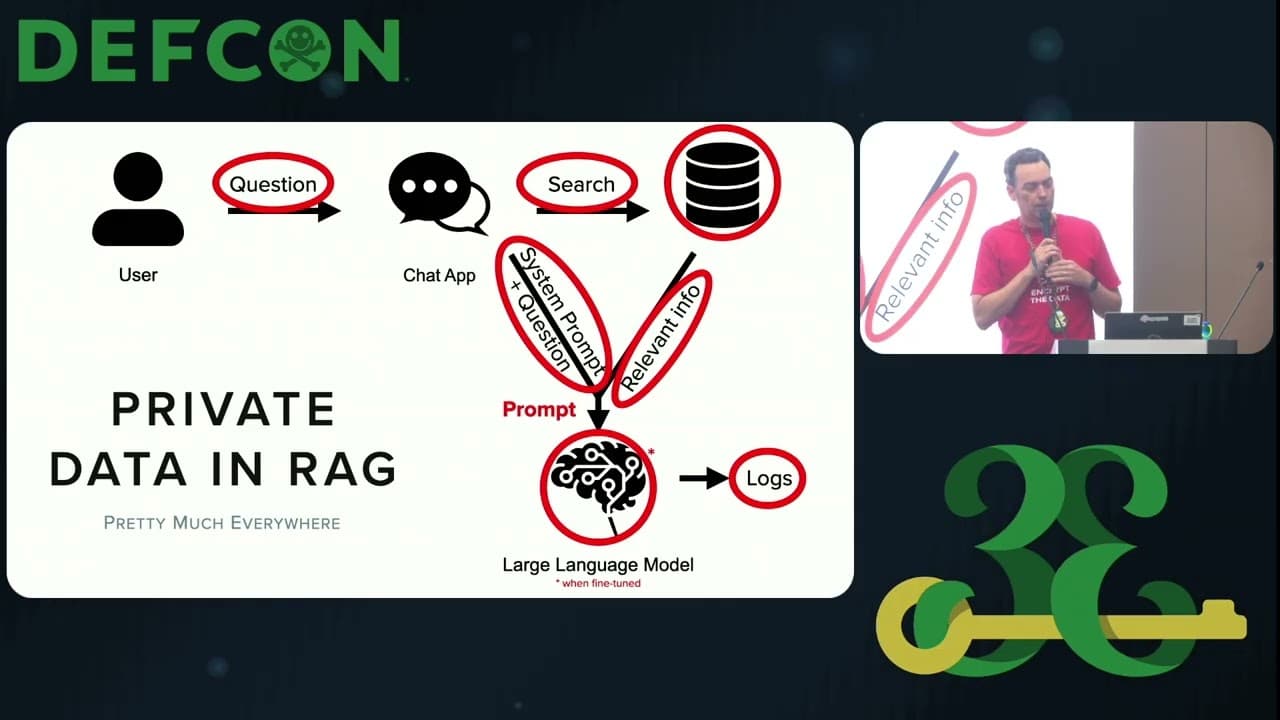
Why Cyber Insurance Should Be Your SOC's New Best Friend
This talk analyzes the evolving landscape of cyber insurance claims, focusing on the rise of sophisticated ransomware and business email compromise (BEC) attacks. It highlights how threat actors leverage stolen credentials and organizational knowledge to conduct targeted funds transfer fraud (FTF). The presentation emphasizes the critical role of proactive security measures, such as mandatory multi-factor authentication (MFA) and the elimination of end-of-life (EOL) software, to reduce organizational risk and insurance premiums.
The Financial Anatomy of Modern Ransomware and BEC Operations
TLDR: Modern threat actors have professionalized their operations by treating ransomware and business email compromise (BEC) as a service, focusing on high-value targets through meticulous financial research. By compromising email accounts and monitoring internal communications, attackers identify and intercept high-value invoices to execute successful funds transfer fraud. Security teams must prioritize strict multi-factor authentication (MFA) and aggressive patching of end-of-life (EOL) software to disrupt these low-effort, high-reward attack paths.
Cybersecurity research often fixates on the latest zero-day or complex exploit chain, but the most effective attacks currently hitting enterprise environments are remarkably mundane. The shift in the threat landscape is not about more sophisticated code; it is about the professionalization of the business model behind the attack. Threat actors are no longer just looking for a way into a network. They are looking for the keys to the checkbook.
The Professionalization of the Attack Lifecycle
The days of "spray and pray" ransomware are largely behind us. Today’s adversaries operate with the efficiency of a corporate finance department. They gain initial access—often through phishing—and then they wait. The dwell time for these operations has surged, with attackers spending weeks or months inside a compromised environment. They are not just looking for data to encrypt; they are performing reconnaissance on the organization’s financial workflows.
This research phase is critical. Attackers monitor internal email traffic to understand vendor relationships, payment cycles, and the specific individuals authorized to approve wire transfers. By the time they initiate a Business Email Compromise (BEC) or a funds transfer fraud (FTF) event, they have already mapped the target's internal hierarchy. They know exactly which invoice to intercept, what the vendor's payment terms look like, and who to impersonate to ensure the fraudulent request is processed without suspicion.
The High Cost of EOL Software
One of the most glaring vulnerabilities in modern enterprise environments is the continued reliance on end-of-life (EOL) software. While security researchers often prioritize the latest CVEs, the reality is that EOL systems are a playground for attackers. These systems lack vendor support, meaning no security patches are released for new vulnerabilities.
Data from recent claims shows that organizations running EOL software are three times more likely to experience a successful breach. This is not a coincidence. When a system is no longer supported, it becomes a permanent, unpatchable entry point. For a pentester, finding an EOL server is often equivalent to finding an open door. If you are conducting an engagement, your first step should always be an inventory of the environment's software lifecycle. If you find an EOL application, you have found your path to domain dominance.
Disrupting the Funds Transfer Fraud Workflow
Funds transfer fraud is particularly dangerous because it bypasses traditional technical controls. It relies on social engineering and the manipulation of business processes. The typical flow involves:
- Initial Access: Gaining control of an email account via credential harvesting.
- Reconnaissance: Searching for invoices, payment instructions, and vendor communication.
- Persistence: Creating mailbox rules to hide incoming alerts from the legitimate user.
- Execution: Sending a modified invoice or a request to update banking details to the finance department.
To defend against this, organizations must move beyond simple perimeter security. The most effective defense is a combination of strict MFA and rigorous verification procedures for any change in payment instructions. If a vendor suddenly changes their bank account, the policy should be to verify that change through an out-of-band communication channel, such as a phone call to a known, trusted contact.
Why Your SOC Needs a Better Relationship with Insurance
The role of cyber insurance is often misunderstood by technical teams. It is not just a safety net for when things go wrong; it is a source of threat intelligence and incident response resources. When an organization is hit by a ransomware attack, the insurance carrier’s incident response team is often the first to arrive. They have the data on how these attacks are unfolding across different industries and can provide the necessary expertise to contain the breach before it escalates.
For the security researcher or developer, the takeaway is clear: security is a business problem. The technical controls you implement—or fail to implement—have direct financial consequences. By focusing on the basics, such as eliminating EOL software and enforcing MFA, you are not just checking compliance boxes. You are actively increasing the cost of the attack for the adversary, making your organization a less attractive target for the professionalized cybercrime syndicates that dominate the current landscape.
Stop waiting for the next zero-day to make headlines. Start auditing your environment for the simple, unpatched, and unprotected gaps that are fueling the current surge in financial fraud. Your ability to secure the business depends on your ability to understand the adversary's business model.
Vulnerability Classes
Target Technologies
Attack Techniques
OWASP Categories
Up Next From This Conference
Chained to Hit: Discovering New Vectors to Gain Remote and Root Access in SAP Enterprise Software
Zero-Touch-Pwn: Abusing Zoom's Zero Touch Provisioning for Remote Attacks on Desk Phones
ODDFuzz: Hunting Java Deserialization Gadget Chains via Structure-Aware Directed Greybox Fuzzing
Similar Talks
Kill List: Hacking an Assassination Site on the Dark Web
Counter Deception: Defending Yourself in a World Full of Lies