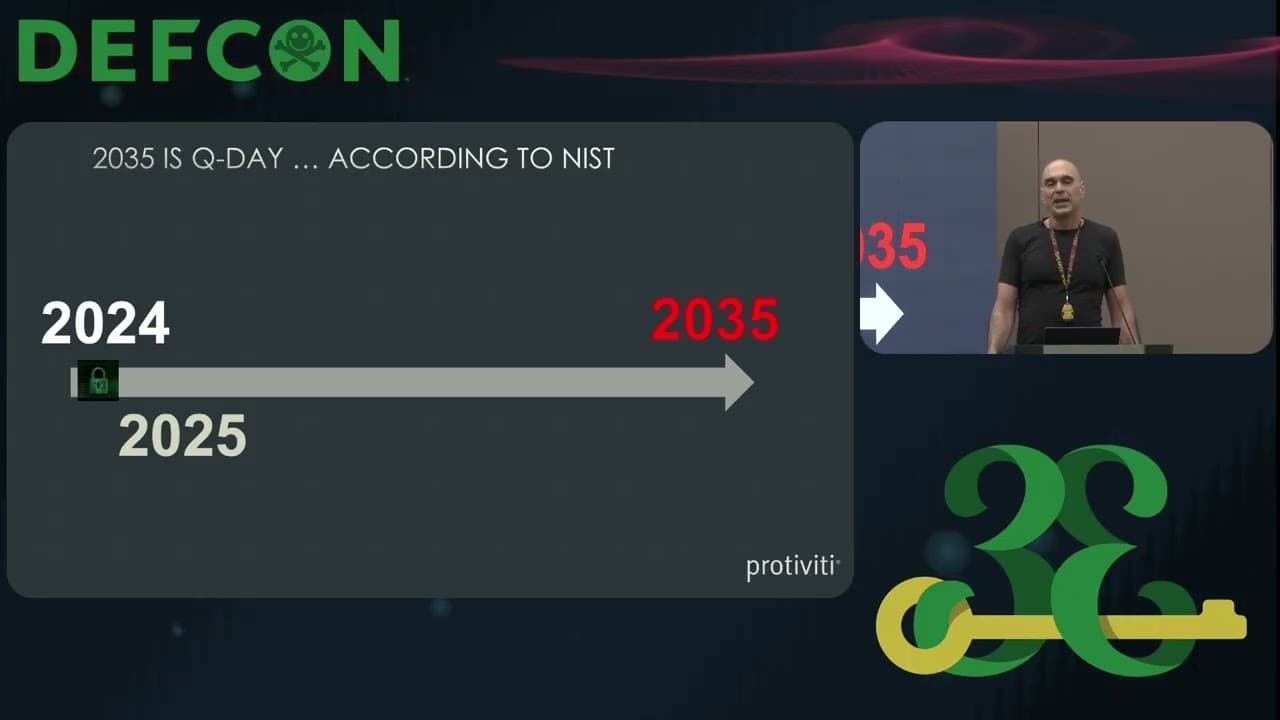
DARPA Cyber Initiatives and Research
This talk provides an overview of DARPA's strategic approach to funding and managing high-risk, high-reward cybersecurity research projects. It highlights the agency's focus on addressing fundamental security flaws through bottom-up innovation and collaborative efforts with diverse research communities. The presentation emphasizes the importance of identifying and solving complex, systemic problems in national security infrastructure.
Beyond the Perimeter: Why DARPA’s Research Matters for Your Next Engagement
TLDR: DARPA’s recent focus on systemic security flaws in critical infrastructure, such as GPS, autonomous vehicles, and brain-machine interfaces, highlights a shift toward addressing fundamental memory corruption and injection vulnerabilities at the architectural level. For researchers and pentesters, this research provides a roadmap for identifying non-obvious attack surfaces in complex, interconnected systems. By understanding these high-level research initiatives, you can better anticipate the next generation of zero-day targets in industrial and embedded environments.
Security research often feels like a game of whack-a-mole. We find a bug, a patch is issued, and we move on to the next target. However, the recent insights shared by DARPA at DEF CON 2024 suggest that we need to stop looking at individual vulnerabilities and start looking at the systemic failures that make those vulnerabilities possible in the first place. When you are deep in a penetration test or hunting for bugs in a complex environment, it is easy to get tunnel vision on the low-hanging fruit. But the most impactful research is currently happening at the intersection of legacy protocols and modern, high-stakes hardware.
The Shift Toward Architectural Vulnerabilities
The research presented by DARPA moves away from the standard web-app focus and dives into the guts of national security infrastructure. We are talking about the protocols that keep the lights on, the navigation systems that guide logistics, and the emerging interfaces that connect human biology to digital systems. The common thread here is not a specific CVE, but a class of problems: memory corruption, buffer overflows, and command injection that have persisted for decades because the underlying architectures were never designed with security as a primary constraint.
Take, for instance, the work on software-defined radio (SDR) and the HackRF platform. By lowering the barrier to entry for manipulating radio spectrum, researchers are finding that the protocols we rely on for GPS and other critical timing signals are essentially wide open. If you can inject a command into a system that expects a trusted signal, you do not need a complex exploit chain. You just need to understand the signal structure. This is the kind of "bottom-up" innovation that DARPA is funding—finding ways to make these systems resilient by default rather than relying on perimeter defenses that are easily bypassed.
Practical Implications for Pentesters
For those of you working in the field, this research is a signal to broaden your scope. When you are assessing an environment, do not just look at the web server or the database. Look at the peripheral devices. If you are on an engagement involving industrial control systems or embedded hardware, start looking for the interfaces that bridge the gap between the digital and physical worlds.
Consider the role of Nmap in these environments. While it is a staple for network discovery, the way you use it against non-standard hardware can reveal massive attack surfaces. If you are scanning a device that uses a custom TCP/IP stack, the response patterns can tell you a lot about how the device handles memory. A malformed packet that causes a service to hang or restart is a classic indicator of a potential buffer overflow or memory corruption issue. These are not just bugs; they are architectural weaknesses that, once identified, can often be chained to achieve remote code execution.
The Challenge of Systemic Security
One of the most compelling points raised is the "chicken and egg" problem of security research. We cannot fix a problem until we define it, but we cannot define the problem until we have the tools to measure it. DARPA’s approach is to fund the creation of these measurement tools. For the research community, this means there is an increasing amount of open-source tooling available to help you analyze complex systems.
If you are hunting for bugs in these spaces, look at the OWASP Top 10 not as a checklist, but as a starting point for understanding how these vulnerabilities manifest in non-web contexts. Command injection, for example, is just as dangerous in a firmware update process as it is in a web form. The impact is often higher because the target is a critical system that lacks the logging and monitoring capabilities of a modern cloud environment.
What Comes Next
We are at a point where the complexity of our infrastructure is outpacing our ability to secure it. The "big bets" that DARPA is making—investing in projects that aim to eliminate entire classes of vulnerabilities—are the only way to get ahead of the curve. As a researcher, your role is to be the one who finds the edge cases that the architects missed.
Do not wait for a vendor advisory to tell you where to look. Start by mapping the trust boundaries in the systems you test. Ask yourself where the data comes from, how it is validated, and what happens when that validation fails. The next major exploit will likely not be a clever bypass of a WAF; it will be a simple, elegant abuse of a fundamental assumption made by a system that was never meant to be connected to the internet. Keep digging, keep questioning those assumptions, and keep sharing your findings. The community is only as strong as the research we produce.
Vulnerability Classes
Tools Used
Target Technologies
All Tags
Up Next From This Conference
Breaking Secure Web Gateways for Fun and Profit
Listen to the Whispers: Web Timing Attacks That Actually Work
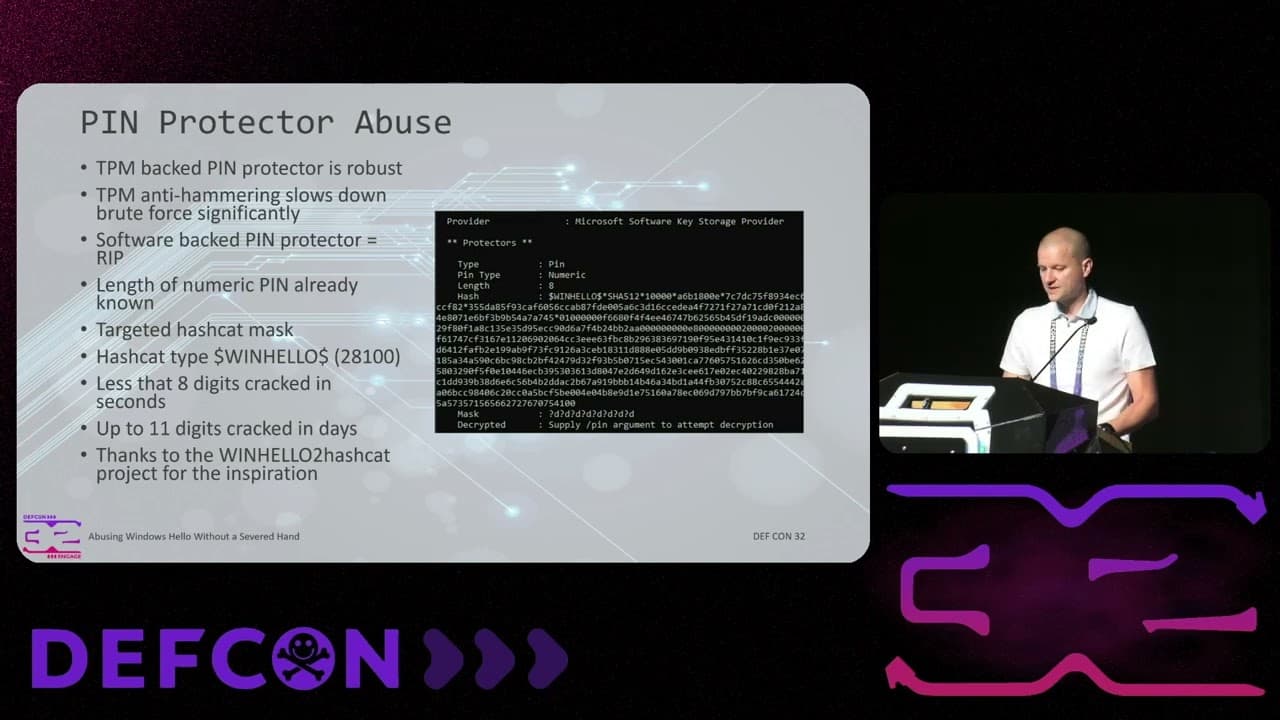
Abusing Windows Hello Without a Severed Hand
Similar Talks
Unmasking the Snitch Puck: The Creepy IoT Surveillance Tech in the School Bathroom
Anyone Can Hack IoT: A Beginner's Guide to Hacking Your First IoT Device