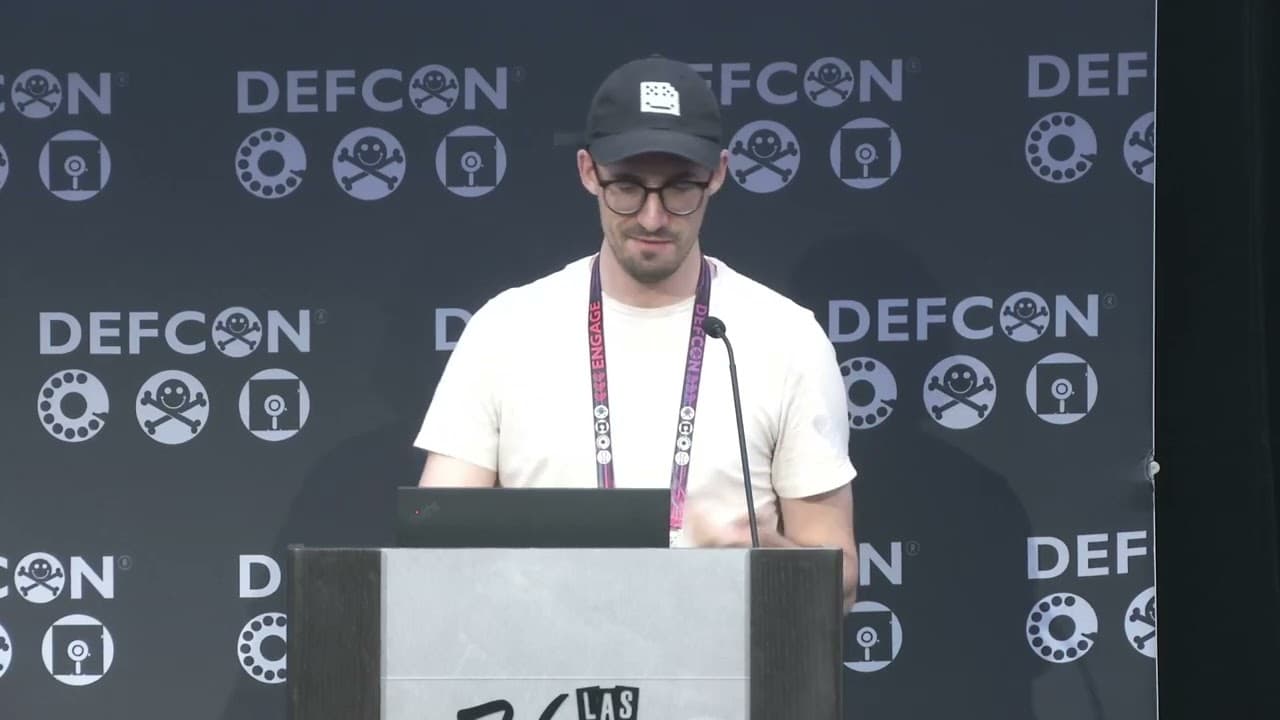
Hacker vs. Triage: Inside the Bug Bounty Battleground
This talk explores the friction between security researchers and triage teams in bug bounty programs, focusing on communication breakdowns and process inefficiencies. It highlights common pain points such as generic responses, downplayed severity, and rejected valid issues. The speakers provide actionable advice for researchers on how to write clear, reproducible reports to improve their success rate and build rapport with program teams. They also discuss the importance of mutual understanding and professional communication in navigating the bug bounty ecosystem.
Beyond the Generic Response: Mastering the Bug Bounty Triage Game
TLDR: Bug bounty success hinges on more than just finding a vulnerability; it requires clear, reproducible reporting that bridges the gap between researchers and triage teams. This post breaks down how to navigate the friction of triage, specifically when dealing with complex issues like authentication bypass and lock screen bypasses. By focusing on business impact and providing concise reproduction steps, researchers can significantly increase their report acceptance rates and build professional rapport with program owners.
Most researchers treat the bug bounty submission process as a black box. You find a bug, you write a report, you hit submit, and then you wait. When the response comes back as a generic "we are looking into it" or a flat rejection, the frustration is immediate. But the reality of the bug bounty battleground is that triage teams are often overwhelmed, under-resourced, and operating under strict internal constraints that researchers rarely see. If you want your findings to move from "triaged" to "resolved" and "paid," you need to stop writing reports for yourself and start writing them for the person on the other side of the screen.
The Mechanics of a Successful Report
Technical brilliance is only half the battle. A vulnerability like CVE-2025-24198, which involves a lock screen bypass, is a high-stakes finding. However, if your report doesn't clearly articulate the path to exploitation, it will likely be dismissed or downplayed. The most effective reports I have seen follow a rigid, logical flow: they define the environment, detail the specific steps to reproduce the issue, and, most importantly, explain the business impact.
When you are testing an application, you are essentially trying to prove that a security control is failing. If you are dealing with an authentication bypass, don't just dump a raw HTTP request. Use Burp Suite to isolate the exact request that triggers the failure. A clean, minimal reproduction payload is worth more than a ten-page document filled with fluff.
POST /api/v1/auth/verify HTTP/1.1
Host: target.com
Content-Type: application/json

{
  "user_id": "12345",
  "bypass_token": "true",
  "signature": "null"
}
If the triage team can copy and paste your steps and see the vulnerability in action within thirty seconds, your chances of a payout skyrocket. If they have to spend twenty minutes setting up a complex environment just to see what you are talking about, they will move on to the next report.
Navigating Internal Friction
Triage teams are not just looking for bugs; they are looking for risks that align with their organization's specific threat model. When you report an issue, you are competing for their attention. If you receive a rejection, it is rarely a personal attack. It is often a result of the triage team not understanding the context or the business impact of your finding.
When you push back on a rejected report, do not get emotional. Avoid calling the triage team incompetent or questioning their technical ability. Instead, reframe the issue. If they claim a bug is "out of scope" or "not a security issue," provide a concrete scenario where that bug could be used to compromise user data or system integrity. Use the OWASP Top 10 as a common language. If you can map your finding to a specific category like Broken Access Control, you provide the triage team with a standardized way to justify the bug to their internal stakeholders.
The Power of Professionalism
Building a reputation as a reliable researcher is a long-term play. When you find a bug, you are essentially entering into a professional partnership with the program. If you are respectful, clear, and concise, you become a preferred source of security intelligence. If you are difficult to work with, you will find yourself deprioritized, regardless of how good your findings are.
There will be times when you are right and the program is wrong. In those cases, the best approach is to provide additional context. For example, if you are reporting an issue that affects a specific enterprise environment, explain why that environment is unique and why the standard security controls are insufficient. This level of detail shows that you have done your homework and that you are genuinely interested in helping them secure their product, not just in collecting a bounty.
What to Do Next
The next time you are preparing a submission, take a step back. Read your report as if you were the triage engineer who has been staring at a screen for eight hours and has fifty other reports to process. Is your summary clear? Is your reproduction path foolproof? Does the business impact jump off the page? If the answer to any of these is no, rewrite it.
Bug bounty programs are not going anywhere, and the demand for high-quality research is only increasing. The researchers who succeed are the ones who treat the triage process as a critical part of their technical workflow. Focus on the quality of your communication, maintain your professionalism even when you disagree, and always prioritize the clarity of your findings. The payout is just the byproduct of a well-executed, professional report.
CVEs
Vulnerability Classes
Tools Used
Target Technologies
Attack Techniques
Up Next From This Conference


Similar Talks
Inside the FBI's Secret Encrypted Phone Company 'Anom'

Surveilling the Masses with Wi-Fi Positioning Systems