Hacking Millions of Modems
The speaker demonstrates an insecure direct object reference (IDOR) and broken access control vulnerability within a major ISP's customer management API. By manipulating API requests and exploiting an internal service integration layer, the researcher was able to access and modify settings for arbitrary customer devices. This research highlights the risks of centralized management platforms and the potential for large-scale impact when internal APIs lack proper authentication. The talk includes a demonstration of using Burp Suite to perform account enumeration and device configuration changes.
Exploiting Centralized ISP APIs: From Account Enumeration to Device Takeover
TLDR: A recent security research presentation at DEF CON 2024 detailed how a misconfigured internal API layer allowed for unauthorized access to millions of customer modems. By exploiting broken access control and IDOR vulnerabilities within a service integration layer, researchers could enumerate customer accounts and modify device configurations. This research underscores the critical danger of exposing internal management APIs to the public internet without robust authentication.
Modern ISPs often rely on complex, multi-layered software architectures to manage millions of customer-premises equipment (CPE) devices. While these systems are designed to streamline support and provisioning, they frequently introduce massive, hidden attack surfaces. The recent research presented at DEF CON 2024 regarding Cox Communications highlights exactly how these internal service integration layers can become the primary vector for full-scale device compromise. When an ISP centralizes control for millions of modems behind a single, poorly secured API gateway, the impact of a single authentication failure is catastrophic.
The Anatomy of the Vulnerability
At the heart of this research was an Insecure Direct Object Reference (IDOR) vulnerability combined with Broken Access Control. The researchers discovered that the ISP’s customer-facing web portal communicated with an internal API layer that lacked sufficient authorization checks. By manipulating the API requests, they could bypass the intended authentication flow and interact directly with backend services that were never meant to be exposed to the end user.
The attack flow began with simple account enumeration. By identifying the API endpoints responsible for searching customer profiles, the researchers found they could input arbitrary identifiers to retrieve sensitive account information. This is a classic example of failing to validate that the requester has the authority to access the requested object. Once the researchers could map account IDs to specific customer profiles, they moved to the next stage: device interaction.
Technical Execution and API Manipulation
The researchers utilized Burp Suite to intercept and modify traffic between the client and the API gateway. A key finding was the presence of an internal service integration layer, which the researchers identified as "SAIL." This layer acted as a bridge between the customer portal and the backend infrastructure. By observing the API calls, they noticed that certain requests were being routed to internal services that expected a specific, encrypted parameter.
The researchers successfully reverse-engineered the JavaScript responsible for this encryption. By setting breakpoints in the browser console, they were able to intercept the encryption function and use it to craft their own malicious payloads. The following pattern illustrates how they bypassed the frontend restrictions to interact with the backend:
POST /api/cbma/accountmanagement/services/accountequipment/v1/gatewaydevice/wifisettings
Host: myaccount-business.cox.com
Content-Type: application/json

{
  "wifisettings": {
    "customerWifiSsid24": "New_SSID_Name"
  },
  "encryptedValue": "ENCRYPTED_PAYLOAD_GENERATED_VIA_REVERSE_ENGINEERED_JS"
}
By passing a valid, encrypted payload that included the target device's MAC address, the researchers could force the backend to apply new configurations to the modem. This effectively allowed them to change Wi-Fi passwords, open ports, or even push malicious firmware updates to any device associated with the enumerated accounts.
Real-World Implications for Pentesters
For those conducting penetration tests or participating in bug bounty programs, this research serves as a reminder to look past the obvious frontend vulnerabilities. When testing large-scale web applications, focus your efforts on the API gateway and the internal service layers that handle the heavy lifting. If you see an application that uses a reverse proxy to route traffic to various internal microservices, that is your primary target.
During an engagement, look for headers or URL patterns that suggest a backend service is being accessed directly. Pay close attention to how the application handles object references in API calls. If you can change an ID in a request and access data belonging to another user, you have found an IDOR. If you can perform administrative actions, such as modifying device settings, you have successfully demonstrated a critical broken access control vulnerability.
Defensive Considerations
Defending against these types of attacks requires a shift in how we view internal API security. Developers must treat all internal APIs as if they are public-facing. Every request, regardless of its origin, must be validated against the user's session and their specific permissions. Relying on the assumption that an internal network or a reverse proxy provides sufficient security is a dangerous mistake.
Implementing Zero Trust principles, where every API call is authenticated and authorized, is the only way to mitigate this risk. Furthermore, organizations should conduct regular, automated security testing of their API endpoints to identify and remediate these vulnerabilities before they can be exploited.
The ease with which these researchers were able to move from simple account enumeration to full device control highlights the fragility of modern, centralized management systems. As we continue to connect more devices to the internet, the importance of securing the management layer becomes paramount. If you are auditing a system that manages thousands or millions of devices, start by mapping the API surface and questioning every assumption about who is allowed to talk to which service.
Vulnerability Classes
Tools Used
Target Technologies
Attack Techniques
All Tags
Up Next From This Conference
Breaking Secure Web Gateways for Fun and Profit
Listen to the Whispers: Web Timing Attacks That Actually Work
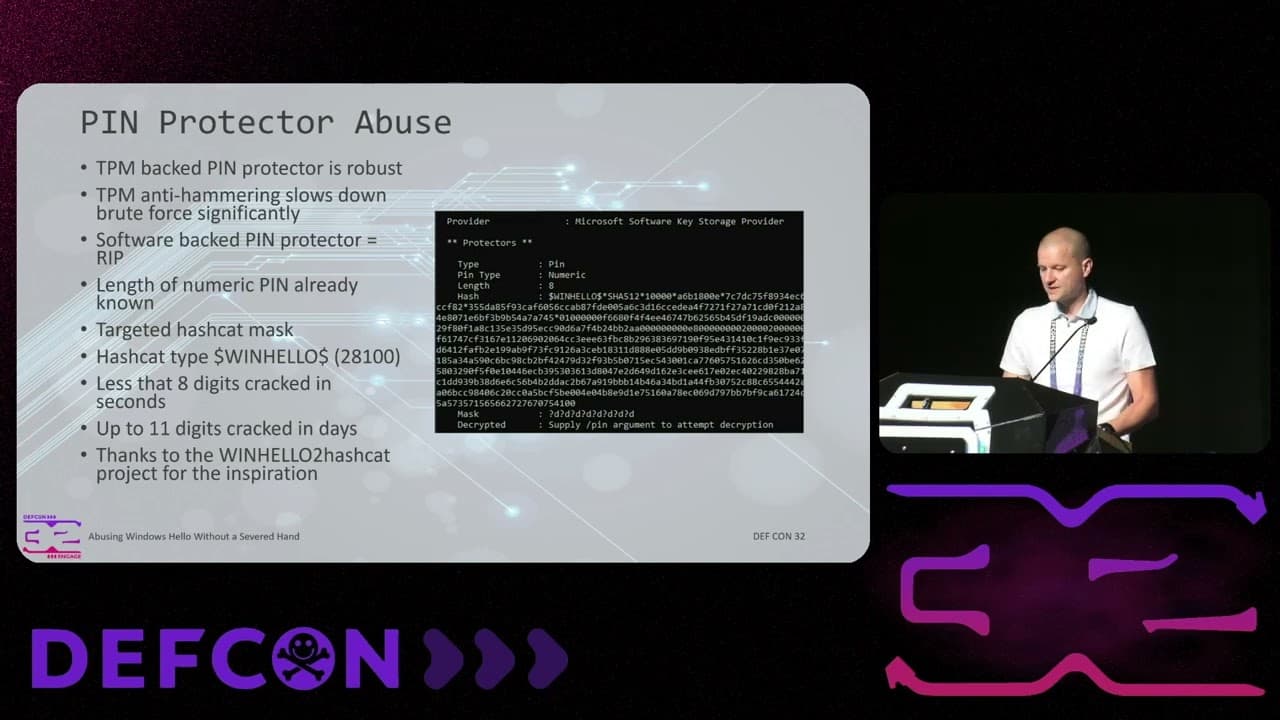
Abusing Windows Hello Without a Severed Hand
Similar Talks

Inside the FBI's Secret Encrypted Phone Company 'Anom'

Kill List: Hacking an Assassination Site on the Dark Web